The OpenClaw frenzy in China tests how Beijing and Xi Jinping will regulate AI
OpenClaw has become a new focal point for China's AI market and, at the same time, a test for regulators. Beijing must decide how to support fast experimentation and the growth of local companies without loosening its grip on data and on how models are deployed. The response will determine whether the current frenzy becomes a fresh leap forward for the industry or ends in another round of tough restrictions.
AI-processed from Bloomberg Tech; edited by Hamidun News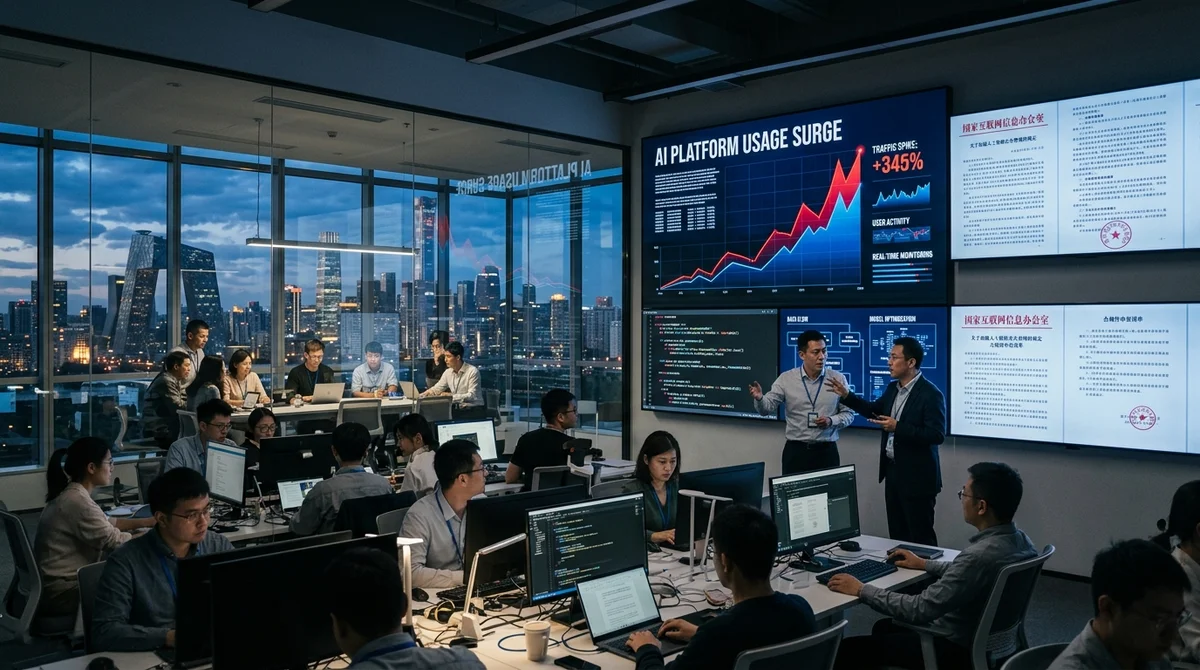
The frenzy around OpenClaw in China has turned a single AI system into a test of the entire regulatory model Beijing has been building for the past several years. The authorities want to speed up development and back local players, but they are not ready to loosen control over data, content, and the way such tools spread across the country. That contradiction is what makes the current OpenClaw wave a political story, not just a technological one.
Why the frenzy started
In a short time, OpenClaw has become a symbol of a new wave of interest in generative AI inside China. For the market, this is not just another high-profile release but a signal that access to powerful models is becoming broader, cheaper, and faster. When a technology spreads not through a few large platforms but through dozens of teams, integrations, and local adaptations, the regulator faces not a single product but an entire ecosystem that is harder to monitor with the old methods.
That is why the OpenClaw story matters not only to developers but also to officials. If interest from users, startups, and corporations keeps growing, Beijing will have to decide where a useful technological impulse ends and the zone of risk begins. For China's AI market, this is the moment when the speed of adoption so openly clashes, for the first time, with the customary logic of cautious approval. And the pace of new launches depends on how quickly a clear operating regime emerges.
Between growth and control
The approach associated with Xi Jinping's line rests on two goals at once: China must lead in a strategic technology, but the technology itself must not slip out of a managed perimeter. With closed services, this scheme is easier to run: there is an operator, a point of accountability, and channels of control. With OpenClaw and similar systems the situation is more complicated, because scaling is faster and the number of participants is growing sharply.
- data origin and protection
- rules for access to models
- responsibility for outputs and content
- local deployment and fine-tuning
For the regulator, this is no longer a debate about whether to allow AI at all. The question is whether tight oversight can be maintained when the technology spreads across the market almost in real time. If the state tries to control every layer with equal severity, it risks slowing its own innovation. If it loosens requirements too much, concerns will grow around data leaks, unpredictable model behavior, and circumvention of existing rules.
What lies ahead for companies
Companies that want to build OpenClaw quickly into their products and internal processes will feel the pressure most. Large players can usually afford compliance teams, legal expertise, and infrastructure for handling data safely. Small startups have no such cushion. For them, any new wave of regulation means not an abstract risk but a direct delay to launches, higher costs, and the need to rebuild the product before it even reaches the market.
So the key question now is not whether Beijing will stop OpenClaw, but what form control will take. One scenario is more flexible rules for research, corporate pilots, and open models. The other is extending existing requirements to nearly all use cases. For investors and teams, this means the rules of the game may change faster than product roadmaps.
That determines whether the current frenzy turns into a lasting platform for the growth of Chinese AI or remains a brief flash, after which the market goes back to caution.
What this means
The OpenClaw story shows that the next competition in AI is being fought not only between models but between regulatory regimes. The winners will be the countries that can not only launch strong systems but also clear a path for them quickly without losing manageability.
- Nov 18, 2026Digg's Creator Releases an Open-Source DocuSign Alternative: $240 a Year Instead of $8,100
- Nov 18, 2026Sakana's AI Scientist crashed in 42% of runs: the model wrote the code itself
- Nov 18, 2026Language Model on ESP32-S3 Sped Up to 406 Tokens/s — 18x Faster
- Nov 12, 2026Oakland Union Wins Retraining Instead of AI Layoffs: 94.1% Vote for Strike
Key Questions Answered
Why the frenzy started?
In a short time, OpenClaw has become a symbol of a new wave of interest in generative AI inside China. For the market, this is not just another high-profile release but a signal that access to powerful models is becoming broader, cheaper, and faster. When a technology spreads not through a few large platforms but through dozens of teams, integrations, and local adaptations, the regulator faces not a single product but an entire ecosystem that is harder to monitor with the old methods.
What are the key details on Between growth and control?
The approach associated with Xi Jinping's line rests on two goals at once: China must lead in a strategic technology, but the technology itself must not slip out of a managed perimeter. With closed services, this scheme is easier to run: there is an operator, a point of accountability, and channels of control. With OpenClaw and similar systems the situation is more complicated, because scaling is faster and the number of participants is growing sharply.
What lies ahead for companies?
Companies that want to build OpenClaw quickly into their products and internal processes will feel the pressure most. Large players can usually afford compliance teams, legal expertise, and infrastructure for handling data safely. Small startups have no such cushion. For them, any new wave of regulation means not an abstract risk but a direct delay to launches, higher costs, and the need to rebuild the product before it even reaches the market.
Build & Ship Production AI Agents Without Boilerplate Code
Start your free 72-hour trial at Hamidun Academy (academy.hamidun.com) — interactive lessons on Claude Code & Cursor, live Tech Radar, and production agent templates.
The AI world, distilled — once a week
Seven stories that actually mattered, hand-picked. No noise, no reposts, no press releases.
Done! Check your inbox for a confirmation.