Guardian: AI companies built for war are already defense contractors in all but name
The column's author argues that firms building AI for combat can no longer hide behind the label "technology companies." The piece compares modern targeting systems to the Israeli "fog procedure", firing blindly in poor visibility, and insists that automation does not remove responsibility for decisions made with incomplete information. By that logic, such developers should be regulated as defense contractors.
AI-processed from Guardian; edited by Hamidun News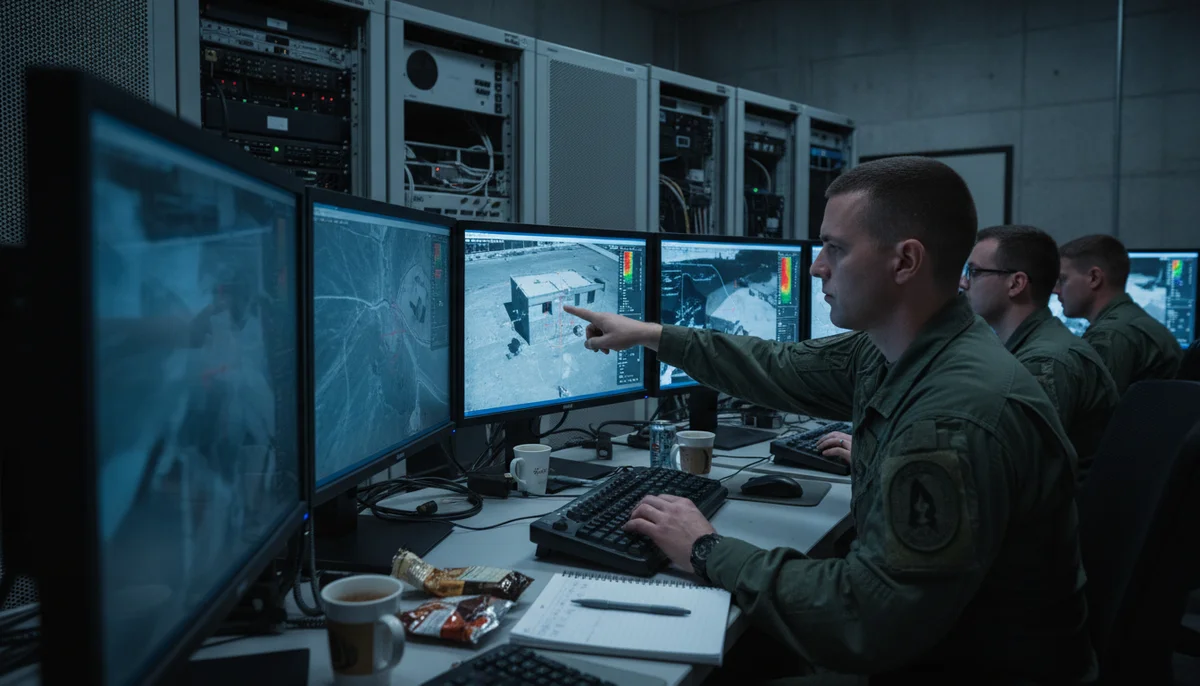
Companies that develop AI for combat tasks should no longer be called simply technology firms. They are defense contractors. That is the thesis running through a Guardian column arguing that the cost of weak regulation of AI warfare is already being measured in human lives.
A blunt thesis
The text opens with a stark formulation: from Gaza to Iran, the author writes, the same pattern repeats: precision weapons, deliberate blindness and the deaths of children. The main objection is not to the rhetoric of precision itself, but to how it works in practice. When a system promises surgical accuracy, political and legal responsibility often dissolves: the damage can be blamed on bad data, an incomplete picture or a model error. The author considers this the most dangerous effect of the current race to build military AI tools.
The column's framing is an accusation: if a company builds models and services that take part in selecting targets, recognizing threats or deciding whether to use force, it cannot be treated as an ordinary software vendor. In the author's view, it is already part of the defense chain, and so stricter rules on transparency, oversight and accountability should apply to it. Otherwise the technology brand becomes a convenient shield behind which the consequences of combat use can be hidden.
The logic of fog
To explain the idea, the author turns to the Israeli "fog procedure", an unofficial rule under which soldiers at checkpoints in poor visibility fire bursts into the darkness on the assumption that a threat may be hiding in it. The text describes this practice not as an accidental excess but as a principle: blindness comes first, then violence, and only afterward an explanation of why it was supposedly necessary.
AI, the author argues, does not abolish this logic but only makes it more systematic. Instead of a person firing into the unknown, there is a model trained to work on incomplete signals and probabilities. Formally the decision looks tidier, because it comes with interfaces, labels, classification and the language of "precision." But the essence, according to the column, does not change: the machine does not eliminate moral uncertainty, it packages it in a technological procedure.
"Violence sanctioned by blindness."
Where accountability is needed
This thesis leads not only to a moral dispute but to a very practical one about regulation. If military AI developers keep calling themselves simply AI firms, public debate easily shrinks to model quality, inference speed and recognition accuracy. The author proposes a different angle: the discussion should cover not only the technology but the conditions of its use, the approval chain, access to data and the limits of acceptable automation in matters of life and death.
In this frame, the argument over the name stops being semantics: the term determines which laws apply, who must disclose risks and whom society has the right to hold to account for the consequences.
- How exactly the system takes part in selecting a target or assessing a threat
- Who bears legal responsibility for a model error in a combat operation
- What data and assumptions underlie the system's "precise" outputs
- Where the line falls between an AI recommendation and a human decision to pull the trigger
- What independent checks and restrictions such products must pass before deployment
What this means
If one accepts the column's logic, the conversation about AI in war should shift from the convenient image of a "neutral model" to the question of the developer's status. Once a product is built into the loop of the use of force, it is no longer just a program. For states, this is an argument for direct regulation; for companies, a signal that they can no longer shelter from responsibility for the consequences behind the word "technology."
- Nov 2, 2026Steering vectors in LLM fine-tuning improved SFT and distillation across three seeds
- Nov 2, 2026ASTC Compresses Agent Context Without Training, Cutting Attention Pairs by 50.68%
- Nov 2, 2026DLC Correction Keeps KL to On-Policy Training Within Two Noise Floors on Qwen3
- Oct 31, 2026Author puts his script before an AI jury: the verdict cost 850 thousand tokens
Key Questions Answered
What are the key details on A blunt thesis?
The text opens with a stark formulation: from Gaza to Iran, the author writes, the same pattern repeats: precision weapons, deliberate blindness and the deaths of children. The main objection is not to the rhetoric of precision itself, but to how it works in practice. When a system promises surgical accuracy, political and legal responsibility often dissolves: the damage can be blamed on bad data, an incomplete picture or a model error. The author considers this the most dangerous effect of the current race to build military AI tools. The column's framing is an accusation:
What are the key details on The logic of fog?
To explain the idea, the author turns to the Israeli "fog procedure", an unofficial rule under which soldiers at checkpoints in poor visibility fire bursts into the darkness on the assumption that a threat may be hiding in it. The text describes this practice not as an accidental excess but as a principle: blindness comes first, then violence, and only afterward an explanation of why it was supposedly necessary. AI, the author argues, does not abolish this logic but only makes it more systematic. Instead of a person firing into the unknown, there is a model trained to work
Where accountability is needed?
This thesis leads not only to a moral dispute but to a very practical one about regulation. If military AI developers keep calling themselves simply AI firms, public debate easily shrinks to model quality, inference speed and recognition accuracy. The author proposes a different angle: the discussion should cover not only the technology but the conditions of its use, the approval chain, access to data and the limits of acceptable automation in matters of life and death. In this frame, the argument over the name stops being semantics: the term determines which laws apply, wh
Test Frontier LLMs & Autonomous Agents in One Workspace
Run Claude Opus 5.5, GPT-6, Gemini 3.1, and DeepSeek side-by-side in Nomad AI (nomadnet.ai) — unified model routing, deep research, and multimodal workflows under one subscription.
The AI world, distilled — once a week
Seven stories that actually mattered, hand-picked. No noise, no reposts, no press releases.
Done! Check your inbox for a confirmation.