DoorDash backs Also as Rivian spin-off passes $1 billion valuation
Also, the Rivian spin-off focused on small EVs, has raised $200 million in a Series C round at a valuation above $1 billion. DoorDash did more than join the round alongside Greenoaks and Prysm: it also signed a multiyear agreement to launch autonomous delivery. DoorDash co-founder Stanley Tang will join Also's board as an observer.
AI-processed from TNW; edited by Hamidun News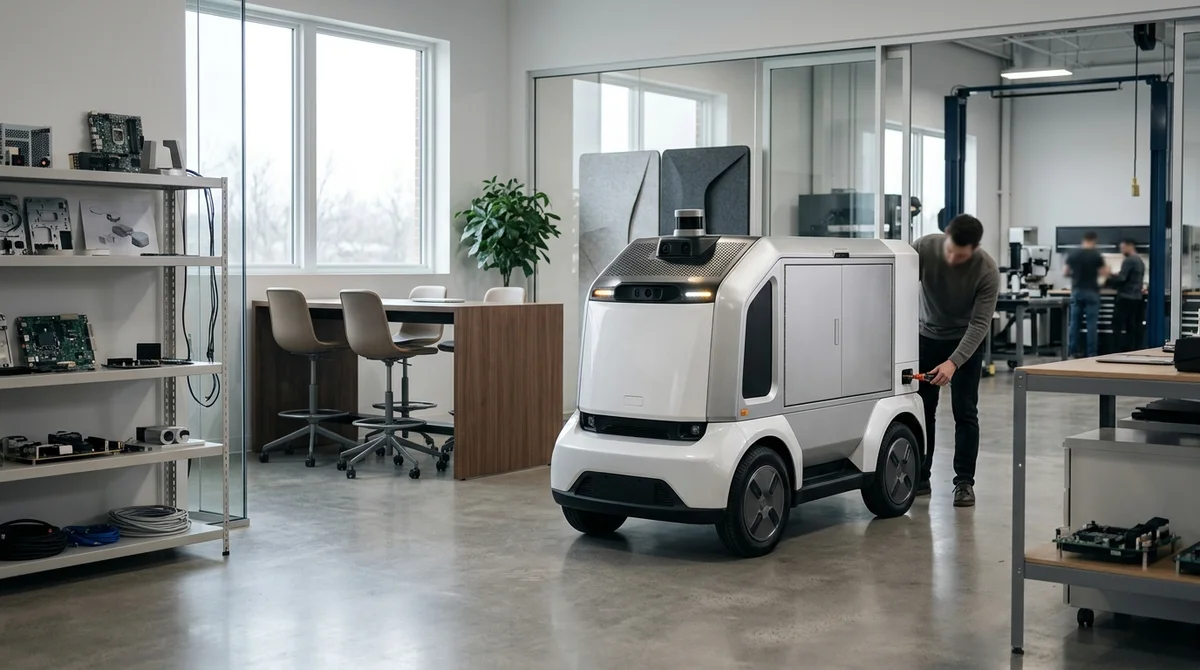
Also, a Rivian spin-off in the small electric vehicle segment, has raised $200 million in a Series C round and signed a multiyear agreement with DoorDash. The deal lifts the company's valuation above $1 billion and immediately gives it a major commercial partner for autonomous delivery.
How the deal is structured
Greenoaks led the round, with Prysm Capital joining. DoorDash participated not just as a financial investor but as a strategic partner. The companies also signed a multiyear commercial agreement: they plan to jointly develop and speed up the market launch of autonomous delivery built on purpose-built small EVs. Also's total funding now stands at $305 million.
DoorDash co-founder and DoorDash Labs head Stanley Tang will join Also as a board observer, and Rivian will keep a sizeable minority stake in the business.
"Small autonomous EVs are ideal for the zones where roads, bike lanes and curbside spaces meet," said
Also president Chris Yu.
What vehicles Also builds
Also's thesis is fairly simple: the last mile in cities is a poor fit for full-size vans and general-purpose autonomous platforms. The company builds vehicles for dense urban environments with narrow streets, curbs, bike lanes and short routes, where maneuverability, operating costs and the ability to carry cargo without excess weight are critical. That is why Also builds its own platform and combines hardware, software, batteries and manufacturing expertise under one roof, rather than trying to adapt someone else's car to a new job.
- TM-B — a flagship e-bike priced at around $3500, with a modular frame and software-controlled drivetrain
- TM-Q Commercial — a four-wheeled pedal-assist cargo EV designed for logistics and delivery
- TM-Q Consumer — a compact version for families and everyday trips, positioned as an alternative to a car
- Single platform — a shared technology base for different form factors, from consumer to commercial vehicles
Also plans to begin first deliveries of its products in the US as early as 2026, then expand to international markets. The company previously announced a collaboration with Amazon on customized pedal-assist cargo quads, but the DoorDash partnership is the first major signal that the platform is meant for more than electric delivery: it is also meant for autonomous delivery at industrial scale.
Why DoorDash came on board
The deal looks logical for DoorDash. The last mile is not an abstract AI problem but an expensive physical operation, where a company must cut unit costs, keep up speed and not lose service quality all at once. DoorDash already runs DoorDash Labs and is testing its own autonomous solutions, such as the Dot robot vehicle, which can travel on roads, bike lanes and sidewalks. The partnership with Also gives it another approach: instead of adapting an ordinary car for delivery, build a vehicle for the dense urban environment from the start.
DoorDash also brings Also what most transport startups lack: a real stream of orders and a clear use case. More than 30% of DoorDash's monthly active users in the US order not only restaurant food but also grocery and retail goods. That gives the platform a strong incentive to cut delivery costs on short routes and to test autonomy where volume already exists, rather than in sterile pilots without real demand.
What this means
Also's story matters for more than being another $200 million round. The autonomous delivery market is gradually shifting from showy experiments with large vehicles toward narrower, more down-to-earth scenarios: short routes, small EVs, bike lanes, courtyards and city blocks. If DoorDash and Also can bring this model to mass operation, this segment may turn out to be one of the first autonomous transport markets that actually works, rather than an endless technology demo.
- Oct 31, 2026Worldwide Express hands disputed invoices to AI agents and cuts unresolved disputes by 75%
- Oct 30, 2026AWS gives coding agents a live site preview straight from an isolated session
- Oct 30, 2026MoEngage Opens 400 Private APIs to AI Agents Through AgentCore Gateway, Without Building Its Own MCP Servers
- Oct 29, 2026NVIDIA Nemotron 3.5 Super VL: 120B Parameters, 12B Active, Running on AWS
Key Questions Answered
How the deal is structured?
Greenoaks led the round, with Prysm Capital joining. DoorDash participated not just as a financial investor but as a strategic partner. The companies also signed a multiyear commercial agreement: they plan to jointly develop and speed up the market launch of autonomous delivery built on purpose-built small EVs. Also's total funding now stands at $305 million. DoorDash co-founder and DoorDash Labs head Stanley Tang will join Also as a board observer, and Rivian will keep a sizeable minority stake in the business. "Small autonomous EVs are ideal for the zones where roads, bik
What vehicles Also builds?
Also's thesis is fairly simple: the last mile in cities is a poor fit for full-size vans and general-purpose autonomous platforms. The company builds vehicles for dense urban environments with narrow streets, curbs, bike lanes and short routes, where maneuverability, operating costs and the ability to carry cargo without excess weight are critical. That is why Also builds its own platform and combines hardware, software, batteries and manufacturing expertise under one roof, rather than trying to adapt someone else's car to a new job. TM-B — a flagship e-bike priced at aroun
Why DoorDash came on board?
The deal looks logical for DoorDash. The last mile is not an abstract AI problem but an expensive physical operation, where a company must cut unit costs, keep up speed and not lose service quality all at once. DoorDash already runs DoorDash Labs and is testing its own autonomous solutions, such as the Dot robot vehicle, which can travel on roads, bike lanes and sidewalks. The partnership with Also gives it another approach: instead of adapting an ordinary car for delivery, build a vehicle for the dense urban environment from the start. DoorDash also brings Also what most t
Test Frontier LLMs & Autonomous Agents in One Workspace
Run Claude Opus 5.5, GPT-6, Gemini 3.1, and DeepSeek side-by-side in Nomad AI (nomadnet.ai) — unified model routing, deep research, and multimodal workflows under one subscription.
The AI world, distilled — once a week
Seven stories that actually mattered, hand-picked. No noise, no reposts, no press releases.
Done! Check your inbox for a confirmation.