Uber and Rivian strike $1.25 billion deal: robotaxis to launch in 2028
Uber will invest $1.25 billion in a partnership with Rivian to deploy robotaxis — but this is not another standard deal. Rivian is developing its own chip and a full autonomy stack rather than using a third-party self-driving system. Commercial launch is planned for 2028 in San Francisco and Miami. This is the first time an EV maker has taken on the role of autonomy technology provider itself in a partnership with Uber.
AI-processed from TNW; edited by Hamidun News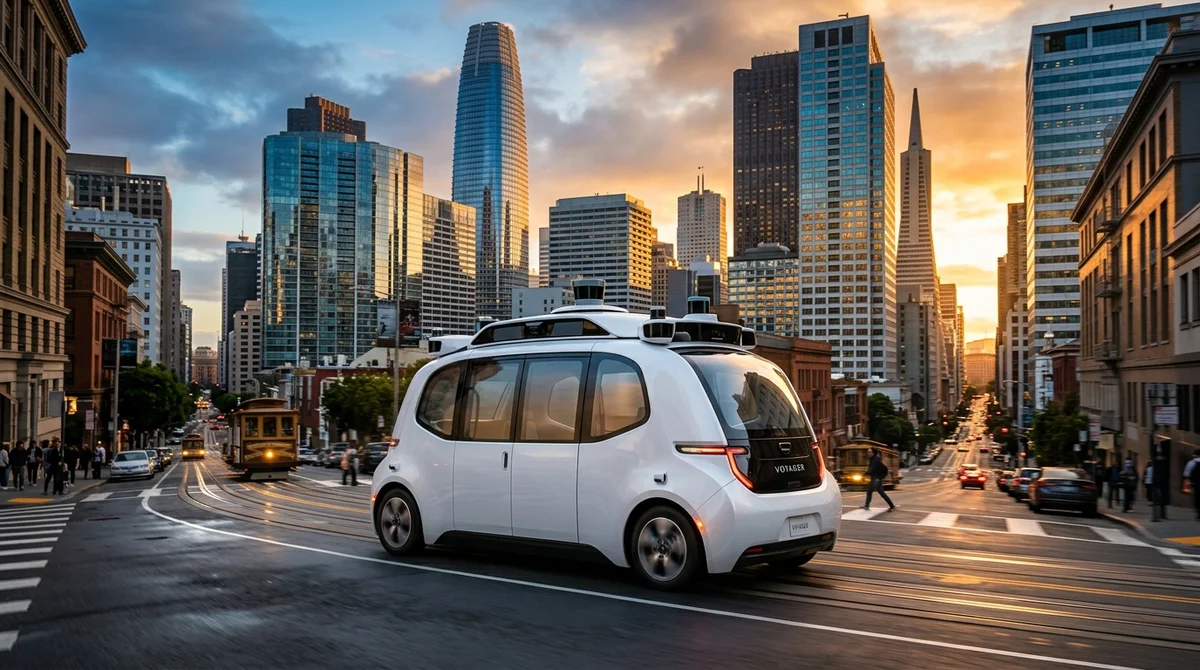
Uber and Rivian have signed a strategic partnership worth $1.25 billion to develop a robotaxi platform. Rivian will develop its own chip and a complete autonomous stack; commercial launches are planned for 2028 in San Francisco and Miami.
How This Deal Differs From the Rest
Over the past few years, Uber has signed partnerships with a dozen companies — Waymo, BYD, Volkswagen, Cruise, Motional. The pace of announcements has become so routine that each new deal starts to feel like business as usual. But the agreement with Rivian is structurally different.
Most of Uber's partnerships are built on a marketplace model: Uber provides the aggregation platform and passenger traffic, the partner supplies the vehicle and autopilot. Rivian, however, is deploying a full vertical stack — from its own chip for computing to autonomous driving software. Uber gains access to this technology as a first operational partner, not just as a distributor.
For Rivian, this deal is particularly meaningful. The company went public in 2021 with a valuation exceeding $100 billion, but since then has faced the harsh realities of manufacturing challenges and price competition. The $1.25 billion partnership with Uber is a signal that Rivian is betting not only on the consumer segment, but also on commercial autonomous transport.
Why an In-House Chip Matters
Developing an in-house chip is an expensive and risky path. Qualcomm, Mobileye, and NVIDIA offer ready-made solutions with lower upfront costs. But for a company aiming for long-term leadership in autonomous transport, proprietary hardware opens fundamentally different possibilities.
Here's why this is strategically important:
- Independence — no dependence on NVIDIA's pricing policy or Qualcomm's roadmap
- Custom optimization — the chip is tailored to Rivian's specific perception and inference architecture
- OTA updates — full control over firmware without supplier constraints
- Scale economics — when transitioning to a fleet of thousands of vehicles, an in-house chip is significantly cheaper
- IP asset — the technology can be licensed to other manufacturers or operators
Tesla invested years developing the FSD chip, released in 2019. Waymo uses proprietary solutions based on Google TPU. Based on the deal structure, Rivian is moving in the same direction.
Why San Francisco and Miami
The choice of cities is no accident. San Francisco is a mandatory presence point for any serious player in autonomous transport. Waymo already operates here in commercial mode without an operator in the vehicle, and any competitor must test their system on the same polygon.
Miami follows different logic. Florida has historically been favorable to autonomous vehicle testing, the state has no snow and extreme weather conditions, and the urban network is predictable enough for initial commercial deployments.
A 2028 launch gives Rivian approximately two years to obtain regulatory permits in California and Florida, accumulate training data for the model, and validate the system under real conditions. This is a tight but achievable timeline — provided the stack development proceeds as planned.
What This Means
The $1.25 billion deal transforms Rivian from a manufacturer of electric pickups and vans into a technology player in the autonomous transport market. For Uber, the partnership means portfolio diversification: instead of betting on a single autopilot, the company is assembling an ecosystem of competing platforms.
If Rivian delivers on its promises, the landscape of robotaxi by 2028 will be noticeably more pluralistic.
Want to stop reading about AI and start using it?
AI News is a curated feed of AI/tech news. Hamidun Academy teaches you to use AI systematically in your work.
The AI world, distilled — once a week
Seven stories that actually mattered, hand-picked. No noise, no reposts, no press releases.
Done! Check your inbox for a confirmation.