Google expands NotebookLM with five new features for advanced research workflows
Google has added five features to NotebookLM for users working with long-form research and presentations. It is now possible to edit individual slides via prompt, export decks to PPTX, assemble artifacts directly from chat, generate video overviews, and upload EPUB books without manual splitting. That moves NotebookLM closer to a full environment for analyzing and packaging results than to a simple note-taking app.
AI-processed from KDnuggets; edited by Hamidun News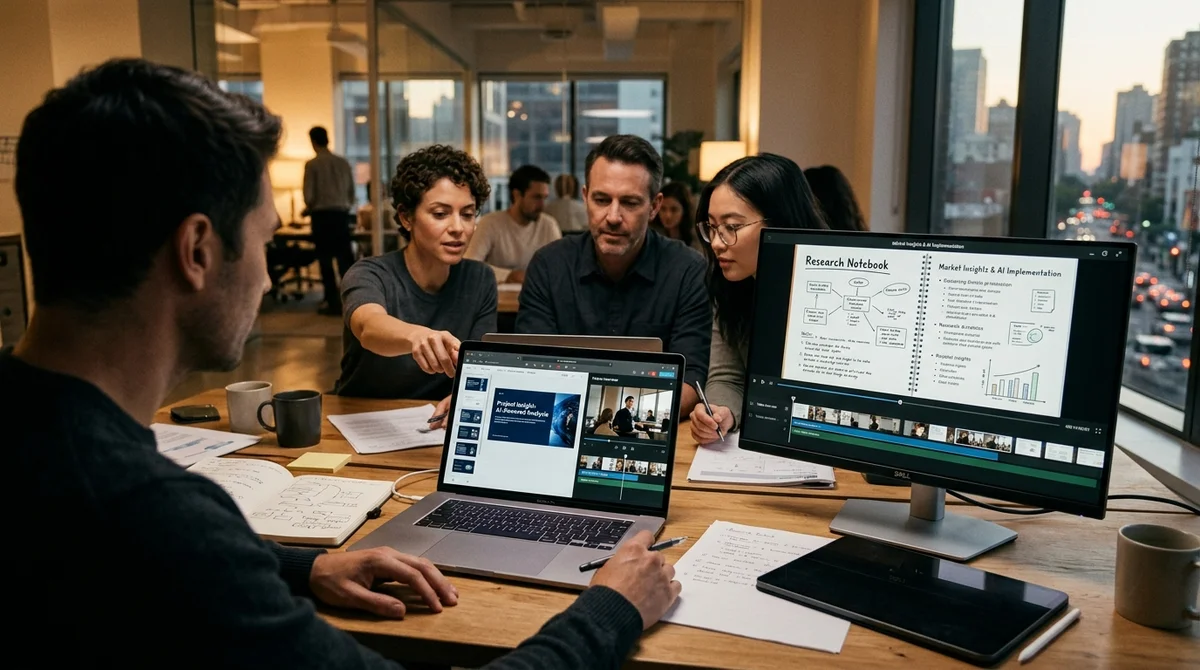
Google has expanded NotebookLM's capabilities and is clearly targeting an audience that uses the service not as a study assistant, but as a working environment for research, presentations, and internal documents. The latest set of updates includes targeted slide editing, PPTX export, artifact generation from chat, video overviews, and EPUB support.
Work More Precisely with Slides
One of the most practical updates is targeted editing of individual slides by text instruction. Previously, if there was an error in a single chart or phrasing, you had to rebuild the entire deck. Now in Studio you can open a finished presentation and ask NotebookLM to change only the needed fragment: correct a metric, turn a list into a comparison table, or shift the emphasis to a specific conclusion. For teams that frequently refine presentations to final form through multiple iterations, this eliminates unnecessary regeneration.
"Update the 2025 revenue by the value from table 2 and add a source in
the footnote".
The second important detail is slide export to PPTX. NotebookLM remains the place where the draft and logic of the presentation are assembled, while PowerPoint again becomes the final container for corporate work. According to the feature description, structure and visual layout are transferred to the standard format without manual copying of each slide. Yes, such decks may still require cosmetic refinement, but the path from research to presentation has become noticeably shorter, especially for analysts, product managers, and consulting teams.
From Chat to Results
Another update removes the unnecessary transition between work modes: now artifacts can be created directly within the chat. If the logic of a document or explanation has already taken shape in the conversation with NotebookLM, it's enough to ask the system to turn that thread into a slide deck, a two-page brief, or another result. This is useful in situations where strong phrasing emerges not from a pre-planned template, but from a live dialogue about data, hypotheses, and clarifying questions.
Separately, Google is strengthening the video overview format. NotebookLM can now assemble more cinematic videos from notebook materials, combining script, structure, and visual presentation in a single pipeline. For internal demos, management explanations, or onboarding, this is a notable step forward: there's no need to separately write a script, compile a storyboard, and manually package a lengthy study into a brief explanation. The key prerequisite, based on the description, is well-prepared sources and a clear prompt tailored to the specific audience.
Long Sources Without Pain
EPUB support makes NotebookLM noticeably more useful for those who work not only with notes and PDFs, but also with full-length books, technical manuals, and long playbook documents. Instead of manual slicing and reconversion, you can upload a long source as is, and then cross-reference it with tables, internal documents, and other files in a single notebook. This fits particularly well with research and data-driven scenarios, where you need to link book chapters with figures, policies, and operational metrics.
The updated workflow in NotebookLM now looks like this:
- Upload EPUB, PDF, CSV, and internal documents into a single notebook
- Quickly validate hypotheses and build narrative through chat
- Turn conclusions into a brief or slide deck directly from the conversation
- Make targeted edits to individual slides without full rebuild
- Export the result to PPTX or assemble a video overview for stakeholders
In sum, the service moves further away from the role of a "smart note-taker" and becomes an environment where you can traverse nearly the entire path from a raw collection of sources to a finished artifact. For power users, this is essentially a savings in context-switching: less manual packaging, less copy-pasting, less regeneration due to a single inaccurate figure or unsuccessful slide, and a more predictable route from analysis to final delivery.
What This Means
NotebookLM is beginning to compete not only with AI assistants for note-taking, but also with pieces of the conventional work stack — from research tools to presentation software. If Google brings the quality of export and video formats to a mature level, the service could become a real intermediate operating system for knowledge within teams.
Want to stop reading about AI and start using it?
AI News is a curated feed of AI/tech news. Hamidun Academy teaches you to use AI systematically in your work.
The AI world, distilled — once a week
Seven stories that actually mattered, hand-picked. No noise, no reposts, no press releases.
Done! Check your inbox for a confirmation.