China backs global AI rules while the US heads for a 'Wild West', says Wendy Hall
At a House of Commons hearing, Wendy Hall, a former UN and UK government adviser on AI, said China now looks like a more responsible player in AI regulation than the US under Donald Trump. In her words, Washington has effectively launched a "Wild West": companies compete on speed, profit and hype, while shared rules take a back seat. Hall's remarks matter because of her track record, and they point to a shift in how the debate over AI governance is framed.
AI-processed from Guardian; edited by Hamidun News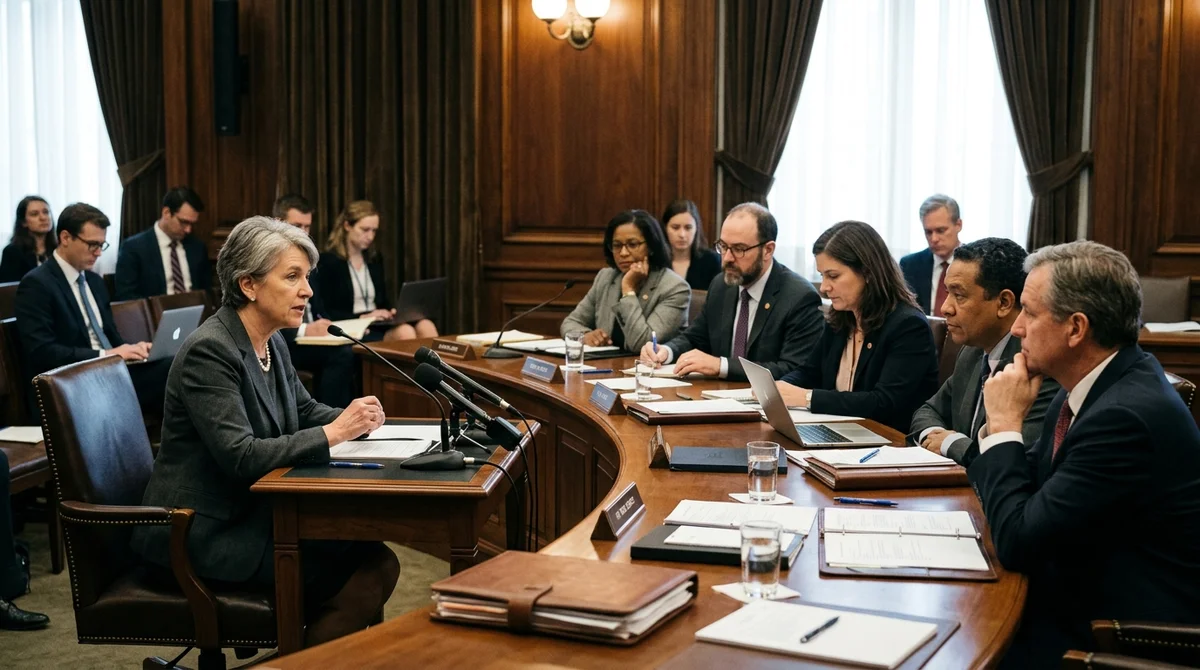
At a House of Commons hearing, British AI expert Wendy Hall said China currently looks like a more constructive participant in global AI regulation than the US under Donald Trump. In her words, the American approach increasingly resembles a "Wild West", where commercial interest and hype set the pace of the race.
A statement to MPs
Hall spoke before the House of Commons business and trade committee. Her words carry weight not only because of the striking "good guy" phrasing, but because of her background: she served on the UN's AI advisory body and co-authored a review for Theresa May's government. In other words, this is not a random commentator but someone who has watched international AI policy from the inside and has long helped shape rules for the industry.
"Right now it is
China that supports multilateral efforts to build global AI governance," was the gist of her statement to the committee.
Hall's central point is that the balance of power in AI is shifting faster than familiar political roles. The West once typically cast itself as the source of standards and restrictions. Now some experts see more responsible rhetoric coming from Beijing, while Washington bets on speed and corporate leadership. For the committee, it sounded like a warning: former allies on technology policy no longer automatically look like the most cautious ones.
China versus the US
The contrast Hall described does not rest on China suddenly becoming more liberal, but on how different powers approach international rules. In her assessment, Beijing supports multilateral formats and the idea of global AI governance. The US, by contrast, encourages competition between corporations, where release tempo, investment and media noise often outweigh the long work of tuning safeguards. Experts say this raises the risk that the market will dictate rules faster than governments can write them.
- China supports international frameworks and negotiations on AI governance
- The US bets on corporate competition and rapid product launches
- The American model centers on a commercial race for leadership
- Experts see this race as dependent on hype and promises
For British MPs, this is a particularly sensitive question. London has to find its own line between two superpowers: not dropping out of the technology race, but not copying a model in which safety and accountability constantly lag behind marketing. Hall's statement effectively nudges the UK and Europe to take a more active part in building shared norms before the largest platforms alone start imposing rules. Otherwise, the agenda will be set for good by those with the most computing power and capital.
Why concern is growing
Experts' worries stem not only from geopolitics but from how the AI market itself works. When major players compete for market capitalization, users and investor attention, they have an incentive to ship ever more powerful systems ahead of rivals. In that environment, robustness testing, data transparency, error control and misuse scenarios often become secondary. Hall called this approach dangerous precisely because it turns states' technology strategy into an extension of the corporate race.
In the British Parliament, such warnings come amid a broader dispute: whether the world needs unified baseline rules for AI, as it once discussed norms for nuclear technology, biosecurity or the internet. There is no full consensus, but the argument that companies' voluntary pledges alone are not enough is becoming more prominent. If the largest economies fail to agree on even minimal standards, differences between national regimes will be used as a loophole to evade restrictions.
What this means
The story matters not because China has suddenly become a model of open AI, but because the framing of the debate itself is changing. When even Western experts start describing the US as a "Wild West", it signals that the next big struggle in AI is no longer only over models, but over the right to write the rules for them. And whoever sets those rules first will shape the entire global AI industry.
- Oct 31, 2026Author puts his script before an AI jury: the verdict cost 850 thousand tokens
- Oct 30, 2026Agent traffic on Zocdoc is up 30x since July, and ChatGPT faces two health lawsuits
- Oct 29, 2026OvisOCR3: an 0.8B-parameter model that reads documents better than specialized systems
- Oct 29, 2026Tencent releases Youtu-Parsing-Omni: one model parses documents, audio and video
Key Questions Answered
What are the key details on A statement to MPs?
Hall spoke before the House of Commons business and trade committee. Her words carry weight not only because of the striking "good guy" phrasing, but because of her background: she served on the UN's AI advisory body and co-authored a review for Theresa May's government. In other words, this is not a random commentator but someone who has watched international AI policy from the inside and has long helped shape rules for the industry. "Right now it is China that supports multilateral efforts to build global AI governance," was the gist of her statement to the committee. Hal
What are the key details on China versus the US?
The contrast Hall described does not rest on China suddenly becoming more liberal, but on how different powers approach international rules. In her assessment, Beijing supports multilateral formats and the idea of global AI governance. The US, by contrast, encourages competition between corporations, where release tempo, investment and media noise often outweigh the long work of tuning safeguards. Experts say this raises the risk that the market will dictate rules faster than governments can write them. China supports international frameworks and negotiations on AI governan
Why concern is growing?
Experts' worries stem not only from geopolitics but from how the AI market itself works. When major players compete for market capitalization, users and investor attention, they have an incentive to ship ever more powerful systems ahead of rivals. In that environment, robustness testing, data transparency, error control and misuse scenarios often become secondary. Hall called this approach dangerous precisely because it turns states' technology strategy into an extension of the corporate race. In the British Parliament, such warnings come amid a broader dispute: whether the
Test Frontier LLMs & Autonomous Agents in One Workspace
Run Claude Opus 5.5, GPT-6, Gemini 3.1, and DeepSeek side-by-side in Nomad AI (nomadnet.ai) — unified model routing, deep research, and multimodal workflows under one subscription.
The AI world, distilled — once a week
Seven stories that actually mattered, hand-picked. No noise, no reposts, no press releases.
Done! Check your inbox for a confirmation.