Anthropic Restrictions Make the Case for Korean AI of Its Own, Says Upstage CEO
The US has restricted foreign access to Anthropic's most advanced technology, and that has strengthened the case for Korean sovereign AI. Upstage's CEO told Bloomberg that the American ban shows plainly that South Korea cannot rely on Western platforms and must build its own language models. Upstage develops enterprise language models aimed primarily at the Asian market, and positions itself as a practical alternative to US platforms.
AI-processed from Bloomberg Tech; edited by Hamidun News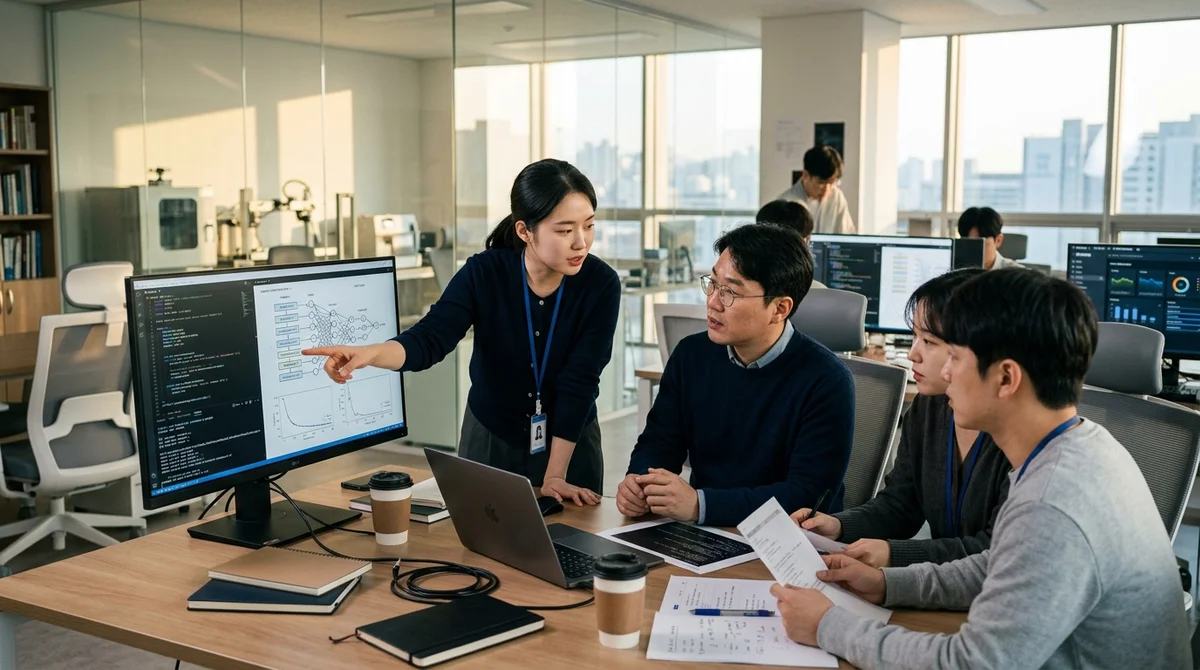
The US has restricted foreign companies' access to Anthropic's most advanced technology. For South Korea, this is more than news: it is a practical argument for building a national sovereign AI that does not depend on decisions made in Washington.
What happened with Anthropic
Under a directive from the American government, foreign players have been restricted from accessing Anthropic's most advanced developments. Anthropic is the company behind the Claude family of models. Official details of the restrictions have not been disclosed, but the signal is clear: geopolitics increasingly determines who can use advanced AI, and on what terms.
This fits a broader trend. The US has already restricted exports of advanced NVIDIA chips to a number of countries, tightened rules on technology partnerships, and added companies to sanctions lists over ties to state structures. The Anthropic restrictions are another link in the same chain: AI is becoming a strategic asset, and Washington is steadily taking control of its distribution.
South Korea is among the countries that felt the consequences directly. Local companies that have deeply integrated Western AI platforms into their products and corporate processes face a real risk of losing access to tools that have become part of their daily work.
The Upstage CEO's response
Kim Sung-hoon, CEO of Upstage, one of Korea's leading AI startups, told Bloomberg bluntly that the American restrictions on Anthropic show why the country critically needs its own artificial intelligence.
"Sovereign AI is a matter of national strategy, not just technological ambition,"
Kim Sung-hoon said in an interview with Bloomberg.
Upstage develops enterprise language models aimed primarily at the Asian market. Its flagship model, Solar, is tuned specifically for Korean, Japanese and other regional languages, where Western systems have historically performed poorly. The company positions itself as a practical alternative to American platforms for businesses that want to avoid dependence on foreign suppliers and on Washington's export decisions.
Why sovereign AI is becoming a priority
The arguments for national AI systems have been around for a while, but now they have a concrete precedent. The key reasons countries are accelerating work in this area:
- Protection from export controls — homegrown systems do not depend on the decisions of foreign governments
- Data localization — sensitive information stays within national jurisdiction
- Language adaptation — regional languages need specialized tuning, which global models provide only partially
- Geopolitical resilience — a country does not lose its AI infrastructure if international relations worsen
- Economic sovereignty — investment stays in the country instead of flowing out as subscriptions to foreign platforms
South Korea is not alone in moving this way. France actively backs Mistral, China is betting on DeepSeek and Qwen, and the UAE is developing Falcon. Now the strategic arguments have been joined by an uncomfortable practical one: the American restrictions are already in effect, and they can affect any country.
What this means
The Anthropic case is not a one-off incident but part of a systemic trend. When access to advanced AI becomes a geopolitical lever, countries without their own systems end up in a vulnerable position. For Korean, European and other technology companies, the conclusion is clear: investing in sovereign AI today is insurance against technological dependence and possible blocking tomorrow.
- Nov 1, 2026OpenAI Rewrites GPT Behavior Rules: Five Values and a Chain of Command
- Nov 1, 2026Google admits AI Mode cuts search revenue, shares fall 15%
- Oct 31, 2026Author puts his script before an AI jury: the verdict cost 850 thousand tokens
- Oct 31, 2026Anthropic: Fold Subagents Back Into a Single Loop — One Customer's Tasks Ran Twice as Fast
Key Questions Answered
What happened with Anthropic?
Under a directive from the American government, foreign players have been restricted from accessing Anthropic's most advanced developments. Anthropic is the company behind the Claude family of models. Official details of the restrictions have not been disclosed, but the signal is clear: geopolitics increasingly determines who can use advanced AI, and on what terms. This fits a broader trend. The US has already restricted exports of advanced NVIDIA chips to a number of countries, tightened rules on technology partnerships, and added companies to sanctions lists over ties to
What are the key details on The Upstage CEO's response?
Kim Sung-hoon, CEO of Upstage, one of Korea's leading AI startups, told Bloomberg bluntly that the American restrictions on Anthropic show why the country critically needs its own artificial intelligence. "Sovereign AI is a matter of national strategy, not just technological ambition," Kim Sung-hoon said in an interview with Bloomberg. Upstage develops enterprise language models aimed primarily at the Asian market. Its flagship model, Solar, is tuned specifically for Korean, Japanese and other regional languages, where Western systems have historically performed poorly. The
Why sovereign AI is becoming a priority?
The arguments for national AI systems have been around for a while, but now they have a concrete precedent. The key reasons countries are accelerating work in this area: Protection from export controls — homegrown systems do not depend on the decisions of foreign governments Data localization — sensitive information stays within national jurisdiction Language adaptation — regional languages need specialized tuning, which global models provide only partially Geopolitical resilience — a country does not lose its AI infrastructure if international relations worsen Economic sov
Test Frontier LLMs & Autonomous Agents in One Workspace
Run Claude Opus 5.5, GPT-6, Gemini 3.1, and DeepSeek side-by-side in Nomad AI (nomadnet.ai) — unified model routing, deep research, and multimodal workflows under one subscription.
The AI world, distilled — once a week
Seven stories that actually mattered, hand-picked. No noise, no reposts, no press releases.
Done! Check your inbox for a confirmation.