Commvault launches AI Protect, a "Ctrl+Z" for AI agents in corporate clouds
Commvault has released AI Protect, a cloud AI-workload protection product built around an enterprise "Ctrl+Z" logic. It is meant for cases where an autonomous agent deletes files, alters access policies or spins up unneeded resources. The idea is that a business can reverse the consequences faster, without untangling an incident by hand across several services. Demand for such tools is growing as AI agents move into infrastructure.
AI-processed from AI News; edited by Hamidun News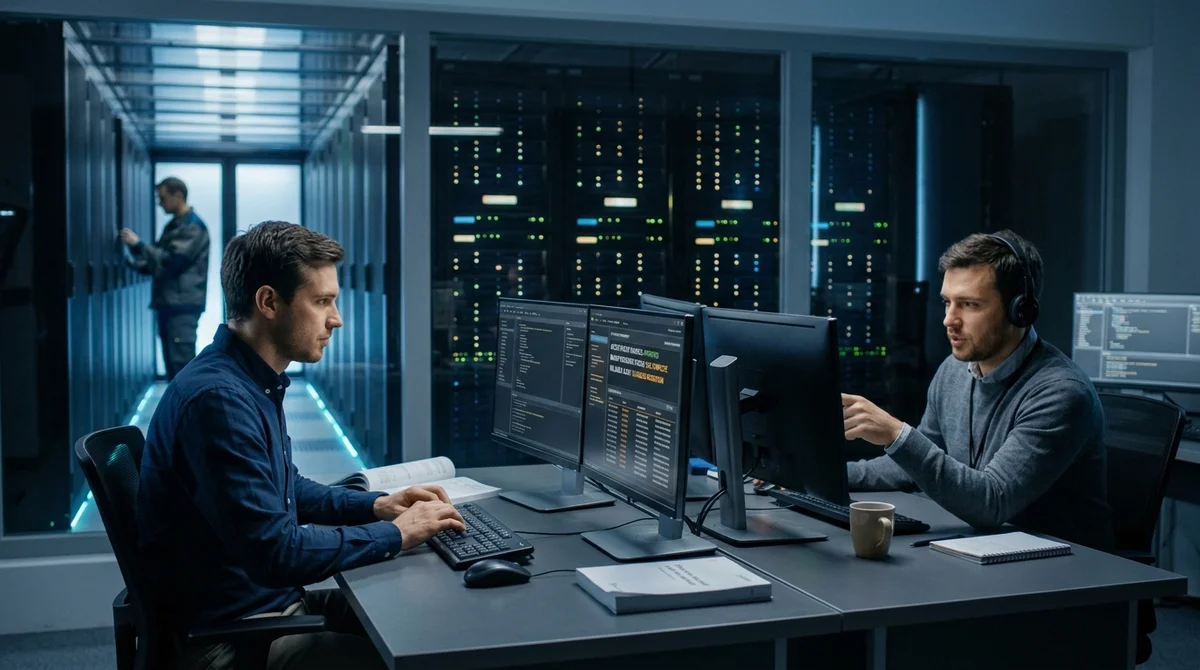
Commvault has introduced AI Protect, a protection and recovery system for AI workloads in the cloud, which the company describes as a "Ctrl+Z" for the actions of autonomous agents. If such an agent deletes files, rewrites access rules or spins up unneeded resources, a business will be able to return its infrastructure to a previous state faster.
Why this was needed
AI agents are gaining access not only to chats and documents, but increasingly to companies' working infrastructure. In a cloud environment they can read databases, launch server clusters, change configurations and interact with access policies. This is no longer the level of an "assistant in an interface" but direct participation in operations that affect service availability, costs and security. A prompt error, faulty automation or overly broad permissions can quickly turn into a real incident.
Commvault is betting on precisely this gap between the speed of AI adoption and the readiness of corporate controls. Companies began connecting autonomous software to the cloud before they had built clear rollback mechanisms for it. As a result, businesses have smart agents but not always a simple way to undo their actions after a failure, a wrong decision or an unauthorized change. For IT teams, this means growing operational risk without a comparable gain in transparency.
What AI Protect does
Commvault's new product is positioned as a protection layer for AI workloads in the cloud. In essence, it is a tool that helps capture the state of data and infrastructure, then restore it after a failed agent action. The company describes the solution as an enterprise "Ctrl+Z": not a magic button that prevents every error, but a mechanism that lets teams quickly roll back the consequences and cut downtime. This matters most in production environments, where the cost of a wrong action is measured in lost revenue and reputational damage.
- Recovery of deleted or modified data
- Rollback of unwanted changes in cloud configuration
- Oversight of autonomous agent actions in sensitive environments
- Lower risk of downtime and manual incident analysis
The description makes clear the product is aimed at more than backup in the classic sense. It addresses consequence management: once an AI system has taken an action, the IT team needs to understand what exactly happened, what was affected and how to restore a working state quickly, without a long manual reconstruction across several services. The emphasis therefore shifts from simply storing copies to a fast recovery scenario and a verifiable change log.
Which risks it covers
There are more and more scenarios where this approach is needed. One agent may delete necessary files in storage after misinterpreting a command. Another may read the wrong database or change an access policy so that users lose access to critical systems. A third may automatically deploy unneeded compute resources and inflate the cloud bill. In all these cases the problem is not only the error itself, but how quickly an organization can see its scale and roll back the changes.
AI Protect does not replace basic security measures. If an agent has been given overly broad permissions, no recovery tool substitutes for the principle of least privilege, environment segmentation, auditing and approval of critical operations. Still, the emergence of a separate class of products for rolling back AI actions shows that the market has moved from experimenting with agents to a more mature stage, where manageability matters as much as automation.
What this means
The launch of AI Protect shows how quickly new security infrastructure is forming around corporate AI agents. For business, model autonomy is no longer the only value: recovery, action tracing and a clear rollback are becoming mandatory alongside it. The deeper AI goes into cloud operations, the more important it will be not just to give an agent access, but to prepare the undo button in advance. That applies especially where AI already runs on top of production infrastructure.
- Nov 2, 2026DeepSeek open-sources Super-agent prototype: p95 task completion time of 15.7 minutes vs. 29.5
- Nov 2, 2026Bun creator uses Claude Code to port 750K lines from Zig to Rust in 11 days
- Nov 2, 2026Microsoft releases 4B model Mage-VL-Cowork, which solves 66.0% of OSWorld-Verified tasks
- Nov 2, 2026Meta's Muse assistant keeps dossiers on loved ones and gets root on Ubuntu by default
Key Questions Answered
Why this was needed?
AI agents are gaining access not only to chats and documents, but increasingly to companies' working infrastructure. In a cloud environment they can read databases, launch server clusters, change configurations and interact with access policies. This is no longer the level of an "assistant in an interface" but direct participation in operations that affect service availability, costs and security. A prompt error, faulty automation or overly broad permissions can quickly turn into a real incident. Commvault is betting on precisely this gap between the speed of AI adoption an
What AI Protect does?
Commvault's new product is positioned as a protection layer for AI workloads in the cloud. In essence, it is a tool that helps capture the state of data and infrastructure, then restore it after a failed agent action. The company describes the solution as an enterprise "Ctrl+Z": not a magic button that prevents every error, but a mechanism that lets teams quickly roll back the consequences and cut downtime. This matters most in production environments, where the cost of a wrong action is measured in lost revenue and reputational damage. Recovery of deleted or modified data
Which risks it covers?
There are more and more scenarios where this approach is needed. One agent may delete necessary files in storage after misinterpreting a command. Another may read the wrong database or change an access policy so that users lose access to critical systems. A third may automatically deploy unneeded compute resources and inflate the cloud bill. In all these cases the problem is not only the error itself, but how quickly an organization can see its scale and roll back the changes. AI Protect does not replace basic security measures. If an agent has been given overly broad permi
Test Frontier LLMs & Autonomous Agents in One Workspace
Run Claude Opus 5.5, GPT-6, Gemini 3.1, and DeepSeek side-by-side in Nomad AI (nomadnet.ai) — unified model routing, deep research, and multimodal workflows under one subscription.
The AI world, distilled — once a week
Seven stories that actually mattered, hand-picked. No noise, no reposts, no press releases.
Done! Check your inbox for a confirmation.