Jean-Michel Jarre urges the music and film industries to stop fearing AI
Jean-Michel Jarre is pushing back against the panic over AI in music and film. The electronic music pioneer argues that both industries are too conservative and are missing the moment: artists will use artificial intelligence not to copy the past, but to create "the cinema, hip-hop, techno and rock 'n' roll of tomorrow." His stance sharply diverges from the caution shown by some stars and rights holders.
AI-processed from Guardian; edited by Hamidun News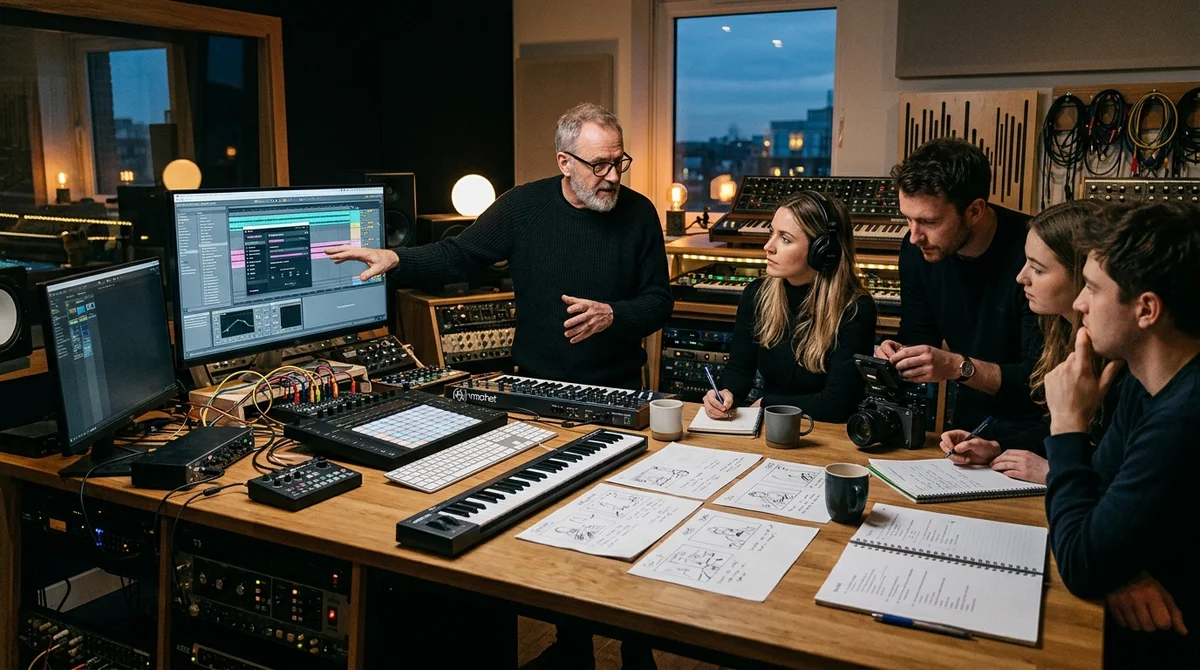
Jean-Michel Jarre has called on the music and film industries to stop treating AI as a threat and start working with it as a new creative tool. According to the electronic music pioneer, artists, not fear of the technology, will decide what the next era of art looks like.
A call without panic
The French musician criticized the conservatism of the music and film business when it comes to artificial intelligence. In his view, the industries have spent too long looking at AI through the language of bans, risks and defense, instead of figuring out how to build it into the actual creative process. Jarre says plainly that the sector is reacting nervously to change and has largely taken a "very anti-AI" position. For an artist whose career has been tied to the history of electronic music since the 1970s, this debate looks less like an exception and more like another technological turning point.
His position also matters because it doesn't come from a startup evangelist or a platform manager, but from a musician for whom technology has long been part of the artistic language. Jarre isn't calling for humans to be removed from the process, and he doesn't describe AI as an automated hit factory. His argument is simpler: new tools almost always provoke fear at first and then become the norm. In that sense, he suggests viewing artificial intelligence not as a replacement for the creator, but as an environment for the next round of experimentation in music and film.
A debate inside the industry
Jarre's comments contrast sharply with the mood among some artists who are far more cautious about AI. His position stands in opposition to concerns voiced publicly by, among others, Elton John and Dua Lipa. The gap makes it clear that the creative industries currently have no shared consensus: for some, AI threatens authorship and the market; for others, it's a new toolkit that has yet to be mastered.
Jarre himself believes the panic obscures the main point: artists will start using these systems anyway, to create new forms rather than simply copy old ones. He describes AI not as a nostalgia machine but as a driver of cultural change that will be visible in both music and film. By his logic, the question is no longer whether to let the technology on set, but who will learn to work with it first and set the aesthetic rules.
"AI will be used to create the cinema of tomorrow, the hip-hop of
tomorrow, the techno of tomorrow and the rock 'n' roll of tomorrow."
The emphasis in that phrasing is what matters. This isn't about artificial intelligence improving existing studio pipelines by a few percent over the next few years. Jarre is talking about the emergence of things that don't exist yet: new sonic aesthetics, new screen forms and new ways of combining human intuition with computational tools in practice. The debate is no longer about optimization, but about the cultural right to stake out the territory of the future first.
Where he sees potential
Following Jarre's logic, AI is interesting not only to major studios but also to creators themselves, who are looking for faster, more flexible ways to test ideas in their everyday work. In music, that could mean faster sketching, working with unusual structures and new sound design methods. In film, it could mean cheaper pre-production scenarios, testing visual approaches, and hybrid formats that blend music video, film and generative media.
- Fast creative prototypes without a long studio cycle
- New genre blends across music, video and performance
- More opportunities for independent creators and small teams
- A shift in the artist's role from performer to director of the process
The debate around AI isn't going away, though. The deeper the technology moves into music and film, the tougher the questions will get about authorship, consent, licensing and the line between inspiration and appropriation. But Jarre's point is a different one: if the industry focuses only on defending the old order, it risks ceding the initiative to those who are already experimenting and learning faster to speak the new visual and sonic language.
What it means
Jean-Michel Jarre's statement deepens the divide in the creative industries: the debate is no longer about whether AI will come to music and film, but about who will be first to turn it into a working artistic tool. For the market, it signals that the main conflict of the coming years will play out between defending the familiar model and fighting for new art forms.
- Nov 2, 2026The Verge reviewer builds a $50 Meta Muse Charm alternative with Claude Code
- Nov 2, 20268 Skills for video in Claude Code: from 244 pixel effects to rough-cut editing
- Nov 1, 2026Pika Labs releases open video model H3 Flex: 6 steps instead of 50
- Nov 1, 2026Google's StreamVibe video agent beats other models by 10.7% on response timing and quality
Key Questions Answered
What are the key details on A call without panic?
The French musician criticized the conservatism of the music and film business when it comes to artificial intelligence. In his view, the industries have spent too long looking at AI through the language of bans, risks and defense, instead of figuring out how to build it into the actual creative process. Jarre says plainly that the sector is reacting nervously to change and has largely taken a "very anti-AI" position. For an artist whose career has been tied to the history of electronic music since the 1970s, this debate looks less like an exception and more like another te
What are the key details on A debate inside the industry?
Jarre's comments contrast sharply with the mood among some artists who are far more cautious about AI. His position stands in opposition to concerns voiced publicly by, among others, Elton John and Dua Lipa. The gap makes it clear that the creative industries currently have no shared consensus: for some, AI threatens authorship and the market; for others, it's a new toolkit that has yet to be mastered. Jarre himself believes the panic obscures the main point: artists will start using these systems anyway, to create new forms rather than simply copy old ones. He describes AI
Where he sees potential?
Following Jarre's logic, AI is interesting not only to major studios but also to creators themselves, who are looking for faster, more flexible ways to test ideas in their everyday work. In music, that could mean faster sketching, working with unusual structures and new sound design methods. In film, it could mean cheaper pre-production scenarios, testing visual approaches, and hybrid formats that blend music video, film and generative media. Fast creative prototypes without a long studio cycle New genre blends across music, video and performance More opportunities for inde
Test Frontier LLMs & Autonomous Agents in One Workspace
Run Claude Opus 5.5, GPT-6, Gemini 3.1, and DeepSeek side-by-side in Nomad AI (nomadnet.ai) — unified model routing, deep research, and multimodal workflows under one subscription.
The AI world, distilled — once a week
Seven stories that actually mattered, hand-picked. No noise, no reposts, no press releases.
Done! Check your inbox for a confirmation.