Nvidia CEO Jensen Huang urges AI companies to stop scaring people with doomsday talk
At GTC 2026, Jensen Huang urged the AI industry to stop frightening people with catastrophe scenarios. In his words, AI models are not an "alien" but a tool, and the far greater danger is a paranoia that could slow technology adoption in the US. Amid Anthropic's dispute with the Pentagon, the Nvidia chief also unexpectedly backed the startup, suggesting its revenue could exceed $1 trillion by 2030.
AI-processed from 3DNews AI; edited by Hamidun News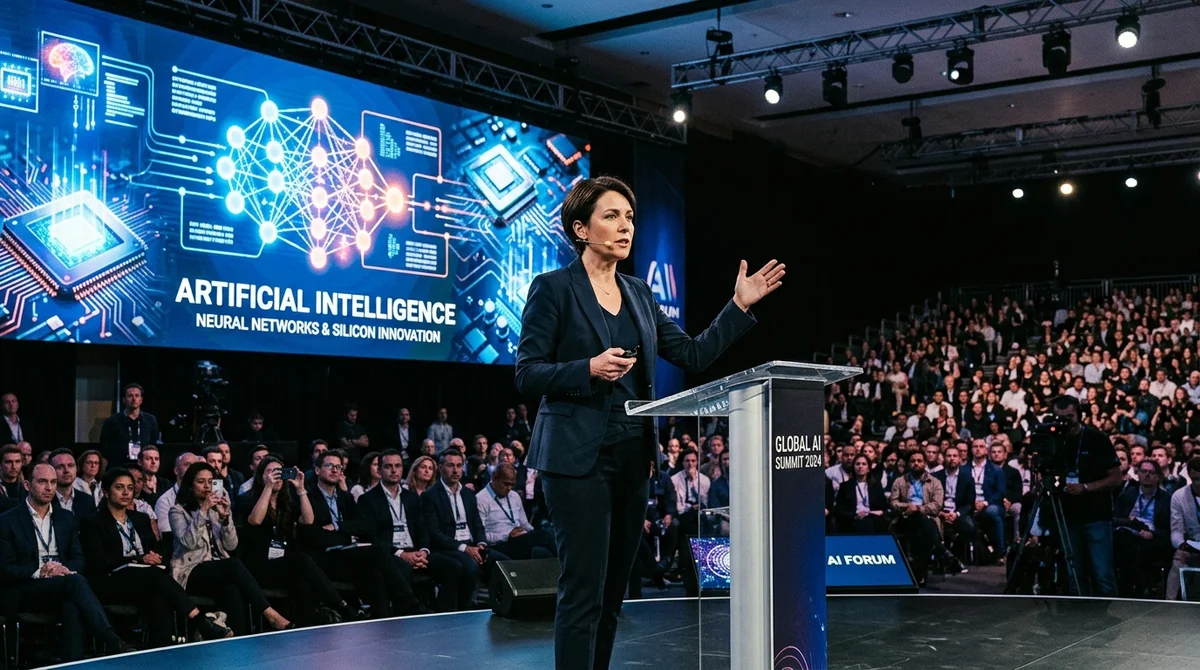
Nvidia CEO Jensen Huang has come out publicly against apocalyptic rhetoric around AI. At the GTC 2026 conference, he said tech companies should warn about risks but should not turn the conversation about generative models into horror stories, especially amid the conflict between Anthropic and the Pentagon.
Why Huang stepped in
The trigger was a drawn-out dispute over how to use AI safely and ethically in the military sphere. The Anthropic-Pentagon conflict has made the topic too loud for one of the biggest beneficiaries of the AI boom to ignore.
Huang did not argue that warning society about the technology's capabilities is useful. But, he said, there is a clear line between discussing risks and deliberately stoking fear, and it matters that the industry does not cross it.
According to Huang, the problem is no longer just how people feel about individual models, but how fear affects the pace of AI adoption as a whole. He tied this directly to US national security: if the country fears the new technology more than it embraces it, it risks slowing itself down in the face of global competition. In this logic, the harm may come less from AI itself than from the panic surrounding it.
"It's not an alien.
It has no consciousness. It's a computer program."
Where the line falls
Huang is effectively proposing a more pragmatic vocabulary for talking about AI. He does not dismiss safety questions and does not mock those who discuss limits on generative models. His point is different: when AI company leaders describe the technology as something almost alive, uncontrollable and catastrophic, it distorts the real picture. In his view, extreme scenarios with no clear basis can harm society and the industry more than is commonly assumed.
- Warning about risks is fine
- Scaring people with apocalyptic scenarios is already harmful
- AI, according to Huang, is not a "biological" entity
- Today's systems have no consciousness or will of their own
- Catastrophic rhetoric can slow technology adoption
Notably, Huang did not attack Anthropic despite its public conflict with US authorities. On the contrary, he suggested the company would be fine financially even if the dispute with the defense department drags on. What's more, the Nvidia chief said Anthropic's revenue could exceed $1 trillion by 2030, and he considers Dario Amodei's forecasts on this front too cautious. To an outside observer, this sounds like criticism of the rhetoric, not a loss of faith in the business itself.
Taiwan and chips
Huang did not stop there and moved the conversation from AI ethics to geopolitics. He urged the US not to push China toward seizing Taiwan and to act with more restraint. For the Nvidia chief this is not an abstract issue: Taiwan remains a key node of the global semiconductor chain, so any escalation around the island hits not only regional security but the entire AI industry. In his framing, it is better to reduce tension than to create new triggers for a crisis.
At the same time, Huang argued that dependence on Taiwan should gradually decline by expanding advanced chip production in the US, Japan and South Korea. But this did not come across as a call to turn away from the island. On the contrary, he stressed that Taiwan's chipmaking expertise deserves friendship and support. In essence, his position boils down to two points: do not stoke fears about AI, and in parallel build more resilient infrastructure for the whole industry faster.
What this means
Huang's statement shows that the AI debate is moving beyond the familiar "accelerate or brake" standoff. Model safety, military contracts, US-China competition and the vulnerability of chip supply chains now sit in the same conversation. For the market, this is a signal: the tone of the AI discussion is becoming as important a factor as the models and hardware themselves.
- Nov 2, 2026TensorFold 1.2.0 boosts Qwen3.8-27B throughput on M3 Ultra by 44.2% at 16 streams
- Nov 1, 2026Local models lose to Opus and Codex: 0.21 on a MacBook versus 1.00 for Codex
- Nov 1, 2026Habr author fine-tunes YOLOv8l on dental X-rays and pushes mAP50 to 0.642
- Nov 1, 2026Voice bots built on LLMs turn to Jev, a fast classifier, for decisions in 200–500 ms
Key Questions Answered
Why Huang stepped in?
The trigger was a drawn-out dispute over how to use AI safely and ethically in the military sphere. The Anthropic-Pentagon conflict has made the topic too loud for one of the biggest beneficiaries of the AI boom to ignore. Huang did not argue that warning society about the technology's capabilities is useful. But, he said, there is a clear line between discussing risks and deliberately stoking fear, and it matters that the industry does not cross it. According to Huang, the problem is no longer just how people feel about individual models, but how fear affects the pace of A
Where the line falls?
Huang is effectively proposing a more pragmatic vocabulary for talking about AI. He does not dismiss safety questions and does not mock those who discuss limits on generative models. His point is different: when AI company leaders describe the technology as something almost alive, uncontrollable and catastrophic, it distorts the real picture. In his view, extreme scenarios with no clear basis can harm society and the industry more than is commonly assumed. Warning about risks is fine Scaring people with apocalyptic scenarios is already harmful AI, according to Huang, is not
What are the key details on Taiwan and chips?
Huang did not stop there and moved the conversation from AI ethics to geopolitics. He urged the US not to push China toward seizing Taiwan and to act with more restraint. For the Nvidia chief this is not an abstract issue: Taiwan remains a key node of the global semiconductor chain, so any escalation around the island hits not only regional security but the entire AI industry. In his framing, it is better to reduce tension than to create new triggers for a crisis. At the same time, Huang argued that dependence on Taiwan should gradually decline by expanding advanced chip pr
Test Frontier LLMs & Autonomous Agents in One Workspace
Run Claude Opus 5.5, GPT-6, Gemini 3.1, and DeepSeek side-by-side in Nomad AI (nomadnet.ai) — unified model routing, deep research, and multimodal workflows under one subscription.
The AI world, distilled — once a week
Seven stories that actually mattered, hand-picked. No noise, no reposts, no press releases.
Done! Check your inbox for a confirmation.