Data Science in Digital Manufacturing: How Plants Collect Data and Cut Defects
Factories accumulate huge volumes of data, but real value appears only where that data can be linked and analyzed. In digital manufacturing, Data Science helps automate quality control, predict equipment failures and trace the causes of defects where design, process engineering and operation meet. The main challenge today is not the algorithms but data quality and infrastructure readiness.
AI-processed from Habr AI; edited by Hamidun News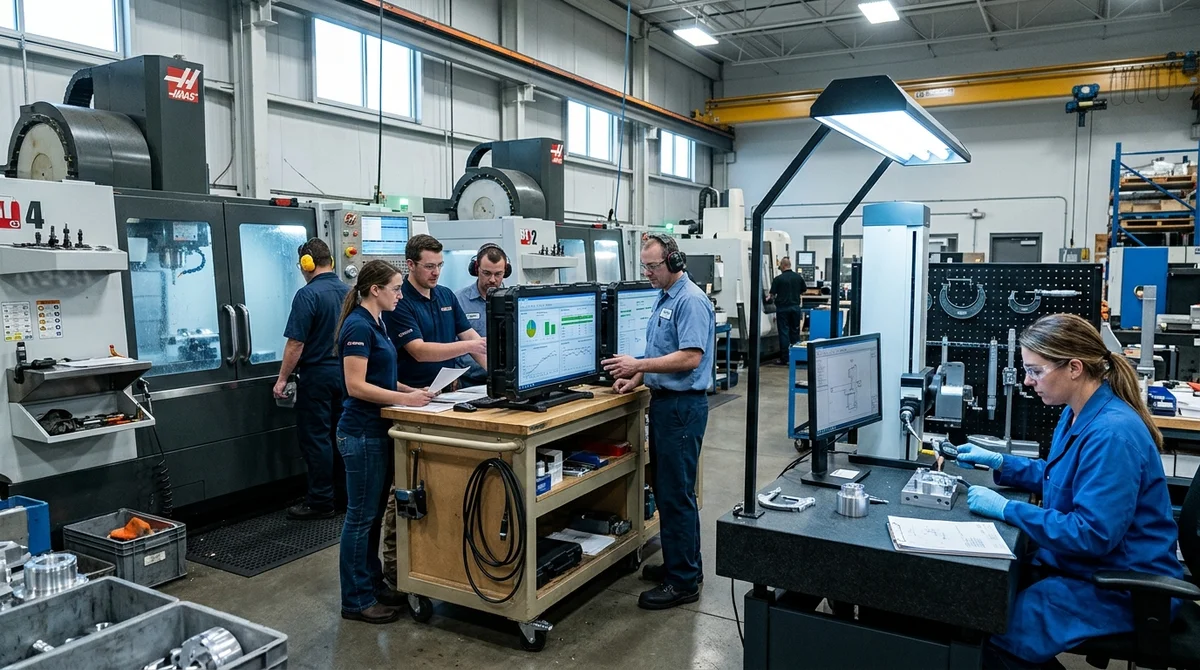
Factories have long generated more data than they can use. A new analysis of digital manufacturing shows why Data Science is becoming the connective layer between a product's digital thread, product quality and decisions on the factory floor.
How digital manufacturing works
Digital manufacturing is not just shop-floor automation. It is an attempt to bring everything that happens to a product, from design to disposal, into a single environment. That chain includes design models, calculations, process planning, procurement, machine data, measurement results, testing, logistics and operation.
If these data sets exist separately from one another, the company ends up with archives and reports. If they are linked, a digital thread emerges: an end-to-end structure in which you can quickly find the data you need and understand how one decision affects the next.
This foundation gives rise to the digital twin, a virtual representation of a specific product that evolves along with it. At first its core may be a 3D model. Calculation results, manufacturing parameters, quality control, metrology, testing and real operating data are then added to it.
This approach solves an old manufacturing problem: information about how a part actually behaves is lost after release and almost never returns to the engineering loop. The more complete the twin, the more precisely engineers can compare design intent with the real result.
Where Data Science helps
Classical analytics works well when data is already organized into tables and the question is clear in advance. In manufacturing, however, the causes of defects, failures and losses are often spread across different stages of a product's life cycle. A single defect can depend on the material batch, the processing mode, tool condition, end-of-line measurements and operating conditions all at once.
This is where Data Science has the edge: it can work with time series, event logs, images, text documents and data streams from equipment, and then look for hidden patterns in them.
- Automates visual quality inspection with computer vision
- Matches calculations, tests and the product's actual parameters
- Predicts equipment failures and reduces unplanned downtime
- Helps tune process modes for quality and unit cost
- Detects anomalies before deviations turn into mass defects
The practical effect of such systems is fairly direct: fewer manual checks, more repeatable quality, faster root-cause analysis of nonconformities and fewer decisions made by eye. The accumulated data can also serve more complex scenarios, from semantic search across engineering documentation to generative design and ML models that link the decisions of designers, process engineers and operations. For companies with long product life cycles this matters especially, because the value of historical data grows with every new stage.
What holds back adoption
Even at large companies, digital manufacturing often remains a set of disconnected initiatives. Some already have a PDM or PLM system, electronic document management, 3D models and individual elements of a digital twin, but no full digital thread.
The main problem is not a lack of fashionable algorithms but basic data readiness. Data may be incomplete, noisy and unlabeled, stored in different systems, with no unified process for collection, cleaning and use. In such an environment even a strong ML team quickly runs into infrastructure limits.
There is also an organizational barrier. Moving to digital manufacturing requires spending on storage, integrations, sensors, employee training and restructuring internal processes. Returns do not always come quickly: management wants clear cases in which big data has already cut costs, reduced downtime or improved product quality. Without such proof, projects easily stay pilots.
So progress here depends not only on technology but on whether companies can turn data into a regular management tool rather than a showcase of digitalization.
What this means
For industry, Data Science is ceasing to be optional analytics attached to the IT department and is becoming part of the production system. The winners will not be the companies that simply collect more data, but those that can link design, production, inspection and operation into one loop and make decisions based on that connectivity. That is where the real effect appears: fewer defects, less downtime and more predictable quality.
Key Questions Answered
How digital manufacturing works?
Digital manufacturing is not just shop-floor automation. It is an attempt to bring everything that happens to a product, from design to disposal, into a single environment. That chain includes design models, calculations, process planning, procurement, machine data, measurement results, testing, logistics and operation. If these data sets exist separately from one another, the company ends up with archives and reports. If they are linked, a digital thread emerges: an end-to-end structure in which you can quickly find the data you need and understand how one decision affects
Where Data Science helps?
Classical analytics works well when data is already organized into tables and the question is clear in advance. In manufacturing, however, the causes of defects, failures and losses are often spread across different stages of a product's life cycle. A single defect can depend on the material batch, the processing mode, tool condition, end-of-line measurements and operating conditions all at once. This is where Data Science has the edge: it can work with time series, event logs, images, text documents and data streams from equipment, and then look for hidden patterns in them
What holds back adoption?
Even at large companies, digital manufacturing often remains a set of disconnected initiatives. Some already have a PDM or PLM system, electronic document management, 3D models and individual elements of a digital twin, but no full digital thread. The main problem is not a lack of fashionable algorithms but basic data readiness. Data may be incomplete, noisy and unlabeled, stored in different systems, with no unified process for collection, cleaning and use. In such an environment even a strong ML team quickly runs into infrastructure limits. There is also an organizational
Ship AI Faster with Founders, Engineers & Weekly Architecture Reviews
Inside Vibe Club (hamidun.com/club) — weekly live masterminds with Zhemal Khamidun, Tech Radar, full LMS access, and 370+ production Claude Code skills.
The AI world, distilled — once a week
Seven stories that actually mattered, hand-picked. No noise, no reposts, no press releases.
Done! Check your inbox for a confirmation.