Pentagon may use AI chatbots to prioritize targets for military strikes
The Pentagon is open to using generative AI to rank military targets and recommend the order of strikes. As one official describes it, the system runs in a closed network: it analyzes a target list against the current situation, then hands its conclusions to humans for review. The disclosure is sharpening questions about Project Maven and about whether humans can realistically check AI recommendations in combat.
AI-processed from MIT Technology Review; edited by Hamidun News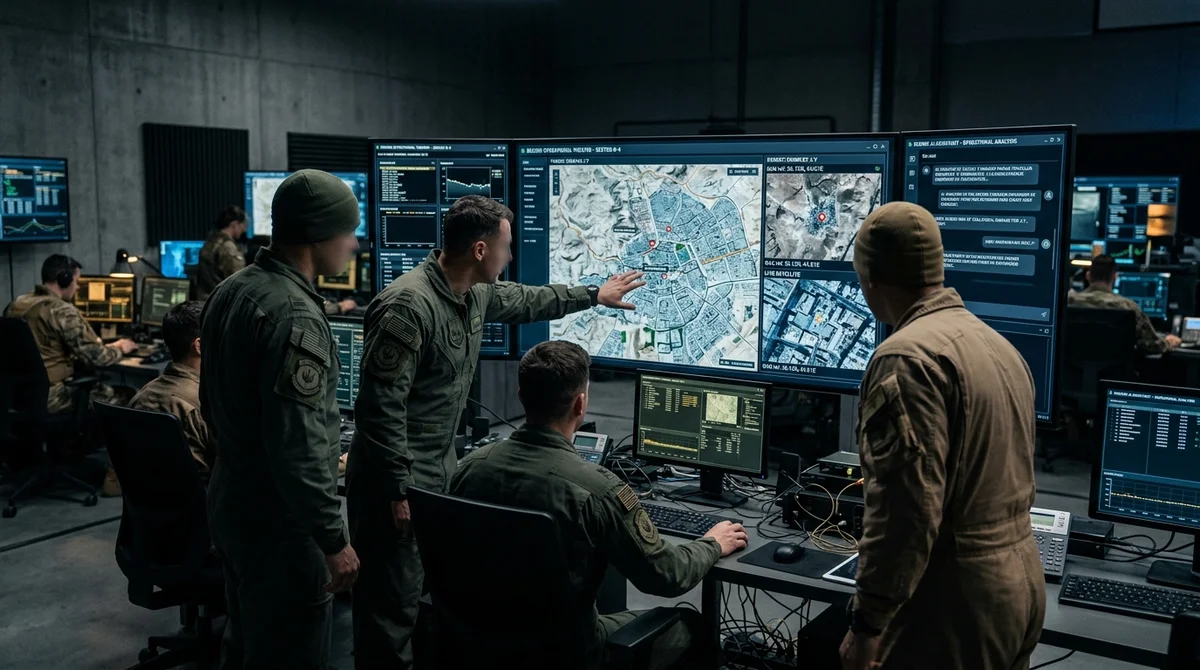
For the first time, the Pentagon has described fairly directly a scenario in which generative AI does more than help the military find data: it helps set priorities on a list of targets. On paper, a human still makes the final call. But chatbots are moving ever closer to deciding the order of strikes, and that sharply raises the stakes in the debate over military uses of AI.
How it might work
According to a US Department of Defense official familiar with the matter, the military can load a list of potential targets into a generative system running on a closed, classified network. An operator then asks the model to analyze the inputs and produce recommendations: which sites matter more, which can wait, and which targets make the most sense to strike first. The model weighs not only the targets themselves but also operational factors such as aircraft positions and the overall battlefield situation.
Crucially, the official described this as a possible working scenario but neither confirmed nor denied whether this exact setup is already in use in real operations. That leaves the key question unanswered: where exactly does the line fall today between analytical assistance and AI influence over decisions to use force? Officially, a human remains the final filter. But in wartime, what matters is not just who gets the last click, but who sets the sequence of actions.
The infrastructure behind it
The Pentagon already has the groundwork for this approach. Since 2017, the US military has used Project Maven, a system that helps analyze large volumes of intelligence, including drone video and satellite imagery, to find potential targets faster. It started mainly as a computer vision tool: the machine helps spot an object, and an operator then verifies it manually.
Now a conversational layer in the style of ChatGPT, Claude, or Grok may be added on top of that stack. The difference is fundamental. Previously, AI mostly found and flagged objects; now it can also explain, compare, rank, and recommend next steps in natural language. In theory, this speeds up the work of staff officers and analysts, especially when they face a large flow of data and a short window to respond.
In this setup, the model can:
- collect and summarize intelligence on multiple targets
- rank a list of sites by strike priority
- factor in context such as aircraft positions and resource availability
- suggest which target makes the most sense to act on first
- pass recommendations to humans, who are then supposed to review them
It also matters that OpenAI and xAI have already signed agreements allowing their models to be used in classified US Department of Defense environments. That does not prove their systems are already involved in combat targeting, but it shows how quickly the technical and contractual foundation for such scenarios is taking shape. Separately, other reports have linked military platforms to Claude, though the specific role of generative models in individual operations has not been publicly confirmed.
Why the debate has intensified
The approach came to light as the Pentagon was already under pressure over a strike on a girls' school in Minab, Iran. According to related reports, more than 100 children were killed, and a preliminary review pointed to a problem with outdated targeting data. Against that backdrop, any claim that AI merely helps humans sounds less like reassurance and more like an invitation to tougher questions.
The main one is simple: how real is human review if the system produces convincing answers in seconds and there is little time to double-check them? If an operator needs nearly as much time to independently verify the model's recommendations, the speed advantage shrinks. If people start trusting the system by default, the risk of error becomes systemic. That is especially dangerous for military decisions, because the cost of a hallucination or a wrong ranking is measured not in bug reports but in lives.
What it means
Generative AI is moving beyond office workflows and into the most sensitive part of the military machine: preparing decisions on the use of force. Even if a human formally stays "in the loop," the real question now is different: can that person actually verify the model's advice before it turns into a strike?
- Nov 1, 2026OpenAI Rewrites GPT Behavior Rules: Five Values and a Chain of Command
- Nov 1, 2026Google admits AI Mode cuts search revenue, shares fall 15%
- Oct 31, 2026Author puts his script before an AI jury: the verdict cost 850 thousand tokens
- Oct 31, 2026Anthropic: Fold Subagents Back Into a Single Loop — One Customer's Tasks Ran Twice as Fast
Key Questions Answered
How it might work?
According to a US Department of Defense official familiar with the matter, the military can load a list of potential targets into a generative system running on a closed, classified network. An operator then asks the model to analyze the inputs and produce recommendations: which sites matter more, which can wait, and which targets make the most sense to strike first. The model weighs not only the targets themselves but also operational factors such as aircraft positions and the overall battlefield situation. Crucially, the official described this as a possible working scena
What are the key details on The infrastructure behind it?
The Pentagon already has the groundwork for this approach. Since 2017, the US military has used Project Maven, a system that helps analyze large volumes of intelligence, including drone video and satellite imagery, to find potential targets faster. It started mainly as a computer vision tool: the machine helps spot an object, and an operator then verifies it manually. Now a conversational layer in the style of ChatGPT, Claude, or Grok may be added on top of that stack. The difference is fundamental. Previously, AI mostly found and flagged objects; now it can also explain, c
Why the debate has intensified?
The approach came to light as the Pentagon was already under pressure over a strike on a girls' school in Minab, Iran. According to related reports, more than 100 children were killed, and a preliminary review pointed to a problem with outdated targeting data. Against that backdrop, any claim that AI merely helps humans sounds less like reassurance and more like an invitation to tougher questions. The main one is simple: how real is human review if the system produces convincing answers in seconds and there is little time to double-check them? If an operator needs nearly as
Test Frontier LLMs & Autonomous Agents in One Workspace
Run Claude Opus 5.5, GPT-6, Gemini 3.1, and DeepSeek side-by-side in Nomad AI (nomadnet.ai) — unified model routing, deep research, and multimodal workflows under one subscription.
The AI world, distilled — once a week
Seven stories that actually mattered, hand-picked. No noise, no reposts, no press releases.
Done! Check your inbox for a confirmation.