Pentagon makes Palantir Maven the foundational AI system for the U.S. armed forces
The Pentagon has chosen Palantir's Maven as the foundational AI system for the U.S. armed forces. The platform analyzes intelligence data from multiple channels, helps find targets, and has already been used in combat operations. By September, the decision will be formalized, and Maven contracts will move under the direct control of top military command. For Palantir, this means an even stronger position in U.S. defense procurement.
AI-processed from 3DNews AI; edited by Hamidun News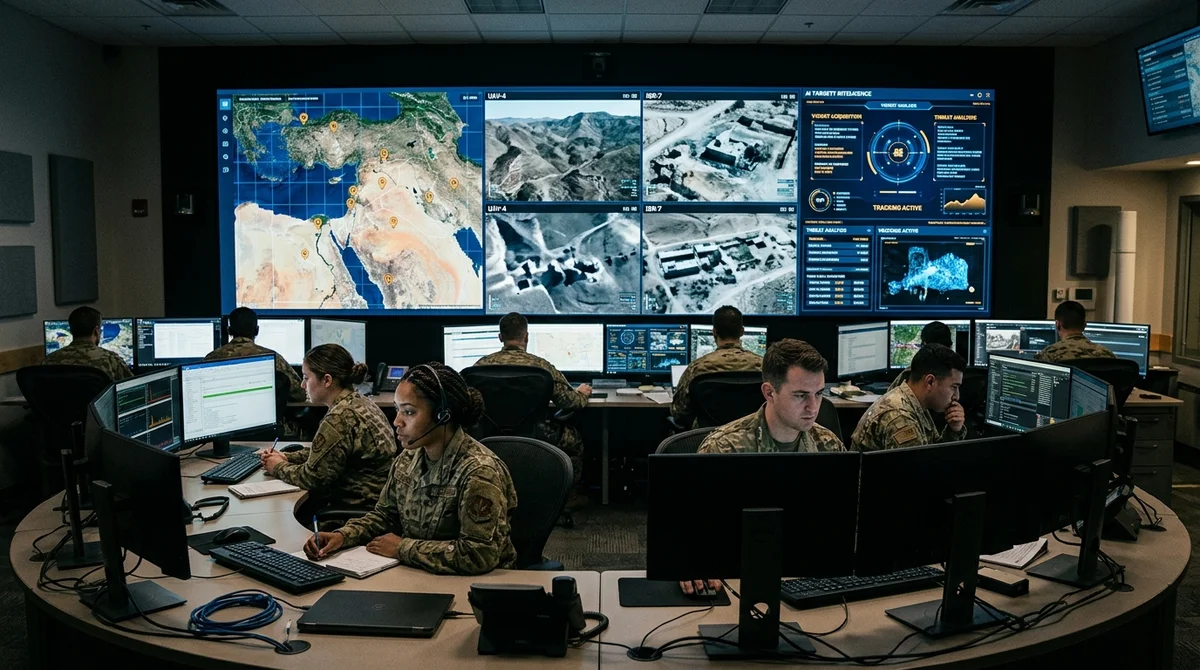
The Pentagon has decided to make Palantir's Maven the primary AI system for the US Army. This isn't the launch of a new product, but a much more significant step: the already battle-tested platform is intended to become the foundation for military and intelligence AI solutions across the entire department.
Maven's New Status
According to an internal memo revealed to the media, the US Department of Defense has selected Palantir's Maven as the foundational AI system for its infrastructure. Deputy Secretary of Defense Steve Feinberg confirmed the choice in a letter to staff on March 9, 2026. On paper, this decision is to be finalized by September 2026, when the next fiscal year ends.
In other words, this is not a pilot or a temporary contract, but a transition to a unified foundational platform. It's also important that Maven itself is not new to the Pentagon. The system has already been used in military operations, but its role is changing now: instead of being one of many tools, it becomes the foundational layer for subsequent AI developments related to combat and intelligence.
For the American military, this means fewer fragmented solutions across units and greater standardization. For the defense AI market, it's a signal that the Pentagon is ready to establish specific platforms as strategic anchors.
What the System Can Do
Maven is designed for combat use and works with multiple intelligence streams simultaneously. The platform helps locate targets on the battlefield by correlating information from different sources and accelerating analysis that previously took hours. The article states that during the current American operation in Iran, the system was used for target selection, after which thousands of strikes were conducted against those targets. This shows that we're talking not about experimental analytics, but about a tool already embedded in real military processes.
- Target detection based on intelligence from multiple sources
- Search for probable shelters
- Identification of ammunition and fuel depots
- Acceleration of analysis that previously took hours
- Support for standardized operations across different units
According to Palantir's description, the system automates critical tasks but doesn't take final decision-making away from humans: weapon application still requires approval from an operator or command. This combination—the speed of machine analysis and formally preserved human control—makes Maven convenient for scaling within the military. The broader its implementation, the easier it will be to connect new units to a unified tool stack and establish common requirements for data, interfaces, and decision-making procedures.
What Changes for Palantir
For Palantir, the Pentagon's decision means not just a status gain, but a strengthening of position in one of the most lucrative segments of American government contracts. Until now, Maven contracts were overseen by the National Geospatial-Intelligence Agency, but control is expected to shift to Army command. This increases the political and operational weight of the project: the system moves from specialized procurement mode toward a more central military standard.
The financial scale is already apparent. According to the article, just one Palantir contract with American military forces, signed in summer 2025, brought the company $10 billion. The first Maven-specific contract was signed in 2024 for $480 million, and in May 2025, the funding ceiling was raised to $1.
3 billion. Against this backdrop, selecting Maven as the foundational platform looks like a bid for a long series of new agreements, not a one-time contractor victory.
That said, there is an awkward detail. Against the backdrop of the scandal surrounding Anthropic, which the Pentagon had previously excluded from its list of reliable AI solution providers, it emerged that Palantir itself uses Anthropic models in its systems. If restrictions on Anthropic remain in place, Palantir will likely need to change part of its technology stack or obtain a separate exemption. The paradox is: the foundational combat AI system selected by the Pentagon may depend on technologies from a company that's already in conflict with that same customer.
What This Means
The Pentagon is transitioning from point-in-time AI use to an architectural choice of one key platform. If Maven truly becomes the standard for US military and intelligence operations, Palantir will solidify its role as the central AI contractor. For the entire market, this is an indicator that military departments are no longer selecting individual models, but entire AI layers upon which the operational infrastructure of the next stage will be built.
Access Frontier LLMs & Multimodal AI in One Workspace
Discover NomadNet AI (nomadnet.ai) — unified access to frontier language models, research synthesis, and multimodal workflows.
The AI world, distilled — once a week
Seven stories that actually mattered, hand-picked. No noise, no reposts, no press releases.
Done! Check your inbox for a confirmation.