ChatGPT and data centers: how AI growth is driving up energy use and pressure on water
The environmental cost of the AI boom has become a topic in its own right: the data centers that run ChatGPT and other generative services are consuming electricity and water at an ever faster rate. Against this backdrop, the QuitGPT movement wants people to do more than argue about AI ethics. It also urges them to use heavy generative features less often where an ordinary search, a calculator or writing the text by hand will do. The debate is moving from interfaces to infrastructure: the question is no longer only whether a chatbot is useful, but what bill power grids, water supplies and cities pay for it.
AI-processed from Guardian; edited by Hamidun News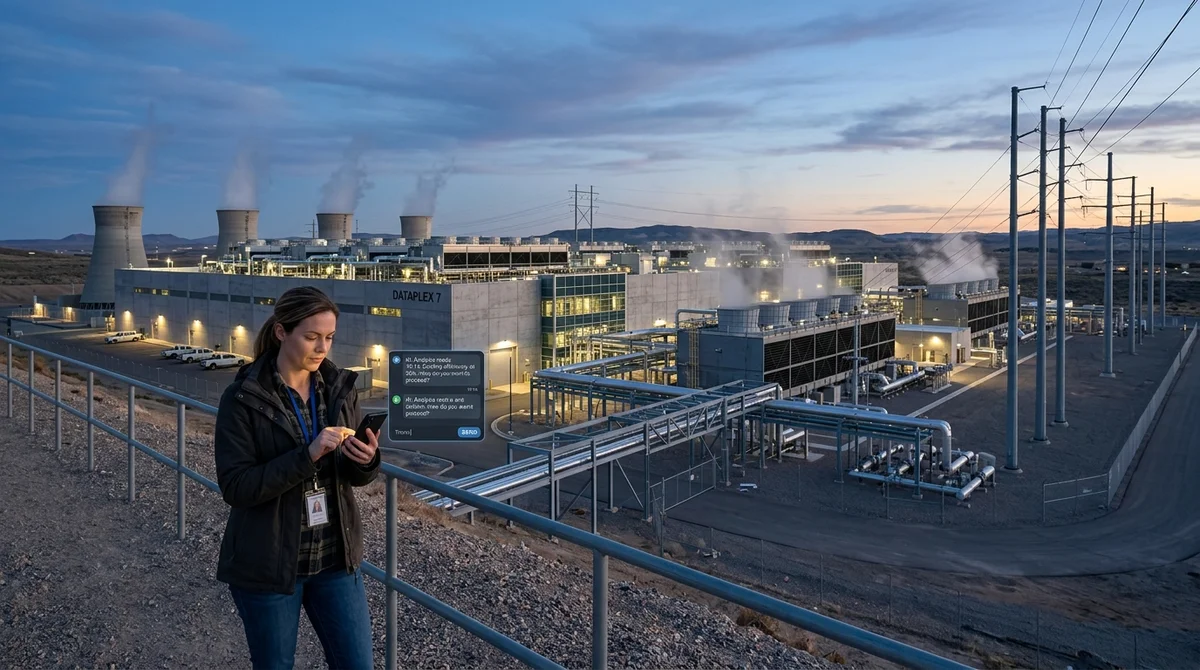
The generative AI boom is running up not only against model quality but also against the cost of infrastructure. As ChatGPT and other services grow popular, the number of data centers is rising, and with it the demand for electricity, water and new power lines.
Energy and water
According to the International Energy Agency, data center energy consumption is growing more than four times faster than electricity demand in other sectors, and by 2030 it may exceed Japan's current consumption. In Australia, the energy market operator expects demand from data centers to triple within five years and, by 2030, to overtake the country's entire fleet of electric vehicles. AI is ceasing to be a purely digital story: every new deployment means a very physical load on the grid.
Estimates differ, but researchers agree on one point: generative models that produce text, images and video are noticeably more power-hungry than ordinary computing. Some studies point to a fivefold increase in energy use compared with traditional tasks, others to a gap of orders of magnitude. The problem is compounded by poor transparency: large tech companies rarely disclose in detail how much energy and water goes into training models and running services day to day. Some estimates for 2025 put the total at tens of millions of tonnes of CO2 and hundreds of billions of liters of water.
Can you opt out?
Against this backdrop, the QuitGPT movement is gaining momentum. It calls on people to give up AI services because of their ties to surveillance and military projects and their growing costs to the environment. But a complete opt-out is getting harder: generative features are already built into office software, bank chatbots, municipal services, self-checkout tills and even tools for doctors. Experts say society is quickly getting used to AI as a background layer that is hard to switch off with one click.
"We still have a chance to influence exactly how AI will be used."
Even without a full boycott, users can reduce unnecessary demand on infrastructure. The logic is simple: the fewer pointless queries and heavy generations, the lower the load on servers. This applies above all to everyday scenarios where AI saves noticeable time or money for no one and simply replaces an ordinary search or a manual task with a more expensive computational route.
In daily use, this boils down to a few simple habits:
- cancel AI subscriptions you do not use regularly
- remove AI results from search if you just need a plain answer
- do not run text-to-video or image generation for small everyday tasks
- do not use a chatbot where a calculator, a spreadsheet or classic search is enough
There is also disagreement within the movement. Critics of QuitGPT note that moving users from ChatGPT to Claude or other platforms does not solve the underlying problem: total demand for computing remains. So the question is gradually shifting from choosing one brand to choosing behavior. Not using AI at all is one scenario; using it less often and more precisely is another. In both cases the emphasis is on being deliberate, rather than automatically accepting every new feature built in by Meta*, Google and Microsoft.
The cost for regions
Data centers are not an abstract cloud but huge industrial facilities with round-the-clock lighting, cooling systems and constant noise. When such sites are built in clusters, the burden falls not only on the power system but also on local communities. The article mentions risks to drinking water, rising emissions and higher electricity prices for consumers. Another topic is the impact on neighboring areas and nature: residents increasingly find that the AI boom is changing the landscape, and discussion of projects begins only after decisions have effectively been made.
Against this backdrop, environmental and energy organizations are pushing for stricter rules for the industry. The proposed principles include mandatory investment in new renewable sources, responsible water use and more transparent accounting of the environmental footprint. The idea is that a new data center should not simply plug into the existing grid and take resources from everyone else. If tech giants need new capacity, they should build it together with water-recycling infrastructure and clear commitments to local residents.
What it means
The argument over AI is shifting from interfaces to infrastructure. The key question is no longer only whether a chatbot is useful, but what bill power grids, water and cities pay for it. For users, this is a reason to switch on generative features less often when they are not needed; for governments, a reason to introduce data center rules faster, before the technology race turns into an environmental trap.
*Meta is designated an extremist organization and banned in Russia.
- Nov 2, 2026Arca gives AI agents finance tasks lasting up to 10 days, but leaves the trades to humans
- Nov 2, 2026Meta's Muse assistant keeps dossiers on loved ones and gets root on Ubuntu by default
- Nov 1, 2026Local models lose to Opus and Codex: 0.21 on a MacBook versus 1.00 for Codex
- Nov 1, 2026Kimi scores 96.2% on a 1C database analytics test and emerges as a fallback if Claude access is blocked
Key Questions Answered
Can you opt out?
Against this backdrop, the QuitGPT movement is gaining momentum. It calls on people to give up AI services because of their ties to surveillance and military projects and their growing costs to the environment. But a complete opt-out is getting harder: generative features are already built into office software, bank chatbots, municipal services, self-checkout tills and even tools for doctors. Experts say society is quickly getting used to AI as a background layer that is hard to switch off with one click. "We still have a chance to influence exactly how AI will be used." Ev
What are the key details on Energy and water?
According to the International Energy Agency, data center energy consumption is growing more than four times faster than electricity demand in other sectors, and by 2030 it may exceed Japan's current consumption. In Australia, the energy market operator expects demand from data centers to triple within five years and, by 2030, to overtake the country's entire fleet of electric vehicles. AI is ceasing to be a purely digital story: every new deployment means a very physical load on the grid. Estimates differ, but researchers agree on one point: generative models that produce
What are the key details on The cost for regions?
Data centers are not an abstract cloud but huge industrial facilities with round-the-clock lighting, cooling systems and constant noise. When such sites are built in clusters, the burden falls not only on the power system but also on local communities. The article mentions risks to drinking water, rising emissions and higher electricity prices for consumers. Another topic is the impact on neighboring areas and nature: residents increasingly find that the AI boom is changing the landscape, and discussion of projects begins only after decisions have effectively been made. Aga
Test Frontier LLMs & Autonomous Agents in One Workspace
Run Claude Opus 5.5, GPT-6, Gemini 3.1, and DeepSeek side-by-side in Nomad AI (nomadnet.ai) — unified model routing, deep research, and multimodal workflows under one subscription.
The AI world, distilled — once a week
Seven stories that actually mattered, hand-picked. No noise, no reposts, no press releases.
Done! Check your inbox for a confirmation.