Musk's case against OpenAI and Microsoft moves ahead, though the judge called his $134 billion figure pulled from thin air
Elon Musk's lawsuit against OpenAI and Microsoft goes on, with an important caveat: the judge found the $79–134 billion damages estimate too arbitrary. The claim was not thrown out entirely, though. A jury must now decide whether the demands have a real financial basis. For both sides, this is no longer a fight over headline numbers. It is a test of the evidence.
AI-processed from 3DNews AI; edited by Hamidun News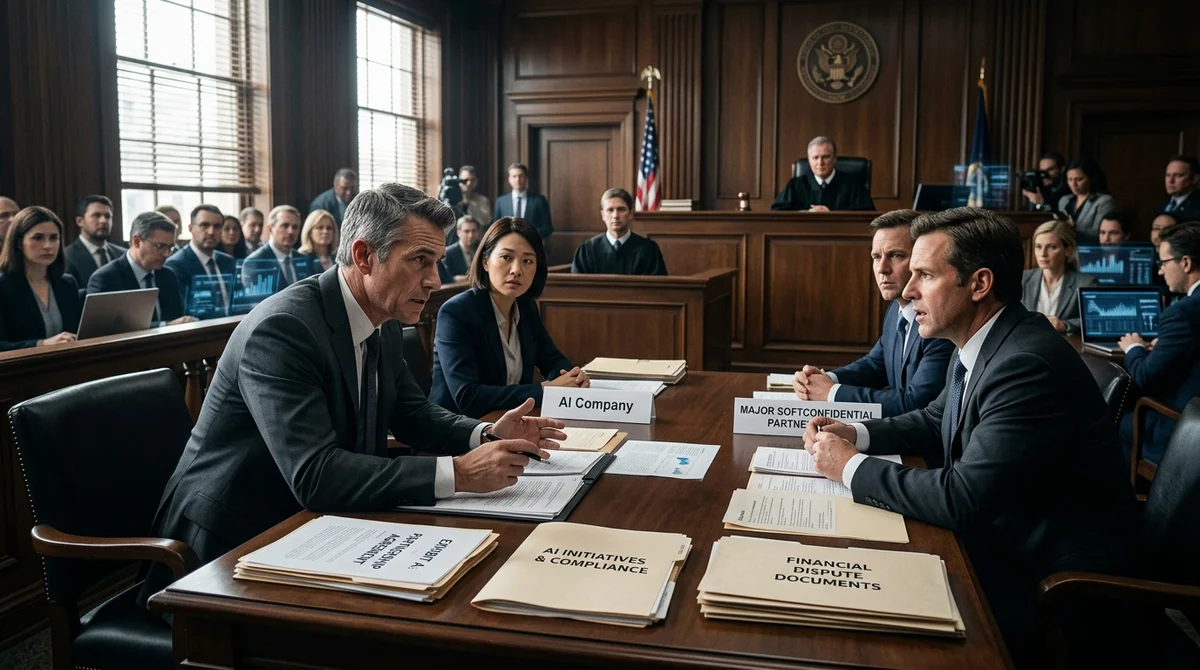
The court did not close Elon Musk's case against OpenAI and Microsoft, but it cast doubt on the central element of the suit: the size of the alleged damages. The judge called the $79–134 billion estimate too arbitrary, yet ruled that a jury should make the final assessment.
What the court decided
In January it emerged that Musk is seeking compensation from OpenAI and Microsoft in a range from $79 billion to $134 billion. The suit rests on the claim that OpenAI abandoned its original intention to build AI for the benefit of humanity and changed course as it grew closer to Microsoft.
At this stage, the court did not endorse the damages figure itself. The judge made clear that the calculation looks insufficiently convincing and does not rest on solid logic that could be accepted without questions right now.
The criticism of the amount matters, but so does what the judge did not do. She did not fully dismiss the claim. Instead, the question goes forward to further proceedings with a jury. That means the dispute is not reduced to a single headline number. The court effectively separated two things: how convincing the claimed amount of losses looks at present, and whether the conflict itself deserves full consideration. On the second point, the door remains open for Musk for now.
What Musk is claiming
The suit's logic is built around OpenAI's original mission. In Musk's version, the startup was created as a project with a more public-minded purpose and later shifted toward a different model after its alliance with Microsoft. The plaintiff is trying to turn exactly this pivot into a legally significant violation, one for which, he believes, both OpenAI itself and its key corporate partner should answer.
For a court at this level, general statements about the "right path" matter less than a concrete link between the companies' decisions and measurable harm.
- the subject of the dispute is the departure from the original idea of developing AI for the benefit of humanity
- a separate line of claims concerns the alliance between OpenAI and Microsoft
- the claimed compensation covers a very wide range, from $79 billion to $134 billion
- the court did not remove the question entirely, but made clear that one large figure in the complaint is not enough
So the key problem is not the emotional force of the accusation but whether it can be proven. In public, the thesis of a "betrayal of the mission" sounds loud, but in court it has to be broken down into clear elements: what exactly changed, who exactly benefited, who exactly was harmed, and how to calculate that harm in money. The weaker this chain, the easier it is for the defendants to show that this is more a dispute over principles and influence than a legally demonstrable loss.
Why the amount matters
In cases of this scale, the size of compensation is not just a detail but the center of gravity of the whole structure. When a judge says outright that a damages estimate looks "pulled from thin air," it hits trust in the calculation method and the overall impression of the plaintiff's position. For OpenAI and Microsoft, that wording is a strong argument that the opponent inflated the demands. For Musk, it is a signal that without a clearer explanation of where the figure comes from, convincing a jury will be noticeably harder.
"Pulled from thin air" is how the judge characterized the damages estimate.
From here, everything will depend on whether the plaintiff's side can turn the general conflict over OpenAI's mission into a coherent financial story. The jury will not debate the abstract philosophy of AI development. It must decide whether there is a causal link between the companies' actions and the claimed losses. In other words, the headline range of $79–134 billion no longer works as evidence on its own. It is now more of a weak point that will have to be justified anew.
What this means
The case shows that high-profile AI conflicts increasingly move from public statements into the territory of dull but decisive legal math. For the industry, this is an important signal: talk about mission, governance structure and alliances with big corporations can end not only in reputational disputes but in multibillion-dollar trials, where evidence quality decides, not rhetoric.
- Nov 1, 2026Local models lose to Opus and Codex: 0.21 on a MacBook versus 1.00 for Codex
- Nov 1, 2026Kimi scores 96.2% on a 1C database analytics test and emerges as a fallback if Claude access is blocked
- Nov 1, 2026OpenAI Rewrites GPT Behavior Rules: Five Values and a Chain of Command
- Nov 1, 2026Google admits AI Mode cuts search revenue, shares fall 15%
Key Questions Answered
What the court decided?
In January it emerged that Musk is seeking compensation from OpenAI and Microsoft in a range from $79 billion to $134 billion. The suit rests on the claim that OpenAI abandoned its original intention to build AI for the benefit of humanity and changed course as it grew closer to Microsoft. At this stage, the court did not endorse the damages figure itself. The judge made clear that the calculation looks insufficiently convincing and does not rest on solid logic that could be accepted without questions right now. The criticism of the amount matters, but so does what the judg
What Musk is claiming?
The suit's logic is built around OpenAI's original mission. In Musk's version, the startup was created as a project with a more public-minded purpose and later shifted toward a different model after its alliance with Microsoft. The plaintiff is trying to turn exactly this pivot into a legally significant violation, one for which, he believes, both OpenAI itself and its key corporate partner should answer. For a court at this level, general statements about the "right path" matter less than a concrete link between the companies' decisions and measurable harm. the subject of
Why the amount matters?
In cases of this scale, the size of compensation is not just a detail but the center of gravity of the whole structure. When a judge says outright that a damages estimate looks "pulled from thin air," it hits trust in the calculation method and the overall impression of the plaintiff's position. For OpenAI and Microsoft, that wording is a strong argument that the opponent inflated the demands. For Musk, it is a signal that without a clearer explanation of where the figure comes from, convincing a jury will be noticeably harder. "Pulled from thin air" is how the judge charac
Test Frontier LLMs & Autonomous Agents in One Workspace
Run Claude Opus 5.5, GPT-6, Gemini 3.1, and DeepSeek side-by-side in Nomad AI (nomadnet.ai) — unified model routing, deep research, and multimodal workflows under one subscription.
The AI world, distilled — once a week
Seven stories that actually mattered, hand-picked. No noise, no reposts, no press releases.
Done! Check your inbox for a confirmation.