Elon Musk and Sam Altman head to court as the fight over OpenAI's mission escalates
Elon Musk's lawsuit against Sam Altman, OpenAI, and Microsoft is going to trial in California. Musk argues that OpenAI abandoned its original nonprofit mission and became a commercial enterprise, breaking the agreements its founders made. Musk, Altman, and Microsoft CEO Satya Nadella are expected to testify. The trial could last up to three weeks and may become one of the highest-profile legal fights of the year.
AI-processed from Guardian; edited by Hamidun News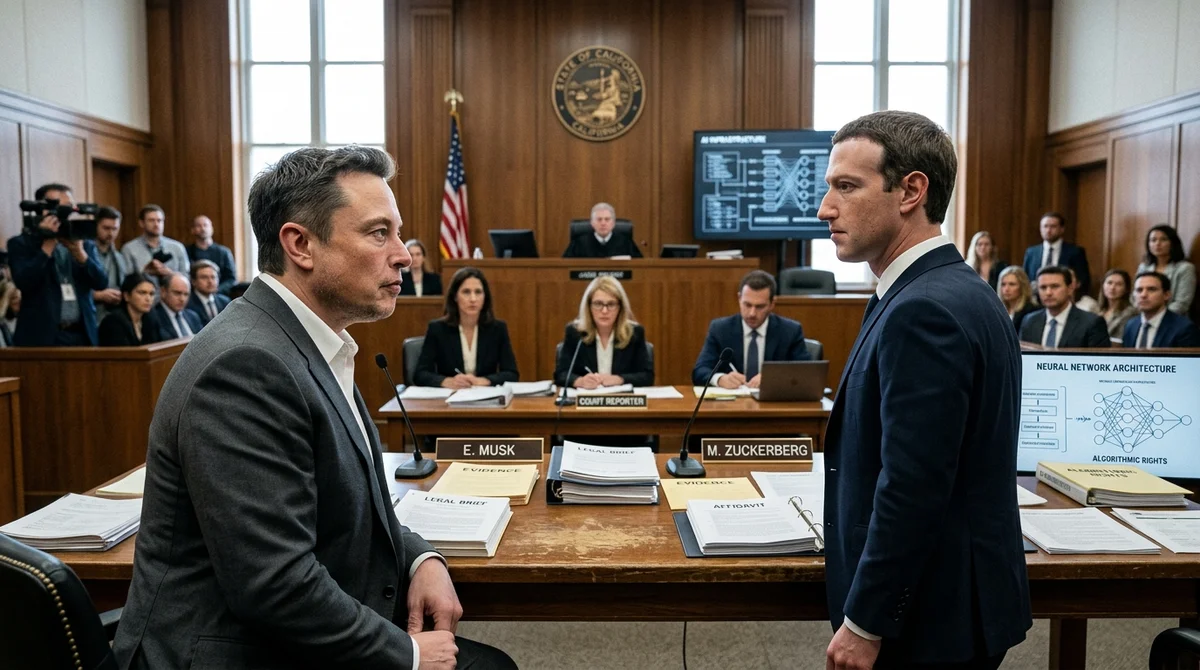
The legal fight between Elon Musk and Sam Altman is escalating: the question of why OpenAI was founded in the first place will now be argued in federal court in California. Musk claims the company broke with its original nonprofit mission and that OpenAI's structure drifted toward commercial interests over time. For the industry, this isn't simply a personal feud between two of Silicon Valley's most visible figures.
It's a public test of whether promises that AI will benefit everyone can coexist with big money, corporate alliances, and power struggles. Musk's lawsuit targets Altman, OpenAI itself, company president Greg Brockman, and Microsoft, which he sees as a key partner in the project's contested transformation. The case includes claims of breach of contract, fraud, and unjust enrichment.
In Musk's telling, the agreements OpenAI launched under envisioned a different development model and different priorities. The trial opens in federal court in Oakland: jury selection is scheduled for Monday, April 27, with opening statements expected later in the week. The proceedings are tentatively expected to take two to three weeks.
The stakes reach well beyond the formal claims. The court is expected to hear internal correspondence between Musk and OpenAI's top executives, which could show how each side understood the project's mission at the outset and when their positions finally split. Potential witnesses include Musk, Altman, and Microsoft CEO Satya Nadella.
That's why the case is already seen as a rare instance in which private discussions about power, strategy, and money inside the AI industry could become part of a public court record. For OpenAI, the risk is reputational damage; for Musk, it's a chance to cement his version of events in front of the market and regulators. OpenAI rejects the allegations and argues that Musk is motivated not by a defense of the original principles but by a personal conflict and jealousy over the company's success.
This line of defense matters as much as the legal arguments themselves: it shifts the dispute from corporate governance to motive. In other words, the court will have to weigh not only the documents and the wording of the early agreements, but also the context of a years-long feud between people who once helped build one of the world's most influential AI organizations. In that sense, the trial is almost certain to become a media event, with every new detail parsed not just by lawyers but by investors, competitors, and politicians.
Microsoft's role draws particular attention. Although the conflict's main public storyline centers on Musk and Altman, the involvement of OpenAI's biggest tech partner makes the dispute much broader than a private quarrel between former co-founders. If the hearings surface details about how influence is distributed, what commercial incentives are at play, and how decisions are actually made at OpenAI, they will sharpen already pointed questions about who really controls the key AI platforms.
Amid the global race for generative AI, such questions stopped being internal company matters long ago: they bear on the market, on access to technology, and on trust in promises of safe industry development. The main takeaway is simple: Musk v. Altman is not only a dispute over old agreements, but a test of transparency for the entire AI ecosystem.
If the trial shows that even the industry's most prominent players have no shared answer on mission, control, and the limits of commercialization, the consequences will reach far beyond a single lawsuit. For the market, it's a signal that the battle over AI's future is increasingly fought not only in labs and boardrooms, but in the courtroom too.
- Nov 1, 2026OpenAI Rewrites GPT Behavior Rules: Five Values and a Chain of Command
- Nov 1, 2026Google admits AI Mode cuts search revenue, shares fall 15%
- Oct 31, 2026Author puts his script before an AI jury: the verdict cost 850 thousand tokens
- Oct 31, 2026Anthropic: Fold Subagents Back Into a Single Loop — One Customer's Tasks Ran Twice as Fast
Ship AI Faster with Founders, Engineers & Weekly Architecture Reviews
Inside Vibe Club (hamidun.com/club) — weekly live masterminds with Zhemal Khamidun, Tech Radar, full LMS access, and 370+ production Claude Code skills.
The AI world, distilled — once a week
Seven stories that actually mattered, hand-picked. No noise, no reposts, no press releases.
Done! Check your inbox for a confirmation.