Super Micro co-founder charged in alleged scheme to divert Nvidia-powered AI servers to China
Super Micro is at the center of another high-profile case. US authorities have charged the company's co-founder, a Taiwanese executive, and a contractor in an alleged scheme to divert servers packed with Nvidia accelerators to China. This is not a proven shipment. The charges describe an alleged effort to evade US export rules. For the AI market, the case is one more sign of how tight controls on compute infrastructure are becoming.
AI-processed from Bloomberg Tech; edited by Hamidun News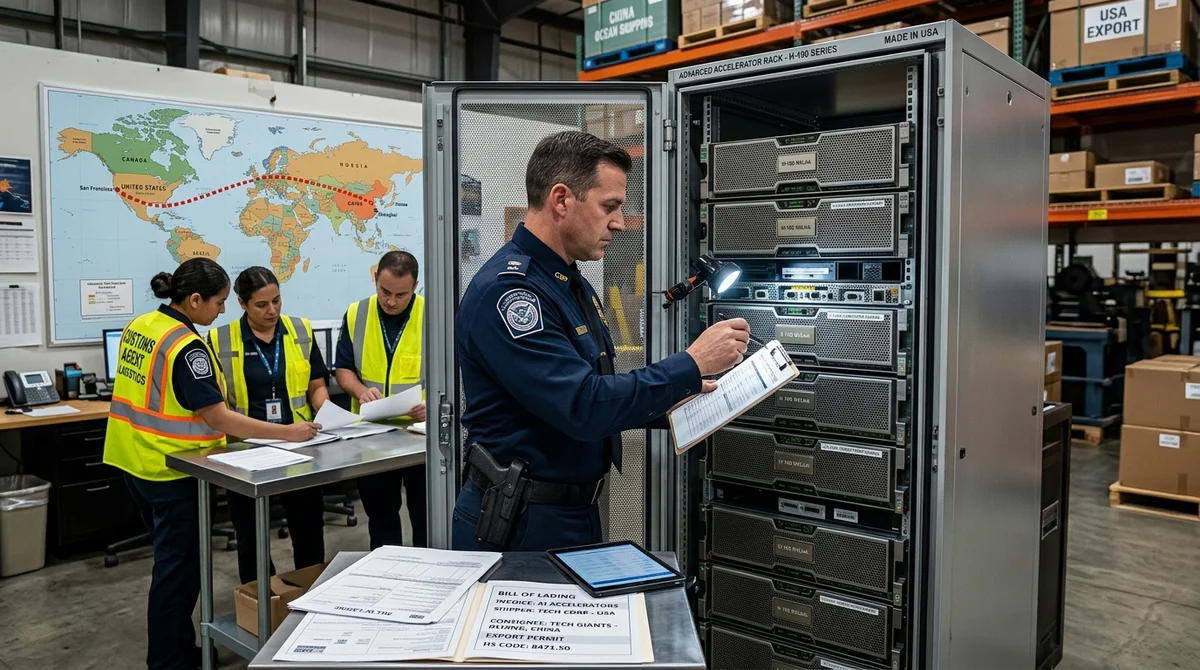
US prosecutors have charged Super Micro Computer's co-founder and two others in a case involving the illegal diversion of AI servers to China. According to investigators, the systems contained Nvidia chips that may have been subject to US export restrictions.
What are the charges?
Federal authorities accuse the Super Micro Computer co-founder, a Taiwanese executive, and a contractor of conspiring to illegally redirect servers with Nvidia accelerators to China. The framing matters: this is an indictment describing an alleged scheme to evade the rules, not a proven shipment. At this stage, prosecutors claim the defendants acted in concert and knew the equipment was sensitive, since it is used in AI infrastructure and falls under tightened export controls.
The case hits Super Micro especially hard. The company is one of the most prominent builders of AI server systems, and Nvidia remains the dominant supplier of compute accelerators. Even though the charges name specific individuals rather than the business as a whole, the brand's appearance in a criminal case immediately raises questions about internal controls, the supply chain, and end-user screening. For US regulators, cases like this also send a message: export rules will apply not only to chipmakers but also to anyone involved in assembling and moving finished systems.
What we know about the case
The brief case summary confirms only a few basic points so far. Prosecutors describe an attempt to illegally divert servers, and they name Nvidia chips as the key component. The public summary does not disclose the full logistics, shipment volumes, or how the scheme supposedly worked, so any conclusions about its scale should be cautious for now. What is already clear is that the case involves not generic hardware but the scarcest and most politically sensitive part of the AI market.
- the defendants include a co-founder of Super Micro Computer
- the other two are a Taiwanese executive and a contractor
- the subject of the case is servers containing Nvidia chips
- the alleged destination is China
- the core charge is conspiracy and illegal diversion of equipment
The framing shows how sharply regulators' focus is shifting. Where they once concentrated on semiconductor makers, the entire chain is now under the microscope: server assembly, intermediaries, contracts, shipping, and the end user. For companies in the AI infrastructure market, that means stricter requirements for documenting deals and verifying exactly where equipment goes after it is sold.
Why do servers matter?
A server with Nvidia chips is not just a box of expensive parts. It is a ready-made compute unit for training and running models that can be dropped into a data center quickly. That is why exports of these systems are treated not as routine electronics trade but as a matter of technological advantage. Once restrictions cover not just GPUs themselves but fully assembled servers, the risk jumps for integrators, distributors, and contractors who may previously have seen themselves as a secondary link.
With the race for AI compute heating up, cases like this will become more common. Nvidia chips remain scarce, and the economic incentive to evade export rules is too strong. For the market, the message is that compliance is no longer a formality: vetting a counterparty's paperwork is not enough. Companies need to understand the full shipment path, the end use, and potential re-export risks. Any weak point in that chain can turn into a criminal case.
What does it mean?
The Super Micro case shows that AI exports are now firmly a matter of geopolitics, not just business. Companies working with server infrastructure now weigh not only demand and margins but also the legal route of every unit they ship. For the AI market, that means even tighter control over access to compute.
- Nov 1, 2026Voice bots built on LLMs turn to Jev, a fast classifier, for decisions in 200–500 ms
- Nov 1, 2026Local AI models agreed to pay scammers, while simple rules blocked all 42 schemes
- Oct 31, 2026A 22B-Parameter Video Model Runs on an RTX 3080 with 10 GB of VRAM
- Oct 30, 2026Mistral opens Large 4 weights: strong at code, but Chinese models score 32 to its 26
Key Questions Answered
What are the charges?
Federal authorities accuse the Super Micro Computer co-founder, a Taiwanese executive, and a contractor of conspiring to illegally redirect servers with Nvidia accelerators to China. The framing matters: this is an indictment describing an alleged scheme to evade the rules, not a proven shipment. At this stage, prosecutors claim the defendants acted in concert and knew the equipment was sensitive, since it is used in AI infrastructure and falls under tightened export controls. The case hits Super Micro especially hard. The company is one of the most prominent builders of AI
Why do servers matter?
A server with Nvidia chips is not just a box of expensive parts. It is a ready-made compute unit for training and running models that can be dropped into a data center quickly. That is why exports of these systems are treated not as routine electronics trade but as a matter of technological advantage. Once restrictions cover not just GPUs themselves but fully assembled servers, the risk jumps for integrators, distributors, and contractors who may previously have seen themselves as a secondary link. With the race for AI compute heating up, cases like this will become more co
What does it mean?
The Super Micro case shows that AI exports are now firmly a matter of geopolitics, not just business. Companies working with server infrastructure now weigh not only demand and margins but also the legal route of every unit they ship. For the AI market, that means even tighter control over access to compute.
Test Frontier LLMs & Autonomous Agents in One Workspace
Run Claude Opus 5.5, GPT-6, Gemini 3.1, and DeepSeek side-by-side in Nomad AI (nomadnet.ai) — unified model routing, deep research, and multimodal workflows under one subscription.
The AI world, distilled — once a week
Seven stories that actually mattered, hand-picked. No noise, no reposts, no press releases.
Done! Check your inbox for a confirmation.