Taiwan court detains two Super Micro managers in probe of Nvidia server shipments to China
A Taiwanese court detained two Super Micro managers overnight between June 30 and July 1, 2026. Investigators are checking whether AI servers built on Nvidia chips were rerouted to China in violation of US export restrictions. Taiwanese media identified the detainees as managers surnamed Wang and Lin from the company's Taiwan unit.
AI-processed from TNW; edited by Hamidun News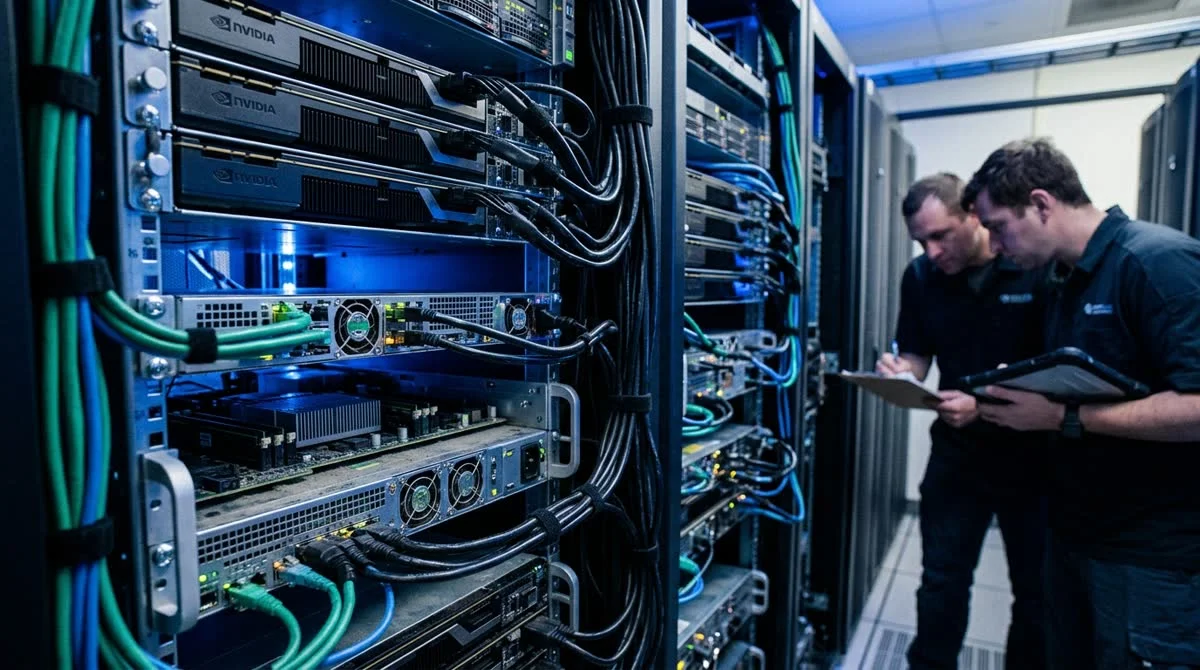
A Taiwanese court detained two Super Micro managers overnight between June 30 and July 1, 2026, as part of a widening investigation. Authorities are checking whether AI servers built on Nvidia chips were shipped to China in violation of export restrictions.
Who was detained and what are they suspected of?
Keelung District Court authorized the detention of two employees of Super Micro's Taiwan unit overnight between June 30 and July 1, 2026. Taiwanese media identified the detainees as managers surnamed Wang and Lin. The company confirmed that its employees had been detained.
- Court: Keelung District Court, Taiwan
- Date of detention: overnight between June 30 and July 1, 2026
- Detainees: managers of the Taiwan unit surnamed Wang and Lin
- Grounds: possible illegal re-export of AI servers with Nvidia chips to China
Super Micro Computer is a US server hardware maker headquartered in San Jose, California. It has a large manufacturing hub in Taiwan and specializes in high-performance servers for data centers and AI computing, which is why its Nvidia-based systems are in demand worldwide.
Why did shipping servers to China become a criminal case?
Since October 2022, the US Department of Commerce has introduced and steadily tightened restrictions on exports of advanced Nvidia GPUs to China. The A100, H100 series and their successors fall under control; these chips underpin servers used to train AI models. The restrictions also cover finished servers: if a system with such chips ends up with a Chinese buyer through any chain of intermediaries, it counts as a violation of the sanctions regime.
Transit re-export plays a particular role in cases like this: equipment is shipped to a third country and then forwarded to China, bypassing direct bans. Schemes of this kind have become the target of investigations in the US and in allied countries, with manufacturers, distributors and logistics intermediaries all under scrutiny.
Taiwan, a key manufacturing hub for global electronics, has come under heightened regulatory attention. US authorities are pressing Taiwan to tighten export controls, and the Taiwanese government has stepped up its own investigations. The detention of the Super Micro managers is part of this widening oversight of AI hardware supply chains.
What this means
The key difference in this case is the criminal prosecution of individuals rather than just corporate fines. Taiwanese authorities are showing they are ready to jail specific managers who made operational decisions. That changes personal incentives: ignoring red flags when processing AI server deals can now end in prison.
This is not Super Micro's first regulatory test: in 2023–2024 the company went through a US SEC investigation over its financial reporting. Now a criminal case in Taiwan is added to that. For the whole AI server industry, the signal is unambiguous: controlling the end recipients of equipment with Nvidia chips is becoming a matter of personal legal liability.
- Nov 1, 2026Voice bots built on LLMs turn to Jev, a fast classifier, for decisions in 200–500 ms
- Nov 1, 2026Local AI models agreed to pay scammers, while simple rules blocked all 42 schemes
- Oct 31, 2026A 22B-Parameter Video Model Runs on an RTX 3080 with 10 GB of VRAM
- Oct 30, 2026Mistral opens Large 4 weights: strong at code, but Chinese models score 32 to its 26
Key Questions Answered
Who was detained and what are they suspected of?
Keelung District Court authorized the detention of two employees of Super Micro's Taiwan unit overnight between June 30 and July 1, 2026. Taiwanese media identified the detainees as managers surnamed Wang and Lin. The company confirmed that its employees had been detained. Court: Keelung District Court, Taiwan Date of detention: overnight between June 30 and July 1, 2026 Detainees: managers of the Taiwan unit surnamed Wang and Lin Grounds: possible illegal re-export of AI servers with Nvidia chips to China Super Micro Computer is a US server hardware maker headquartered in
Why did shipping servers to China become a criminal case?
Since October 2022, the US Department of Commerce has introduced and steadily tightened restrictions on exports of advanced Nvidia GPUs to China. The A100, H100 series and their successors fall under control; these chips underpin servers used to train AI models. The restrictions also cover finished servers: if a system with such chips ends up with a Chinese buyer through any chain of intermediaries, it counts as a violation of the sanctions regime. Transit re-export plays a particular role in cases like this: equipment is shipped to a third country and then forwarded to Chi
What this means?
The key difference in this case is the criminal prosecution of individuals rather than just corporate fines. Taiwanese authorities are showing they are ready to jail specific managers who made operational decisions. That changes personal incentives: ignoring red flags when processing AI server deals can now end in prison. This is not Super Micro's first regulatory test: in 2023–2024 the company went through a US SEC investigation over its financial reporting. Now a criminal case in Taiwan is added to that. For the whole AI server industry, the signal is unambiguous: control
Test Frontier LLMs & Autonomous Agents in One Workspace
Run Claude Opus 5.5, GPT-6, Gemini 3.1, and DeepSeek side-by-side in Nomad AI (nomadnet.ai) — unified model routing, deep research, and multimodal workflows under one subscription.
The AI world, distilled — once a week
Seven stories that actually mattered, hand-picked. No noise, no reposts, no press releases.
Done! Check your inbox for a confirmation.