Google Photos adds virtual try-on for clothes from your own wardrobe
Google has added a virtual wardrobe to Google Photos: photograph the clothes in your closet, and AI shows how any outfit will look on you. The generative model accounts for cut, fit and fabric color to produce a realistic result. The company pitches the feature as a fix for the perennial "nothing to wear" problem, and as part of a broader transformation of Google Photos from a photo archive into an AI platform.
AI-processed from 3DNews AI; edited by Hamidun News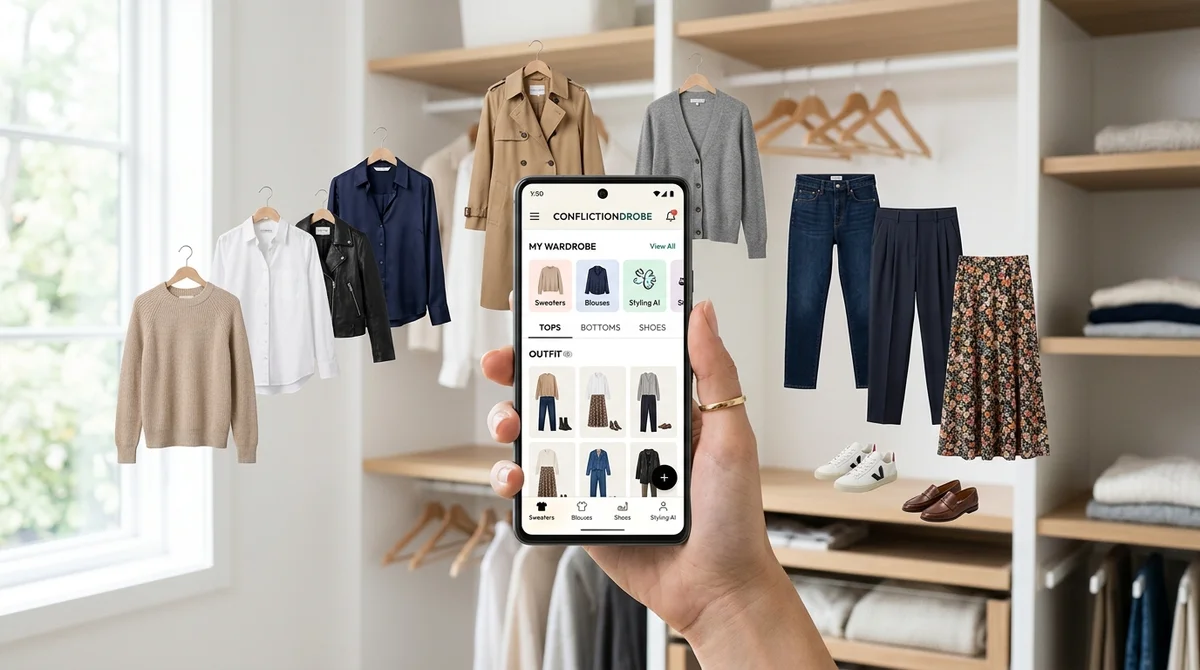
Google has added a virtual wardrobe feature to Google Photos. The app now lets you try on your own clothes virtually, without physically putting them on. The company pitches it as a solution to one of the most common everyday problems.
How the virtual wardrobe works
The logic is simple. First, you photograph the items in your closet: shirts, dresses, jeans, jackets, skirts, accessories. The app automatically recognizes each garment and adds it to a personal digital wardrobe inside Google Photos. Gradually, everything in your closet gets digitized.
Then comes the magic: you pick any combination of items and see how the outfit will look on you. Google's generative AI does not simply paste images onto a photo. The model processes each item in detail, accounting for cut, fit, fabric folds, how the material behaves, and color under different lighting. The result is supposed to look realistic, not like an obvious montage of several shots.
Why it exists and who it is for
Google explains the feature simply: the company wants to solve the age-old problem of standing in front of a packed closet with "nothing to wear." It sounds like a joke, but it is a real behavioral pattern. People leave a good half of their wardrobe unused because they cannot quickly picture how it all will look together. Virtual try-on is meant to remove that barrier.
A few concrete scenarios where the feature may prove useful:
- Morning choices — test several outfits in a minute instead of physically trying on each item
- Event preparation — put together and evaluate an outfit in advance without pulling everything out of the closet
- Experimenting with combinations — try pairings that would never occur to you on their own
- Trip planning — build a capsule wardrobe from what you already own before you start packing
- Mindful shopping — work out what your wardrobe actually lacks, rather than buying things that go with nothing
What is behind the technology
Virtual try-on is not entirely new for Google. The company has already tested similar technology in the opposite direction: a user uploaded their own photo, picked an item in an online store and saw how it would look on them. It was an attempt to help retailers reduce return rates. Now the vector is reversed: you try on not what you want to buy, but what you already own.
Over the past few years, Google Photos has been actively evolving from a passive cloud photo archive into a platform with active AI features. The app already offers smart search by objects, places and faces, Magic Eraser for removing unwanted objects from shots, automatic photo quality enhancement, and memories features with automatic editing. The virtual wardrobe joins this lineup but stands out: for the first time, a feature helps not with photos as such, but with real decisions in everyday life.
The feature arrives amid a broader trend: major tech companies are moving aggressively into fashion tech. Amazon is testing virtual try-on for its marketplace, and startups offer similar solutions to brands. Google is following the same path, with one fundamental difference: the emphasis is not on buying new items, but on making mindful use of what you have.
What this means
Google is staking out territory in personal AI assistants for daily life, where competitors are still focused on work tools and productivity. The virtual wardrobe looks like a small feature, but a clear strategy sits behind it: the more useful everyday actions a user performs inside the Google ecosystem, the stronger the lock-in to the platform. If the technology catches on, the next logical step looks like integration with Google Shopping: compare what you own, find what is missing and buy it right in the app.
- Nov 2, 2026The Verge reviewer builds a $50 Meta Muse Charm alternative with Claude Code
- Nov 1, 202616 models tested on 7 search tools: Exa averaged 10.5 out of 14, SearXNG about 3
- Nov 1, 2026Google's StreamVibe video agent beats other models by 10.7% on response timing and quality
- Nov 1, 2026OpenAI Rewrites GPT Behavior Rules: Five Values and a Chain of Command
Key Questions Answered
How the virtual wardrobe works?
The logic is simple. First, you photograph the items in your closet: shirts, dresses, jeans, jackets, skirts, accessories. The app automatically recognizes each garment and adds it to a personal digital wardrobe inside Google Photos. Gradually, everything in your closet gets digitized. Then comes the magic: you pick any combination of items and see how the outfit will look on you. Google's generative AI does not simply paste images onto a photo. The model processes each item in detail, accounting for cut, fit, fabric folds, how the material behaves, and color under differen
Why it exists and who it is for?
Google explains the feature simply: the company wants to solve the age-old problem of standing in front of a packed closet with "nothing to wear." It sounds like a joke, but it is a real behavioral pattern. People leave a good half of their wardrobe unused because they cannot quickly picture how it all will look together. Virtual try-on is meant to remove that barrier. A few concrete scenarios where the feature may prove useful: Morning choices — test several outfits in a minute instead of physically trying on each item Event preparation — put together and evaluate an outfi
What is behind the technology?
Virtual try-on is not entirely new for Google. The company has already tested similar technology in the opposite direction: a user uploaded their own photo, picked an item in an online store and saw how it would look on them. It was an attempt to help retailers reduce return rates. Now the vector is reversed: you try on not what you want to buy, but what you already own. Over the past few years, Google Photos has been actively evolving from a passive cloud photo archive into a platform with active AI features. The app already offers smart search by objects, places and faces
Test Frontier LLMs & Autonomous Agents in One Workspace
Run Claude Opus 5.5, GPT-6, Gemini 3.1, and DeepSeek side-by-side in Nomad AI (nomadnet.ai) — unified model routing, deep research, and multimodal workflows under one subscription.
The AI world, distilled — once a week
Seven stories that actually mattered, hand-picked. No noise, no reposts, no press releases.
Done! Check your inbox for a confirmation.