OpenAI shuts down Sora, ending its standalone video app after a viral launch
OpenAI has shut down Sora, the iPhone video-generation app it launched in fall 2025. At launch the service spread across social networks thanks to nearly unlimited video generation, but it later received strict limits on third-party intellectual property and quickly lost momentum. According to media reports, the company is now betting not on a standalone video app but on a larger ecosystem built around ChatGPT.
AI-processed from 3DNews AI; edited by Hamidun News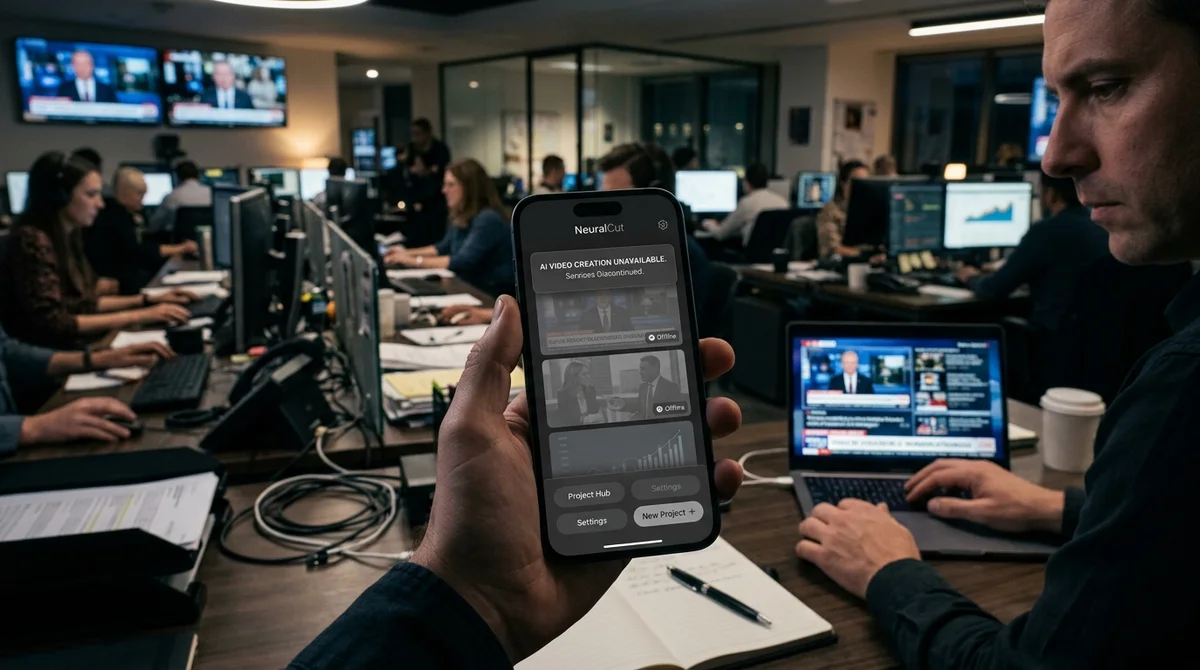
OpenAI is shutting down Sora, the iPhone video-generation app that in fall 2025 looked like the company's next viral hit. The experiment with a standalone video service was short-lived: the hype outran real demand, and subsequent restrictions quickly narrowed the ways people could use it.
How Sora took off
Sora launched in September 2025 and became OpenAI's second iPhone app after ChatGPT. The idea was simple: give users the easiest possible path from a text prompt to a short video. At launch the service worked almost like a viral-content construction kit. It generated clips in a range of genres, required no complicated learning curve, and came with a built-in feed where people could watch and share others' work. For a mass audience, that made Sora less a editing tool than a mix of video editor and social platform.
That simplicity quickly won it attention. Sora was discussed as an app that could turn video generation into a routine mobile habit: open it, type a couple of lines, get a clip, post it to the feed. But this kind of growth had a weak side. Virality does not always mean retention, and interest in "look what a neural network can do" rarely lasts long unless real daily value emerges behind the effect. Without that, Sora went from a habit to a carnival ride.
Why it was all wound down
The trouble began when OpenAI started restricting the use of third-party intellectual property more tightly. The original freedom of generation was one reason for Sora's popularity: users came for the chance to quickly assemble recognizable scenes, styles and meme clips. Once those boundaries narrowed, the "make anything" magic disappeared. The service ended up caught between two audiences: for professionals it never became an essential tool, and for the general public it stopped being daring and unpredictable enough.
"We're saying goodbye to Sora.
What you made with it mattered," — the Sora team.
- Viral start after launch
- Simple text-to-video generation
- Restrictions on content involving third-party intellectual property
- Weak conversion of hype into sustained use
OpenAI has already confirmed the shutdown in a post on X and promised to say later what will happen with the timing of the app and API shutdowns, and how users can save their work. That detail matters: the company is not just removing a mobile wrapper but effectively closing an entire line of work that was presented as the next notable step after text and voice products. For creators who tested Sora as a standalone platform, this means finding a backup route quickly.
Where the focus is shifting
The story may not end with the closure of a single app. According to media reports, OpenAI is scaling back its broader generative-video efforts and reallocating resources toward a "super app." The logic is clear: instead of a set of scattered services, the company wants a single product in which ChatGPT, development tools and browser features work as one system. Under that strategy, a separate video platform looks less like a priority and more like an experiment that failed to deliver the needed scale.
This also changes how Sora looks in hindsight. The project was often seen as a vivid demonstration of the model's capabilities, not as a mature professional tool on which a sustainable workflow could be built. Major players showed interest too: the article mentions a potential collaboration with Disney, which ultimately never reached a real stress test. If the company really is moving away from a standalone AI video product, then even a well-known brand and strong initial attention were not enough without a clear business model and long-term retention.
What it means
Sora's closure shows that in the AI market, merely surprising users with "wow" content is no longer enough. The winners are not the most viral demos but the products that retain their audience, fit into daily tasks and withstand copyright constraints. For OpenAI, this is a turn toward an ecosystem around ChatGPT; for the market, it is a reminder that the era of standalone AI toys is ending faster than it seems. That applies to both mobile apps and standalone content generators.
- Nov 1, 2026Local models lose to Opus and Codex: 0.21 on a MacBook versus 1.00 for Codex
- Nov 1, 2026Kimi scores 96.2% on a 1C database analytics test and emerges as a fallback if Claude access is blocked
- Nov 1, 2026OpenAI Rewrites GPT Behavior Rules: Five Values and a Chain of Command
- Nov 1, 2026Google admits AI Mode cuts search revenue, shares fall 15%
Key Questions Answered
How Sora took off?
Sora launched in September 2025 and became OpenAI's second iPhone app after ChatGPT. The idea was simple: give users the easiest possible path from a text prompt to a short video. At launch the service worked almost like a viral-content construction kit. It generated clips in a range of genres, required no complicated learning curve, and came with a built-in feed where people could watch and share others' work. For a mass audience, that made Sora less a editing tool than a mix of video editor and social platform. That simplicity quickly won it attention. Sora was discussed
Why it was all wound down?
The trouble began when OpenAI started restricting the use of third-party intellectual property more tightly. The original freedom of generation was one reason for Sora's popularity: users came for the chance to quickly assemble recognizable scenes, styles and meme clips. Once those boundaries narrowed, the "make anything" magic disappeared. The service ended up caught between two audiences: for professionals it never became an essential tool, and for the general public it stopped being daring and unpredictable enough. "We're saying goodbye to Sora. What you made with it mat
Where the focus is shifting?
The story may not end with the closure of a single app. According to media reports, OpenAI is scaling back its broader generative-video efforts and reallocating resources toward a "super app." The logic is clear: instead of a set of scattered services, the company wants a single product in which ChatGPT, development tools and browser features work as one system. Under that strategy, a separate video platform looks less like a priority and more like an experiment that failed to deliver the needed scale. This also changes how Sora looks in hindsight. The project was often see
Test Frontier LLMs & Autonomous Agents in One Workspace
Run Claude Opus 5.5, GPT-6, Gemini 3.1, and DeepSeek side-by-side in Nomad AI (nomadnet.ai) — unified model routing, deep research, and multimodal workflows under one subscription.
The AI world, distilled — once a week
Seven stories that actually mattered, hand-picked. No noise, no reposts, no press releases.
Done! Check your inbox for a confirmation.