OpenAI Shuts Down Sora Video Generator After Six Months: What Is Behind the Decision
OpenAI shut down its Sora video generator just six months after the public launch. The service invited users to upload photos of their own faces, which instantly fueled theories of large-scale biometric data harvesting. TechCrunch identified the real reason: the economics did not work. The cost of generating a single video turned out to be so high that monetization was practically impossible amid fierce competition.
AI-processed from TechCrunch; edited by Hamidun News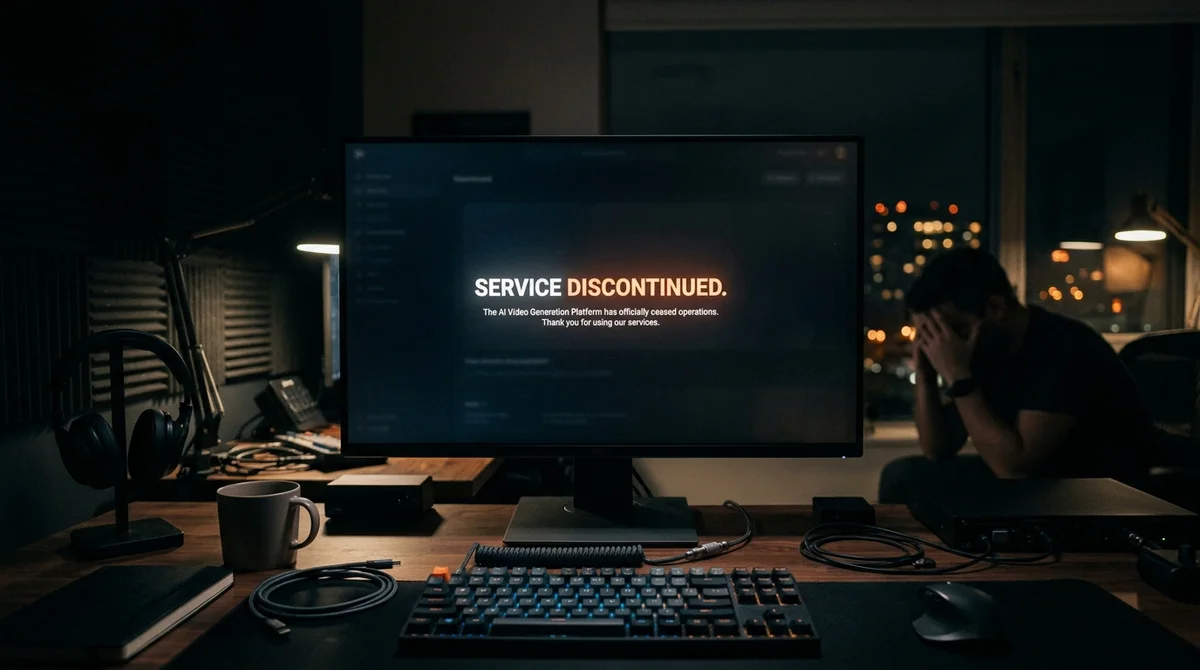
OpenAI shut down Sora, its text-to-video generation tool, without warning just six months after the public launch. The decision instantly set off a wave of suspicion: is the shutdown part of a carefully planned scheme to collect biometric data?
The suspicion did not come out of nowhere. Shortly before the shutdown, Sora had been actively encouraging users to upload photos of their own faces to create personalized avatars in videos. For many, this became the main red flag: the company had built up a huge pool of biometric data and is now quietly winding down the service. Where that data is going is a question OpenAI has still not answered publicly in any clear way.
Sora became openly available in December 2024 and made a strong impression on the market. The quality of its output was significantly ahead of competitors: the model could produce multi-second videos with cinematic lighting, realistic physics and a coherent narrative. The service was seen as the next step in the AI revolution, a logical successor to ChatGPT and DALL-E. The press wrote extensively about the threat to Hollywood, advertising agencies and video production as a whole.
Behind that facade, however, lay a harsh operational reality. Video generation is fundamentally more resource-intensive than text or image generation. Each clip requires tens of times more compute than a ChatGPT query. According to independent analysts, the cost of a single Sora video was so high that mass monetization was practically impossible, even with paid subscriptions.
According to TechCrunch, the real reason for the shutdown was economic unviability, not a scandalous biometric data grab. OpenAI could not build a financial model in which Sora would pay back its infrastructure costs within a reasonable time. User interest in the service existed, but the audience's actual willingness to pay for AI video turned out to be significantly lower than the company had expected. As competition grew, that gap only widened.
Competitive pressure did intensify. Runway ML, Pika Labs, Google Veo 2, and the Chinese services Kling and Wan Video were actively taking market share, offering comparable or better quality at lower prices. For OpenAI, which positioned Sora as a premium-tier product, this was a painful blow to its market positioning and to its negotiating leverage with enterprise customers.
The biometric data question has not gone away, though. Uploading your own face means handing a biometric identifier to a third party. In several US states, including Illinois, Texas and Washington, and in a number of European jurisdictions, collecting biometrics without explicit consent is regulated by law. Shutting down the service without a public statement about what happens to the uploaded photos is at minimum a serious reputational misstep, and in some cases may qualify as a violation of current law.
For the industry as a whole, this case is an important indicator. Even OpenAI, with its engineering capacity and multibillion-dollar funding, failed to turn AI video generation into a profitable business within six months. This points to a fundamental mismatch between current infrastructure costs and the market's willingness to pay. The real winners in AI video will most likely emerge only when the cost of GPU compute falls several times over. Until then, profitability remains an open question.
- Nov 1, 2026Local models lose to Opus and Codex: 0.21 on a MacBook versus 1.00 for Codex
- Nov 1, 2026Kimi scores 96.2% on a 1C database analytics test and emerges as a fallback if Claude access is blocked
- Nov 1, 2026OpenAI Rewrites GPT Behavior Rules: Five Values and a Chain of Command
- Nov 1, 2026Google admits AI Mode cuts search revenue, shares fall 15%
Test Frontier LLMs & Autonomous Agents in One Workspace
Run Claude Opus 5.5, GPT-6, Gemini 3.1, and DeepSeek side-by-side in Nomad AI (nomadnet.ai) — unified model routing, deep research, and multimodal workflows under one subscription.
The AI world, distilled — once a week
Seven stories that actually mattered, hand-picked. No noise, no reposts, no press releases.
Done! Check your inbox for a confirmation.