US court temporarily sides with Anthropic in Pentagon dispute over Claude restrictions
A US court has temporarily sided with Anthropic in its dispute with the Pentagon. The company refused to allow Claude to be used in fully autonomous weapons and mass surveillance, and the government then tried to push it out of federal procurement. Those measures are now on hold. The court also made a separate point: the government is not obligated to buy Claude, but it cannot arbitrarily punish the developer for its stance.
AI-processed from Guardian; edited by Hamidun News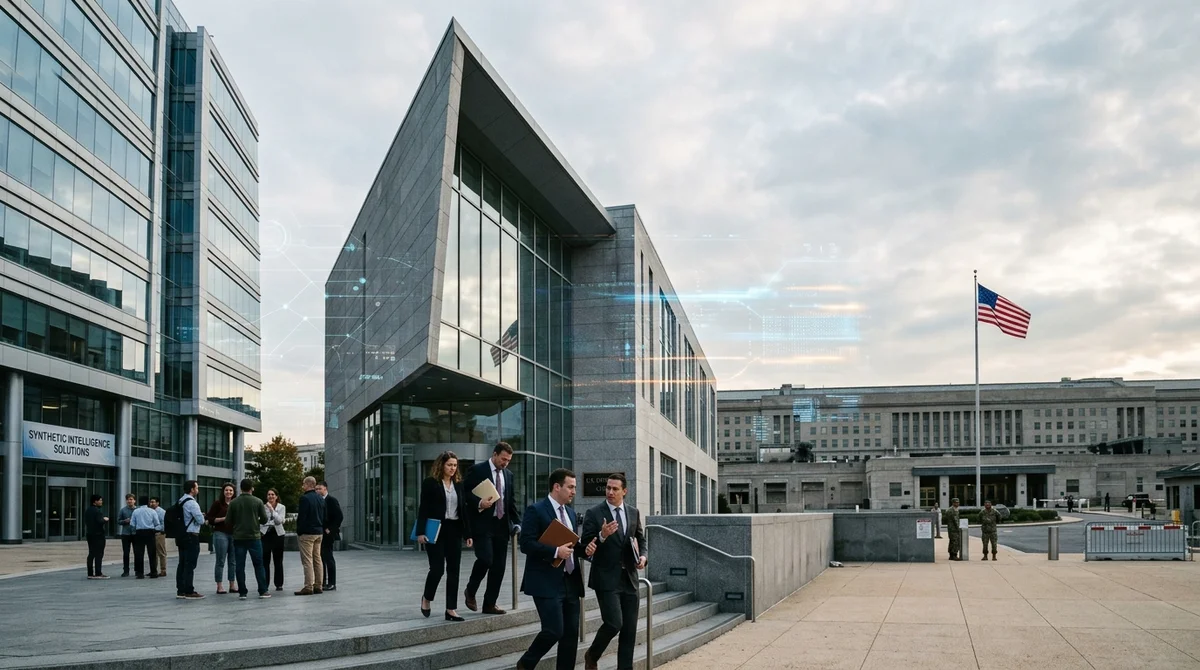
Anthropic has won an interim victory in its dispute with the Pentagon: a federal court in California has temporarily halted the measures the US government used to try to restrict the company's work with the state. This is not a final ruling in the case. It is a judicial pause that lets Anthropic challenge the administration's actions without suffering immediate damage to its business.
Why the court stepped in
Judge Rita Lin issued a temporary injunction while the US District Court for the Northern District of California considers the lawsuit on its merits. She also delayed the ruling's effect by a week to give the government time to pursue an appeal. For Anthropic, this is the first clear win in a public conflict that, within a few weeks, grew from a dispute over contract terms into a federal-level political and legal case.
According to the company, the Pentagon and Donald Trump's administration went far beyond a customer's ordinary right to drop a supplier. Anthropic argues that the government did not simply end the relationship but tried to punish it for its public position on AI safety. In its lawsuit, the company cites a First Amendment violation, since the dispute concerns speech on a matter of public importance: whether generative models should be used for autonomous weapons and mass surveillance.
What the conflict is about
The conflict stems from Anthropic's red lines for Claude. The company refused to allow the model to be used in fully autonomous lethal systems, where a machine makes the final decision to strike a target without human involvement. The second restriction covers mass surveillance of citizens inside the country. The Pentagon, by contrast, insisted on language that would allow the model to be used for all lawful purposes, without regard to additional corporate prohibitions.
After negotiations collapsed, the dispute escalated sharply. The government designated Anthropic a supply chain risk and then demanded that federal agencies stop using its technology. Based on the case filings, the company views these steps not as a security measure but as a pressure tactic meant to force it to loosen its own rules.
- Anthropic refused to lift its restrictions on autonomous weapons
- The company did not agree to open Claude up for mass domestic surveillance
- The administration demanded that government agencies stop using Anthropic's technology
- The Pentagon designated the company a supply chain risk
- Anthropic said this threatens it with multimillion-dollar losses and reputational damage
What the judge found
In her preliminary ruling, Judge Rita Lin effectively agreed with Anthropic's central argument: the government likely went further than the law allows. The court documents state that designating the company a supply chain risk may have been arbitrary and poorly justified. Lin also noted that the government had a simpler option: if the Department of Defense is unhappy with Claude's terms of use, it can simply stop buying the product and switch to another supplier.
"This looks like an attempt to cripple Anthropic."
That point became one of the key issues for the court. If the government's goal was to protect its operational interests, it did not need to impose such sweeping restrictions. The court also noted that public criticism of the government's position and discussion of AI risks fall under free speech protections. In other words, the case currently looks less like an ordinary procurement dispute and more like possible retaliation against the company for its stance.
The ruling does not force the Pentagon to use Claude, nor does it bar the department from seeking another contractor. The injunction targets the broader punitive measures: the blacklist, the supply chain threat designation, and directives that effectively cut the company off from government work before the lawsuit is finally decided.
What it means
This dispute sets an important precedent for the entire AI model market. The court has shown that even in national security, the government will have a hard time forcing developers to drop baseline restrictions by putting pressure on their contracts and reputation. For Anthropic, this is not yet a win in the case, but it is a strong signal: the court is prepared to take seriously companies' right to draw their own red lines on how AI is used.
- Nov 1, 2026Local models lose to Opus and Codex: 0.21 on a MacBook versus 1.00 for Codex
- Nov 1, 2026Kimi scores 96.2% on a 1C database analytics test and emerges as a fallback if Claude access is blocked
- Nov 1, 2026OpenAI Rewrites GPT Behavior Rules: Five Values and a Chain of Command
- Nov 1, 2026Google admits AI Mode cuts search revenue, shares fall 15%
Key Questions Answered
Why the court stepped in?
Judge Rita Lin issued a temporary injunction while the US District Court for the Northern District of California considers the lawsuit on its merits. She also delayed the ruling's effect by a week to give the government time to pursue an appeal. For Anthropic, this is the first clear win in a public conflict that, within a few weeks, grew from a dispute over contract terms into a federal-level political and legal case. According to the company, the Pentagon and Donald Trump's administration went far beyond a customer's ordinary right to drop a supplier. Anthropic argues tha
What the conflict is about?
The conflict stems from Anthropic's red lines for Claude. The company refused to allow the model to be used in fully autonomous lethal systems, where a machine makes the final decision to strike a target without human involvement. The second restriction covers mass surveillance of citizens inside the country. The Pentagon, by contrast, insisted on language that would allow the model to be used for all lawful purposes, without regard to additional corporate prohibitions. After negotiations collapsed, the dispute escalated sharply. The government designated Anthropic a supply
What the judge found?
In her preliminary ruling, Judge Rita Lin effectively agreed with Anthropic's central argument: the government likely went further than the law allows. The court documents state that designating the company a supply chain risk may have been arbitrary and poorly justified. Lin also noted that the government had a simpler option: if the Department of Defense is unhappy with Claude's terms of use, it can simply stop buying the product and switch to another supplier. "This looks like an attempt to cripple Anthropic." That point became one of the key issues for the court. If the
Test Frontier LLMs & Autonomous Agents in One Workspace
Run Claude Opus 5.5, GPT-6, Gemini 3.1, and DeepSeek side-by-side in Nomad AI (nomadnet.ai) — unified model routing, deep research, and multimodal workflows under one subscription.
The AI world, distilled — once a week
Seven stories that actually mattered, hand-picked. No noise, no reposts, no press releases.
Done! Check your inbox for a confirmation.