Meta to fund seven gas-fired power plants for its Hyperion data center in Louisiana
Meta plans to fund seven new gas-fired power plants for its Hyperion data center in Louisiana. The story matters for more than the scale of the project: it shows that the main AI bottleneck is no longer just chips, but electricity too. With the Nasdaq 100 in a correction and a possible Anthropic IPO on the horizon, the market gets another signal that the infrastructure race is only accelerating. *Meta has been designated an extremist organization and is banned in Russia.
AI-processed from Bloomberg Tech; edited by Hamidun News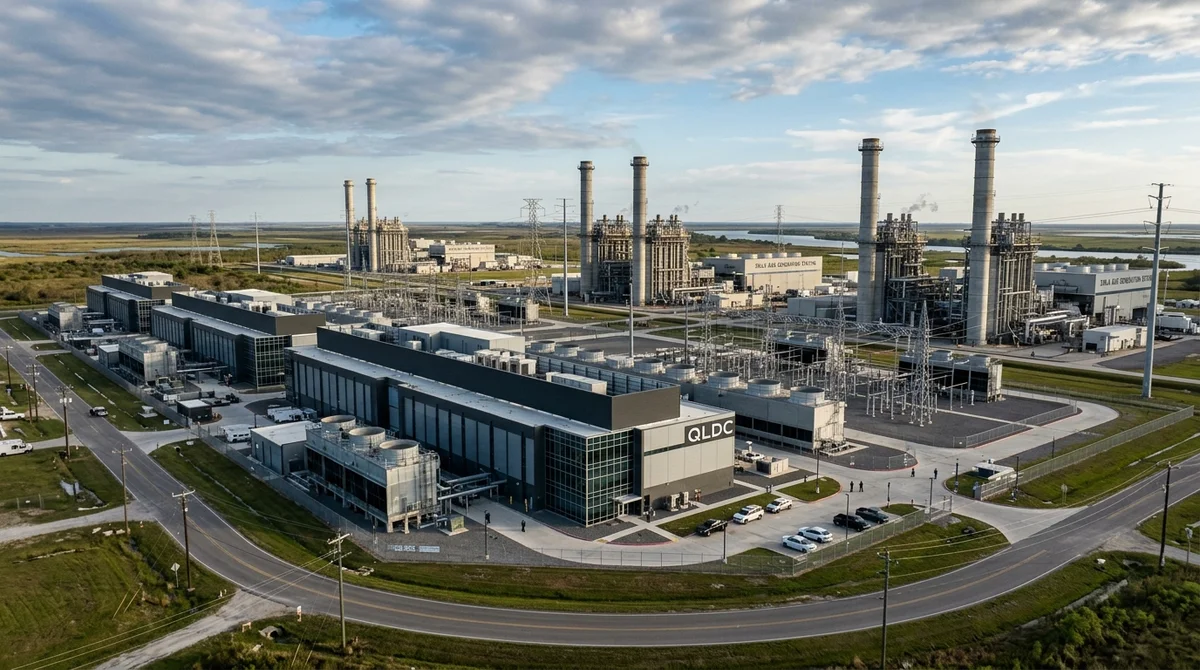
Meta is ready to fund the construction of seven new gas-fired power plants to supply its Hyperion data center in Louisiana. It is a rare case where AI infrastructure is so power-hungry that a tech company is effectively commissioning new energy generation for itself, rather than simply renting capacity from the grid.
Seven plants for Hyperion
This is not an expansion of an existing site but the creation of a new energy base for one specific facility. Hyperion is one of the mega data centers around which the whole logic of AI capital spending is now being rebuilt: the more models, users and computation, the smaller the chance of getting by on standard grid connections. If Meta really does pay for seven gas plants, it will show that energy for AI has moved from an operating expense to strategic infrastructure.
For the market, this is an important shift. Not long ago, chips and access to frontier models were seen as the main constraints on AI, but a third factor is now increasingly visible: electricity. When a company of Meta's size starts financing generation next to a data center, the signal goes not only to utilities but also to competitors: the scale of new compute clusters is bound by physical capacity that cannot be obtained at the click of a button. And this shortage can no longer be solved by buying servers alone.
Why gas?
The choice of gas looks pragmatic. New AI data centers need not abstract "green" capacity at some point in the future, but predictable power supply on schedule. In this logic, gas plants are a compromise between speed of deployment, controllability and fuel availability. Amid the generative AI boom, tech giants increasingly conclude that without their own or semi-own energy base, timelines for launching large facilities start to slip. For companies with tight deadlines, this is critical.
- Faster commissioning than some large grid projects
- Clear, controllable generation for constant load
- Less dependence on an overloaded regional grid
- The ability to build the data center and power facilities as a single system
But this approach has a price. The more the AI business relies on gas, the sharper the conflict between the speed of compute growth and the climate agenda that Big Tech itself has promoted for years. For Meta, Hyperion is not just a construction project in Louisiana but a public acknowledgment of the energy consumption of the next generation of data centers. The question is no longer whether more capacity is needed, but how many more separate power plants the industry will require.
The market and competitors
The Meta news arrived against a nervous backdrop for the tech sector. Market discussion centered on the impact of the war with Iran: the Nasdaq 100 slid into correction territory and shares of major tech companies fell. At the same time, reports emerged that Anthropic could go public as early as October. Together, these stories paint a fairly accurate picture of 2026: AI companies are simultaneously fighting for capital, infrastructure and investor confidence, and each new round of growth demands ever heavier spending in the physical world.
Against this backdrop, Meta's move looks especially telling. While the market reprices Big Tech and the sector's sensitivity to geopolitics, the largest players keep making long-term infrastructure decisions that pay off over years, not quarters. And if Anthropic is indeed preparing for the stock market, investors will almost certainly look not only at revenue and models, but also at how the AI business plans to secure energy at industrial scale.
What this means
The Hyperion story shows that the next phase of the AI race will be determined not only by model quality but by access to real megawatts. The winners will not be those with simply more GPUs, but those who can quickly turn capital into durable compute and energy infrastructure. For the market, it is also a reminder: AI long ago stopped being a purely software story. This changes the rules of competition across the entire industry.
*Meta has been designated an extremist organization and is banned in Russia.
- Nov 1, 2026MoneyGate safety layer blocked all 42 fraudulent requests to local AI models
- Oct 31, 2026Open-source LLM gateway KTMS 1.0 plugs your own GPUs into the cloud and survives outages
- Oct 31, 202622B-Parameter LTX-2.5 Runs on a 10 GB RTX 3080, but Takes 5 Minutes per Shot
- Oct 29, 2026T-Tech Introduces LIMe, a Method That Trains Language Models With 15% Less Compute
Key Questions Answered
Why gas?
The choice of gas looks pragmatic. New AI data centers need not abstract "green" capacity at some point in the future, but predictable power supply on schedule. In this logic, gas plants are a compromise between speed of deployment, controllability and fuel availability. Amid the generative AI boom, tech giants increasingly conclude that without their own or semi-own energy base, timelines for launching large facilities start to slip. For companies with tight deadlines, this is critical. Faster commissioning than some large grid projects Clear, controllable generation for c
What are the key details on Seven plants for Hyperion?
This is not an expansion of an existing site but the creation of a new energy base for one specific facility. Hyperion is one of the mega data centers around which the whole logic of AI capital spending is now being rebuilt: the more models, users and computation, the smaller the chance of getting by on standard grid connections. If Meta really does pay for seven gas plants, it will show that energy for AI has moved from an operating expense to strategic infrastructure. For the market, this is an important shift. Not long ago, chips and access to frontier models were seen a
What are the key details on The market and competitors?
The Meta news arrived against a nervous backdrop for the tech sector. Market discussion centered on the impact of the war with Iran: the Nasdaq 100 slid into correction territory and shares of major tech companies fell. At the same time, reports emerged that Anthropic could go public as early as October. Together, these stories paint a fairly accurate picture of 2026: AI companies are simultaneously fighting for capital, infrastructure and investor confidence, and each new round of growth demands ever heavier spending in the physical world. Against this backdrop, Meta's mov
Ship AI Faster with Founders, Engineers & Weekly Architecture Reviews
Inside Vibe Club (hamidun.com/club) — weekly live masterminds with Zhemal Khamidun, Tech Radar, full LMS access, and 370+ production Claude Code skills.
The AI world, distilled — once a week
Seven stories that actually mattered, hand-picked. No noise, no reposts, no press releases.
Done! Check your inbox for a confirmation.