Why the Pentagon–Anthropic Standoff Is a Warning Sign for Businesses Using AI
The Pentagon–Anthropic standoff is about more than a $200 million contract. It showed that corporate AI systems depend not just on model quality, but on the rules, restrictions and political decisions of the company that supplies the model. OpenAI, meanwhile, was able to strike a deal with the military on different terms. The market took away the main lesson: tying yourself to a single vendor quickly becomes an operational risk.
AI-processed from Habr AI; edited by Hamidun News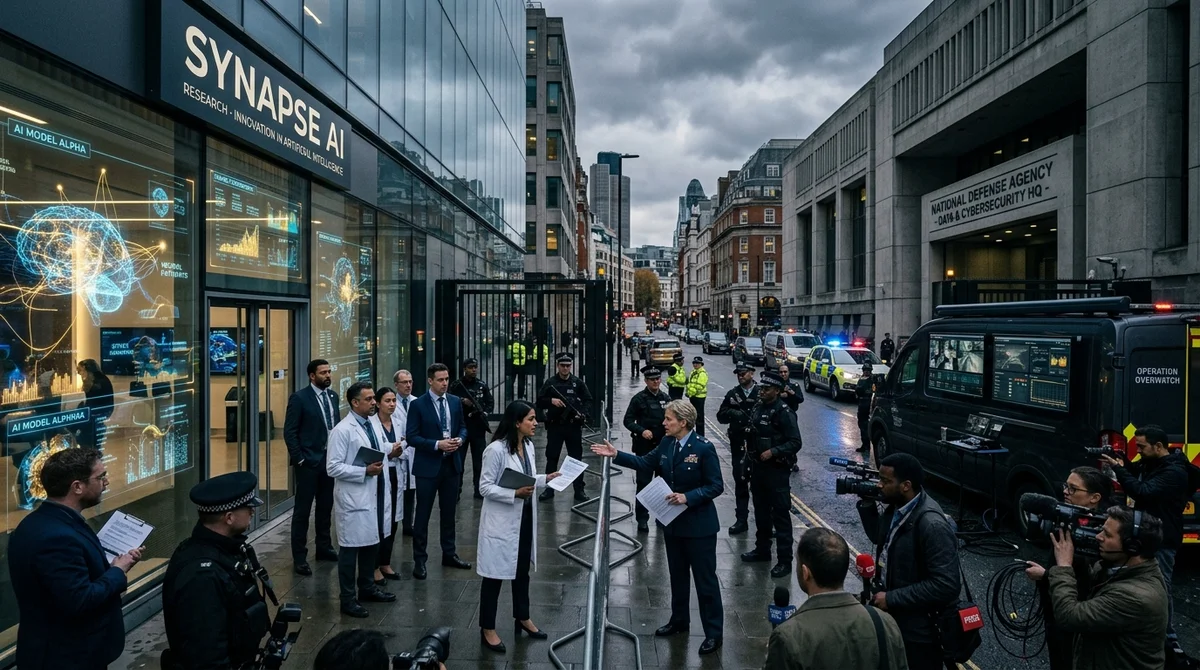
The conflict between the Pentagon and Anthropic looks like a dispute over a $200 million contract, but for business it is a far more practical story. It showed that an AI strategy built around a single supplier can suddenly run into someone else's political, ethical and contractual limits.
What actually happened
According to US press reports, the US Department of Defense wanted access to Anthropic's models for the broadest possible range of "lawful" tasks. Anthropic insisted on red lines: exclusions for mass surveillance and fully autonomous weapons. When the company refused to back down, the dispute quickly went beyond ordinary procurement talks. There was talk of pressure from above, the risk of being blacklisted, and the idea that participation in the government AI ecosystem may depend on a willingness to accept someone else's rules.
The situation then became even more revealing. Amid the conflict, OpenAI signed its own agreement with the Pentagon and presented it as consistent with safety principles. For the market this was an important signal: even two companies in the same industry can define acceptable use cases differently. So the question is no longer only about model quality, but about who controls the boundaries of its use.
"Your strategy is now hostage to someone else's conflict."
Where the business risk lies
Many executives still treat LLMs as a cloud service: pick a vendor, agree on a price, connect the API and launch a pilot. But models are not neutral infrastructure. Along with them, a company gets built-in restrictions, refusal policies, data retention rules, logging logic, pricing tiers and contract terms that can change without the customer's involvement. In effect, an AI vendor supplies not only compute but its own governance regime.
This is especially dangerous where AI is embedded in real processes: support, sales, compliance, internal search, analytics or agentic scenarios. If the provider changes its safety policy, revisits permitted use cases, raises prices or limits the model's availability, the company loses more than a convenient tool. It risks breaking a workflow that already depends on the model's specific behavior and on its contractual terms. Here legal, product and infrastructure risk converge into a single problem.
How to reduce dependence
The most vulnerable area is agentic systems. For simple tasks such as summarization or drafting, switching models is relatively tolerable. But when an agent calls tools, reaches into internal systems, chooses actions and makes decisions along a chain, dependence rises sharply. In such systems, prompts, function-calling schemas, orchestration, safety rules and even the team's expectations of how the model behaves in ambiguous cases become tied to a specific vendor.
- Separate business logic from any specific model API
- Keep at least two providers in production or in reserve
- Build your own layer for evaluation, routing and observability
- Test critical scenarios for portability between models
- Write a switchover plan in advance covering data, contracts and processes
The point is not abstract "model independence" but the ability to adapt quickly without rewriting half the product. Companies need their own layer above the model: quality metrics, tool access rules, logging, risk controls and vendor replacement procedures. Then a dispute between a government and an AI provider remains an external event instead of turning into an internal business failure. It is architecture, not loud announcements about adopting AI, that determines resilience when conflict hits.
What this means
The Pentagon–Anthropic story showed that choosing an LLM is no longer just buying technology but an architectural and management decision. The winners will be companies that build AI systems around their own processes and can swap the engine without halting operations. That readiness will become the new maturity benchmark for enterprise AI.
- Nov 2, 2026Bun creator uses Claude Code to port 750K lines from Zig to Rust in 11 days
- Nov 2, 2026mcp-linter finds 18 undescribed parameters in Anthropic's filesystem server
- Nov 2, 2026The Verge reviewer builds a $50 Meta Muse Charm alternative with Claude Code
- Nov 2, 20268 Skills for video in Claude Code: from 244 pixel effects to rough-cut editing
Key Questions Answered
What actually happened?
According to US press reports, the US Department of Defense wanted access to Anthropic's models for the broadest possible range of "lawful" tasks. Anthropic insisted on red lines: exclusions for mass surveillance and fully autonomous weapons. When the company refused to back down, the dispute quickly went beyond ordinary procurement talks. There was talk of pressure from above, the risk of being blacklisted, and the idea that participation in the government AI ecosystem may depend on a willingness to accept someone else's rules. The situation then became even more revealing
Where the business risk lies?
Many executives still treat LLMs as a cloud service: pick a vendor, agree on a price, connect the API and launch a pilot. But models are not neutral infrastructure. Along with them, a company gets built-in restrictions, refusal policies, data retention rules, logging logic, pricing tiers and contract terms that can change without the customer's involvement. In effect, an AI vendor supplies not only compute but its own governance regime. This is especially dangerous where AI is embedded in real processes: support, sales, compliance, internal search, analytics or agentic scen
How to reduce dependence?
The most vulnerable area is agentic systems. For simple tasks such as summarization or drafting, switching models is relatively tolerable. But when an agent calls tools, reaches into internal systems, chooses actions and makes decisions along a chain, dependence rises sharply. In such systems, prompts, function-calling schemas, orchestration, safety rules and even the team's expectations of how the model behaves in ambiguous cases become tied to a specific vendor. Separate business logic from any specific model API Keep at least two providers in production or in reserve Bui
Test Frontier LLMs & Autonomous Agents in One Workspace
Run Claude Opus 5.5, GPT-6, Gemini 3.1, and DeepSeek side-by-side in Nomad AI (nomadnet.ai) — unified model routing, deep research, and multimodal workflows under one subscription.
The AI world, distilled — once a week
Seven stories that actually mattered, hand-picked. No noise, no reposts, no press releases.
Done! Check your inbox for a confirmation.