MIT and IBM Open New Laboratory at the Intersection of AI, Algorithms, and Quantum Computing
MIT and IBM launched MIT-IBM Computing Research Lab — a new laboratory at the intersection of AI, algorithms, and quantum computing. This is an evolution of the previous MIT-IBM Watson AI Lab, but with expansion toward hybrid systems and quantum algorithms. Among the focus areas are compact language models, enterprise AI with an emphasis on reliability, and research for chemistry, biology, logistics, and finance.
AI-processed from MIT News; edited by Hamidun News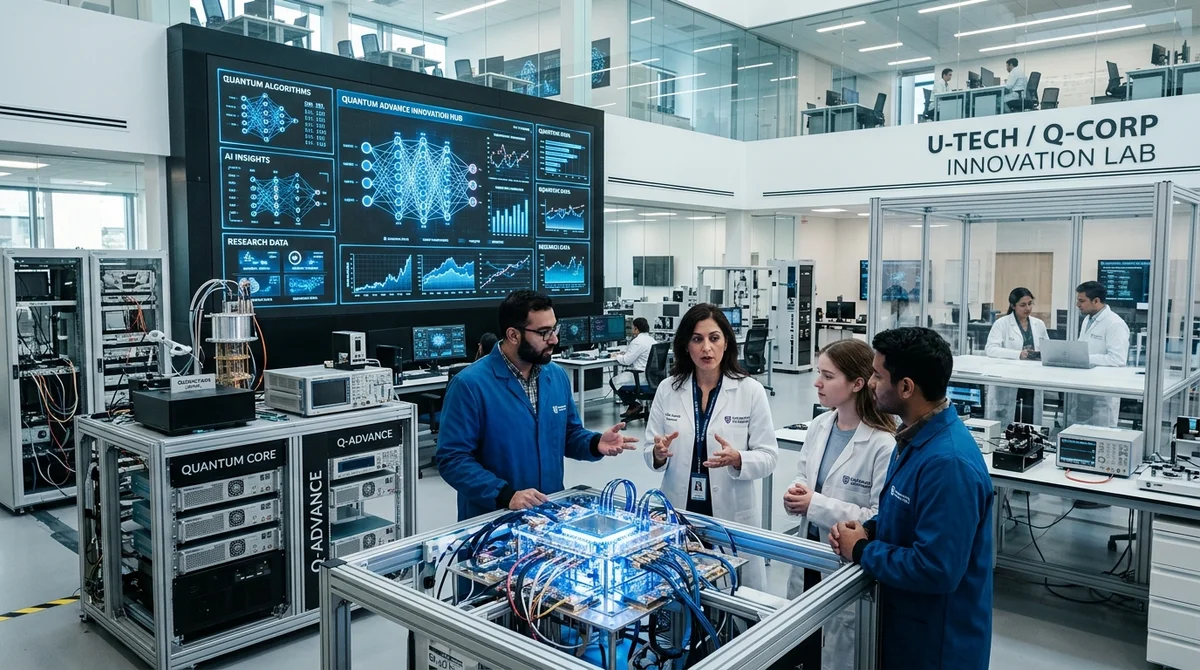
MIT and IBM announced the launch of MIT-IBM Computing Research Lab — a new joint laboratory that expands their previous AI partnership toward quantum computing. The project will seek new computational approaches at the intersection of AI, algorithms, and hybrid systems, where classical machines work together with quantum hardware.
From Watson to the New Lab
The new structure grew out of the MIT-IBM Watson AI Lab, which operated on the MIT campus since 2017. During that time, the landscape changed dramatically: AI shifted from laboratory technology status to mass deployment, and quantum computing began moving toward practical scenarios. MIT and IBM believe that it now makes sense to combine these directions within a single research framework, rather than pursuing them in parallel as separate tracks.
This is not simply a rebranding. MIT-IBM Computing Research Lab expands the agenda: in addition to fundamental AI research, it now includes quantum computing and the mathematical foundation of future computational systems. Particular emphasis is placed on hybrid architectures, where quantum devices, classical computing, and AI methods reinforce each other. The lab should also complement two MIT initiatives — a consortium on the impact of generative AI and the institute's quantum initiative.
What the Lab Will Do
At the center of the new program are joint MIT and IBM research initiatives in three areas: AI, algorithms, and quantum computing. The team wants to accelerate the emergence of approaches that go beyond the capabilities of today's classical systems. This concerns not only the models themselves, but also computational architecture, new ways of integration into hybrid systems, engineering interfaces between platforms, and corporate scenarios where reliability, transparency, and trust in results are critical.
- Small, efficient, and modular language models
- Enterprise AI systems for real-world deployment
- New quantum algorithms for tasks in chemistry, biology, and materials science
- Optimization methods, Hamiltonian simulations, and work with differential equations
- Hybrid systems combining quantum hardware, classical computing, and AI accelerators
According to the partners' plan, the effect of such a program could extend far beyond computer science. MIT's materials mention more accurate weather and air turbulence forecasting, improved financial market models, more targeted drug design through protein structure prediction, and global supply chain optimization. In other words, the lab aims not at demonstrating beautiful prototypes, but at computational tools applicable to science and industry.
Scale and Team
The lab will retain its educational function: MIT explicitly mentions training the next generation of computational researchers. The work will involve faculty and students from different departments of the institute to accelerate discoveries in physical and biological sciences. At the project management level, a clear structure was established: separate leads from MIT and IBM are responsible for AI, algorithms, and quantum directions, while Aude Oliva and David Cox will continue to lead the lab.
"We want to rethink how models, algorithms, and systems are designed
for an era where AI and quantum computing work together."
The new platform already has a solid foundation. The previous MIT-IBM Watson AI Lab funded over 210 research projects involving more than 150 MIT faculty and over 200 IBM researchers. These projects yielded over 1,500 peer-reviewed publications, and funding supported over 500 students and postdocs. IBM separately reminds of its roadmap: the company expects to create the world's first fault-tolerant quantum computer by 2029.
What This Means
Large AI partnerships are rapidly shifting from individual models to next-level computational infrastructure. The launch of MIT-IBM Computing Research Lab shows that the race is now not only about the best chatbot, but also about who first assembles a working combination of AI, new algorithms, and quantum systems. If this bet pays off, the winners will be not only model developers, but also industries that need more accurate and complex computing.
Want to stop reading about AI and start using it?
AI News is a curated feed of AI/tech news. Hamidun Academy teaches you to use AI systematically in your work.
The AI world, distilled — once a week
Seven stories that actually mattered, hand-picked. No noise, no reposts, no press releases.
Done! Check your inbox for a confirmation.