Meta shares slide after 2026 AI spending forecast rises to as much as $145 billion
Meta posted a strong quarter: revenue rose 33% to $56.3 billion, and its advertising business accelerated again. But the market looked elsewhere. The company lifted its 2026 capital expenditure forecast from $115–135 billion to $125–145 billion, blaming more expensive components and data center expansion. In after-hours trading, the shares fell more than 6%. *Meta is designated an extremist organization and banned in Russia.
AI-processed from Bloomberg Tech; edited by Hamidun News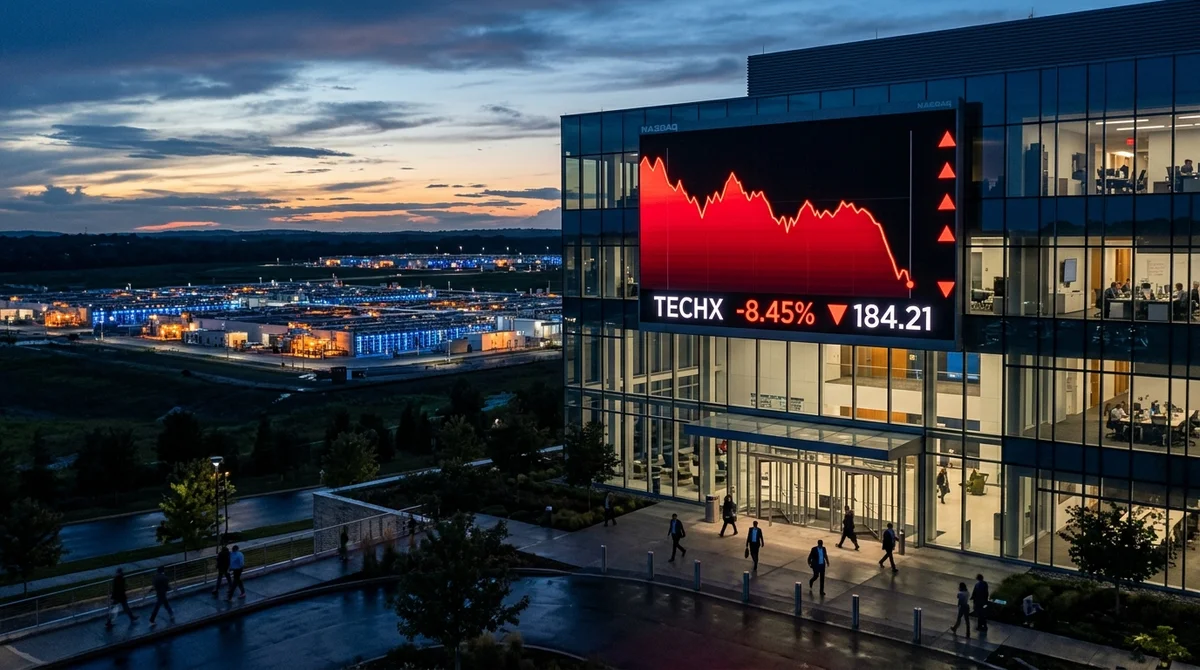
Meta raised its 2026 capital expenditure forecast and immediately drew a harsh market reaction. Despite strong quarterly results, investors again fixed on the central question: will the company's giant bet on artificial intelligence pay off?
Why the shares fell
The main trigger was the new capex range: $125–145 billion, up from January's $115–135 billion. For a company of this size, it still looks like another sharp step up, and it overshadowed the rest of the report. In extended trading, Meta shares lost more than 6%.
Officially, management attributed the revision to rising component prices, above all memory, and additional data center spending needed to provide capacity not only in 2026 but in the years that follow.
The problem for the market is not that Meta earns too little; on that front, things are going well. The problem is that the company is sinking deeper into a spending cycle in which promises of future returns still outweigh proven monetization.
The profit structure adds further skepticism: diluted earnings per share came to $10.44, but the quarter included a tax benefit of $8.03 billion. Without it, EPS would have been lower, so investors are reading the report more cautiously than the headline suggests.
What the quarter showed
Operationally, Meta had a strong quarter. Revenue grew 33% year over year to $56.31 billion, operating income reached $22.87 billion, and the margin held at 41%. The ad engine continues to carry the business: ad impressions rose 19%, and the average price per ad rose 12%. The Meta family of apps was used by an average of 3.56 billion people per day, and the company separately noted that a slight quarterly dip in audience was tied to internet disruptions in Iran and the restriction of WhatsApp in Russia.
- Second-quarter revenue is expected in the range of $58–61 billion
- First-quarter capex already totaled $19.84 billion
- Free cash flow reached $12.39 billion
- Cash and liquid securities on the balance sheet stand at $81.18 billion
In other words, the core business is not broken and even looks very resilient. Moreover, Meta did not raise its total 2026 expense forecast: it stayed at $162–169 billion, and the company still expects to end the year with higher operating income than in 2025. But for the market that was not enough: it now wants to see not just ad growth but a direct link between AI infrastructure and future cash flows.
Where the billions are going
According to management, rising investment is needed not only because of scarce memory and pricier components. Meta continues to build out compute capacity for its own models and AI-based products. Mark Zuckerberg said the company has already released the first model from Meta Superintelligence Labs, and that it is deploying more than 1 gigawatt of its own custom silicon, built with Broadcom, inside its infrastructure, along with significant volumes of AMD chips and new Nvidia systems. At the same time, Meta is signing multiyear cloud contracts to get the needed capacity faster.
"All the signals we see internally and across the industry give us
confidence in these investments."
Meta's logic is clear: the company says its new models already improve recommendations, engagement and ad value, and should later evolve into personal and business agents. But in the same communication, management effectively admits that leadership is still far off. On a separate call with analysts, CFO Susan Li said the new model release helped Meta "be in the group of leaders," but most of the road is still ahead, from multimodality to tool use and orchestration of multiple agents. That is the source of the jitters: spending is already historic, but eventual leadership is not guaranteed.
What this means
The market sent Meta a simple signal: strong advertising and strong revenue are no longer enough if the AI budget grows faster than confidence in the payoff. For the whole Big Tech race, this is an important marker: investors are willing to tolerate enormous AI spending, but now demand firmer proof that it turns into profit, not just new models.
*Meta is designated an extremist organization and banned in Russia.
- Nov 1, 2026MoneyGate safety layer blocked all 42 fraudulent requests to local AI models
- Oct 31, 2026Open-source LLM gateway KTMS 1.0 plugs your own GPUs into the cloud and survives outages
- Oct 31, 202622B-Parameter LTX-2.5 Runs on a 10 GB RTX 3080, but Takes 5 Minutes per Shot
- Oct 29, 2026T-Tech Introduces LIMe, a Method That Trains Language Models With 15% Less Compute
Key Questions Answered
Why the shares fell?
The main trigger was the new capex range: $125–145 billion, up from January's $115–135 billion. For a company of this size, it still looks like another sharp step up, and it overshadowed the rest of the report. In extended trading, Meta shares lost more than 6%. Officially, management attributed the revision to rising component prices, above all memory, and additional data center spending needed to provide capacity not only in 2026 but in the years that follow. The problem for the market is not that Meta earns too little; on that front, things are going well. The problem is
What the quarter showed?
Operationally, Meta had a strong quarter. Revenue grew 33% year over year to $56.31 billion, operating income reached $22.87 billion, and the margin held at 41%. The ad engine continues to carry the business: ad impressions rose 19%, and the average price per ad rose 12%. The Meta family of apps was used by an average of 3.56 billion people per day, and the company separately noted that a slight quarterly dip in audience was tied to internet disruptions in Iran and the restriction of WhatsApp in Russia. Second-quarter revenue is expected in the range of $58–61 billion First
Where the billions are going?
According to management, rising investment is needed not only because of scarce memory and pricier components. Meta continues to build out compute capacity for its own models and AI-based products. Mark Zuckerberg said the company has already released the first model from Meta Superintelligence Labs, and that it is deploying more than 1 gigawatt of its own custom silicon, built with Broadcom, inside its infrastructure, along with significant volumes of AMD chips and new Nvidia systems. At the same time, Meta is signing multiyear cloud contracts to get the needed capacity fa
Test Frontier LLMs & Autonomous Agents in One Workspace
Run Claude Opus 5.5, GPT-6, Gemini 3.1, and DeepSeek side-by-side in Nomad AI (nomadnet.ai) — unified model routing, deep research, and multimodal workflows under one subscription.
The AI world, distilled — once a week
Seven stories that actually mattered, hand-picked. No noise, no reposts, no press releases.
Done! Check your inbox for a confirmation.