Musk v. Altman Lawsuit Reveals OpenAI Letters, Documents, and Early Architecture
In the Elon Musk versus Sam Altman lawsuit, initial exhibits are being revealed: letters, photos, and corporate documents from OpenAI's early history. They demonstrate Musk wielded significant influence over the lab's mission and structure, Nvidia provided access to scarce supercomputer capacity, and team members harbored concerns about one founder's degree of influence.
AI-processed from The Verge; edited by Hamidun News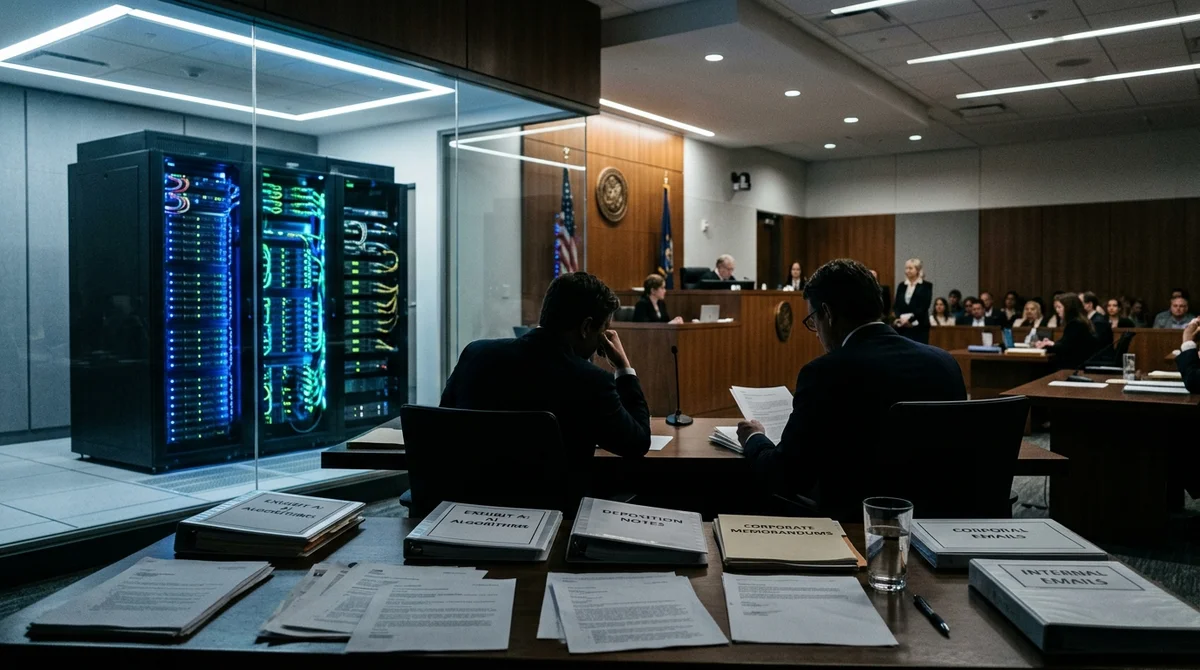
The lawsuit between Elon Musk and Sam Altman has begun publishing court exhibits, and they are already revealing many details about OpenAI's early days. Among the materials are early letters, photographs, and corporate documents that show who formulated the company's mission, where they sought resources, and how they discussed control over the laboratory.
What the Documents Revealed
The court materials relate to a period when OpenAI was just forming as an organization and, judging by the documents, had not yet adopted the identity that is familiar today. The case already includes correspondence, internal papers, and photographs from the startup phase of the project. The main point here is not isolated sensational phrases, but rather the context: the documents show that OpenAI's structure, its original mission, and support model were discussed much more substantively and personally than it appeared externally in the lab's first years of existence.
So far, this is only part of the body of evidence, and the court has not yet given it a final assessment. But even the published fragments already suggest how roles were distributed among the participants. From them, it is clear that Musk was not simply a notable donor or public ally of the project: he actively participated in formulating OpenAI's mission and significantly influenced its early organizational structure.
For the current dispute, this is one of the key narratives.
Who Influenced the Startup
From the already-revealed exhibits, several important lines emerge. They concern not only the personal conflict between Musk and Altman, but also how one of the most influential AI projects of the decade was assembled. In short, the materials so far point to these key moments:
- NVIDIA CEO Jensen Huang provided OpenAI with scarce supercomputer resources
- Musk participated significantly in drafting OpenAI's mission
- The team considered Y Combinator support as an important early resource
- Greg Brockman and Ilya Sutskever, according to the materials, were concerned about the degree of Musk's influence
The NVIDIA episode is particularly revealing. If one of the main scarce resources for an AI laboratory is computing power, then a gift in the form of a supercomputer speaks to the scale of support at the very beginning. The Y Combinator line is equally important: the documents create the impression that Altman saw in the accelerator not just a familiar network of contacts, but a potential foundation for launching and legitimizing OpenAI. This helps better understand how, alongside idealistic rhetoric from the very beginning, there were questions about infrastructure, money, and a management center.
Why This Matters
These materials are interesting not only to fans of corporate drama. Court exhibits turn long-standing public disputes into a dispute over concrete facts: who wrote the basic formulations, who provided the hardware, who sought institutional support, and who feared too much concentration of influence. For OpenAI, this is a sensitive topic because today's company has long moved far from the initial image of a non-profit research structure. Therefore, any document from the early period automatically becomes an argument in debates about what the founders promised and how the course changed afterward.
There is another layer to this. OpenAI's history has often been retold as a story of ideas, people, and breakthrough models. The court is showing that organizational details are equally important, details that usually remain behind the scenes: charter principles, balance of power, sources of computational resources, and how project participants saw each other's roles. It is precisely such details that later determine who gets the right to speak on behalf of the original mission and who is accused of deviating from it.
What This Means
The Musk vs. Altman lawsuit is gradually becoming not just a legal conflict, but a public reconstruction of OpenAI's birth. The more documents come to light, the clearer it becomes: the dispute is not only about personal relationships, but about who from the beginning set the rules, values, and levers of control in one of the world's most important AI companies.
Need AI working inside your business — not just in your newsfeed?
I build production AI for companies — custom CRM, internal tools, autonomous agents, workflow automation. Owned by you, shaped to your process, no per-seat tax. Built by Zhemal Khamidun, CPO of AlpinaGPT (AI platform, 6,000+ users).
The AI world, distilled — once a week
Seven stories that actually mattered, hand-picked. No noise, no reposts, no press releases.
Done! Check your inbox for a confirmation.