Elon Musk testifies for a third day in court in case over OpenAI’s founding history
The court case over Elon Musk’s lawsuit against Sam Altman and OpenAI continues on April 30. After a tense cross-examination of Musk, private emails, personal messages, and diary entries about the company’s early days are surfacing in the case. The court is next expected to hear from new witnesses, including OpenAI president Greg Brockman, and Altman himself is due to testify later.
AI-processed from Guardian; edited by Hamidun News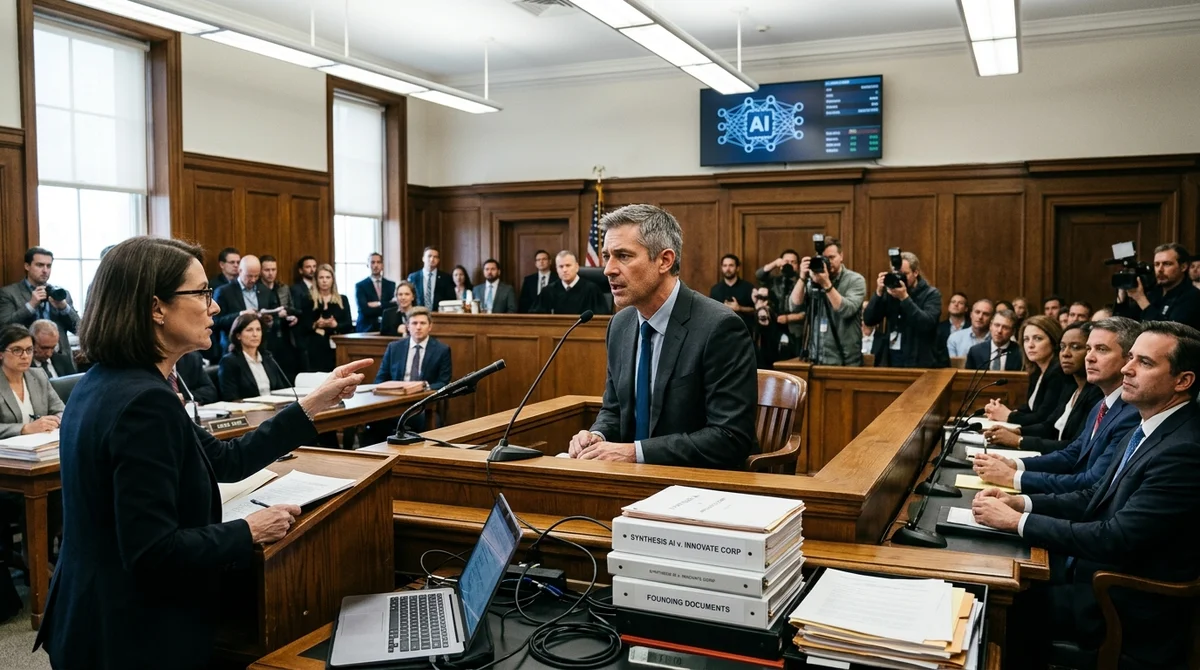
The lawsuit between Elon Musk and Sam Altman over the history of OpenAI's creation continued on April 30, 2026. After a heated exchange during Musk's cross-examination, the case is increasingly becoming a public examination of how one of the most influential AI companies was born.
Third Day in Court
On April 30, Musk is answering questions in court again following a tense hearing the day before, April 29. During the proceedings, OpenAI's lawyers continue cross-examining the Tesla chief, and Musk's side is expected to call new witnesses. Among those expected at upcoming hearings is OpenAI's president Greg Brockman.
Such an order matters in itself: first the court records the position of one of the key co-founders, then compares it with the testimony of other participants in the events. The atmosphere around the case is already looking far from formal. From the hearing description, it follows that Wednesday proceeded on heightened tones, with exchanges between the sides being harsh.
This adds not only drama to the process, but also weight: the dispute is not about secondary details, but about how exactly OpenAI was created, what each party was counting on at the beginning, and why relations between Musk and Altman ultimately escalated into a prolonged conflict.
Sealed Materials Surfaced
One of the most notable parts of the process is documents and personal records that were not previously public. During testimony and the presentation of evidence in court, private emails, text messages, and diary entries related to OpenAI's founding have already emerged. For the industry, this is a rare case where the internal history of a major AI company is examined not through interviews and posts, but through primary materials created at the moment decisions were made.
These materials are important not only for lawyers. They show how behind the public story of mission and technology stood ordinary human agreements, expectations, and disagreements. The court is essentially assembling an early chronology of OpenAI from pieces of private communication and turning it into a verifiable legal picture.
For the industry, this is an opportunity to see not an edited legend, but the working reality of the launch of a major technological initiative. This is especially important for market observers.
- private letters help reconstruct the logic of the first agreements
- messages show the tone and dynamics of relationships between participants
- diary entries add a personal perspective on disputed episodes
- witness testimony links these materials into a unified version of events
This is exactly why the process has already gone beyond a typical corporate dispute. It gives a glimpse behind the scenes of a company's creation that today influences the global AI market, and simultaneously shows how fragile alliances between powerful figures in the technology business can be. The more such materials enter the public domain, the harder it becomes to maintain a smooth and convenient-for-all version of the past. And this is already affecting public assessment of the dispute.
Who Comes Next
The legal proceedings are planned for three weeks, which means the most important episodes are still to come. Among the witnesses are many notable players in the technology industry, and later testimony from Sam Altman himself is expected. Before that, the court must hear from other participants in OpenAI's early history, including Brockman.
The more people with direct access to events take the stand, the harder it will be for the parties to maintain only their own convenient version of the past. Particular interest is drawn to Altman's future testimony. If Musk is now answering questions as one of the co-founders and opponent of the company, then Altman will probably have to explain not only the origin of the conflict, but also his interpretation of how the goals, structure, and balance of influence within OpenAI changed.
For observers of the AI market, this could become the culmination of the proceedings, because the dispute has long gone beyond personal enmity and touches on the very legend of the company's origins.
What This Means
This court case has already become not just a rehashing of the old conflict between Musk and Altman, but a public audit of OpenAI's origins. Even if the final decision is still distant, the process itself is changing the company's perception: instead of a neat success story, the public sees a collection of personal correspondence, disputed decisions, and competing versions of how it all began. For the AI market, this is a reminder that the largest technology projects are built not only on ideas and code, but also on complex relationships between people.
Need AI working inside your business — not just in your newsfeed?
I build production AI for companies — custom CRM, internal tools, autonomous agents, workflow automation. Owned by you, shaped to your process, no per-seat tax. Built by Zhemal Khamidun, CPO of AlpinaGPT (AI platform, 6,000+ users).
The AI world, distilled — once a week
Seven stories that actually mattered, hand-picked. No noise, no reposts, no press releases.
Done! Check your inbox for a confirmation.