Oracle bets on AI and data centers for OpenAI — market tests whether the boom is deflating
Oracle, associated for decades with databases and enterprise software, is now making one of the riskiest bets in AI. The company doesn't build its own foundational models but instead sells infrastructure and bare-metal compute power to meet OpenAI's and other players' demand. If the market cools, its metrics could be among the first to show where the hype ends and real economics begin.
AI-processed from The Verge; edited by Hamidun News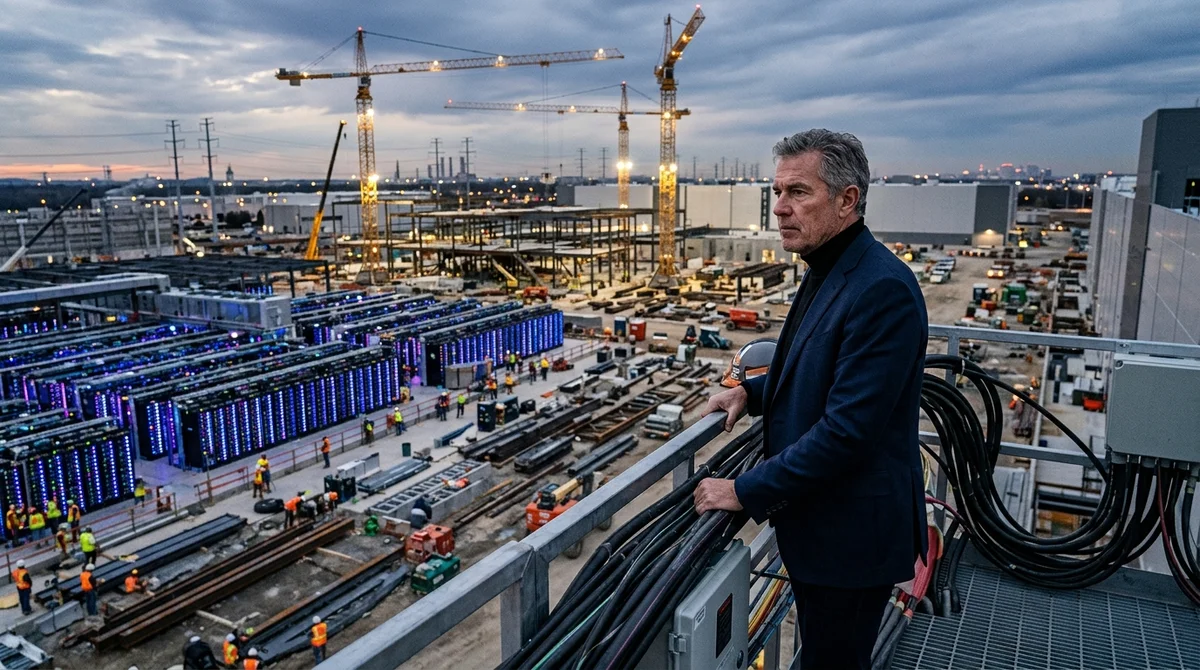
Oracle is attempting to redefine its role in the AI economy. A company that the market has perceived for decades as a provider of databases and enterprise software is now becoming one of the most telling indicators of how sustainable the current artificial intelligence boom truly is.
An Unexpected Market Barometer
Oracle is now being viewed not as another AI winner, but as a public stress test for the entire sector. The logic is simple: if demand for computing power, data centers, and AI infrastructure truly remains high, Oracle will be able to quickly convert this trend into revenue. If, however, corporate clients begin to slow their purchases and model developers start cutting expenses, this will hit the company almost immediately and be clearly reflected in its financial reports.
"If you want to understand whether the AI bubble is deflating, there is only one public company that will show it:
Oracle."
Herein lies the paradox. Oracle is much older than almost all current AI stars and has long been associated with another technological cycle—databases, enterprise software, and large contracts with traditional business. But that's precisely why its pivot looks so telling: the company is not creating a new legend from scratch, but is restructuring a mature business for a market where stable rules of the game don't yet exist, and estimates of demand and profitability can change very rapidly.
Betting on Infrastructure
Oracle is not trying to play the role of OpenAI or Anthropic and is not competing with them in creating foundation models. Its bet is elsewhere: to sell the foundation without which AI companies cannot scale—namely, computing power, server capacity, infrastructure, and services around data centers. This makes Oracle not a typical SaaS vendor of the past decade, but a hybrid of an old corporate company and a new infrastructure player.
In essence, its current market position looks like this:
- it is not a creator of foundation models
- it is not a classical hyperscaler in the vein of the largest cloud providers
- it is no longer just a supplier of enterprise software
- the company has entered the bare-metal segment, where hardware and direct access to computing power matter
- its growth is increasingly tied to the future of AI workloads and major customers
This pivot makes sense given that Oracle's traditional business is no longer perceived by the market as the main driver of growth. The company is essentially betting on a specific future scenario: demand for AI will be so large and lasting that the infrastructure layer will be one of the most profitable places in the entire value chain. If this scenario plays out, Oracle will be able to move from the category of "reliable old vendor" into the category of key suppliers of the computational foundation for a new cycle.
Where the Risk Lies for Oracle
The problem is that this bet is very narrow and therefore especially risky. Oracle is not diversifying its AI story across dozens of directions; instead, it is concentrating on a version of the market where winners are suppliers of infrastructure for heavy models and gigantic data centers. This is closer to the logic of CoreWeave and other players who profit from scarce computing capacity than to the strategy of companies earning revenue from subscriptions, applications, or their own AI models at the application level.
Because of this, Oracle could become the first company where investors see a real gap between AI expectations and AI money. While the market believes in unlimited demand for computing power, data center construction and capacity leasing look almost risk-free. But if generative AI begins to grow more slowly than predicted, if major clients trim budgets, or if the utilization of new facilities falls short of promises, the blow will hit first and foremost those who invested in infrastructure early and at scale.
For OpenAI and other model companies, this development is also important. If a whole layer of partners forms around them, willing to restructure their business around AI infrastructure, this strengthens the entire sector and accelerates its growth. But at the same time, systemic risk increases: more and more companies begin to depend on current demand not being a short-term spike but becoming a sustainable market. This is precisely why Oracle is now being watched as an early signal for the entire sector.
What This Means
Oracle is turning into the litmus paper of the AI market. Not because it leads in models or consumer products, but because its success now depends on the most expensive and vulnerable layer of the industry—computing power and data centers. If Oracle shows sustained growth on this bet, the thesis about a long AI boom will be strengthened. If not, discussions about market overheating will quickly shift from abstract to concrete financial terms within the coming quarters.
Want to stop reading about AI and start using it?
AI News is a curated feed of AI/tech news. Hamidun Academy teaches you to use AI systematically in your work.
The AI world, distilled — once a week
Seven stories that actually mattered, hand-picked. No noise, no reposts, no press releases.
Done! Check your inbox for a confirmation.