OpenAI Rewrote Its Core Principles and Cemented Its Course Toward Commercial Development
OpenAI released a new version of its core principles and notably departed from its 2018 Charter rhetoric. The document places less emphasis on AGI as a shared mission and more on AI democratization, infrastructure, sustainability, and the company's right to change course as it grows. In essence, OpenAI has publicly cemented its transition from a research non-profit to a major commercial player.
AI-processed from 3DNews AI; edited by Hamidun News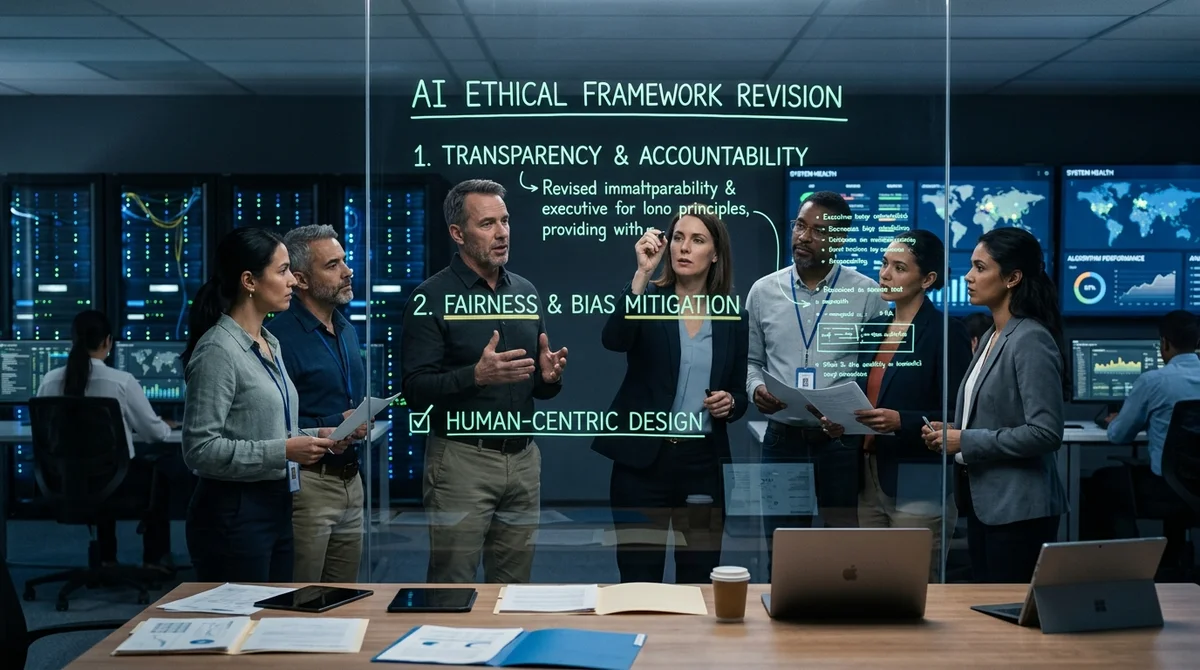
OpenAI updated its "foundational principles" on April 26, 2026. The new document no longer resembles the idealistic manifesto of a research laboratory from 2018: it is now a policy statement from a major AI company that simultaneously sells products, builds infrastructure, and attempts to set the framework for the entire industry.
What Changed
In 2018, OpenAI had a Charter — a document written in the language of mission and self-restraint. The company spoke extensively about AGI, the benefit to all humanity, long-term safety, and even its readiness to stop competing if another laboratory came closer to creating safe strong AI. It was a text of a non-profit research organization that wanted to show: it was not going to win the race at any cost.
The 2026 version sounds different. AGI remains part of the mission, but no longer dominates each section. Instead of promises to yield to a more successful competitor, OpenAI formulates five new principles and essentially describes itself as a commercial player that intends to scale AI, reduce computation costs, build data centers, and influence how society will make decisions about technology development.
This is not a cosmetic edit, but a public fixation of the company's new role.
Five New Principles
The new text is built around five core ideas. They look more applied than the previous Charter: fewer abstract commitments to a distant future and more discussion about how OpenAI intends to act in a world where AI has already become business, infrastructure, and subject to political disputes.
In essence, the document explains not only the company's values, but also its operational logic for the coming years. This is evident both in vocabulary and priorities.
- Democratization — prevent the concentration of advanced AI capabilities in the hands of a few players.
- Empowerment — provide users with increasingly useful tasks and freedom in service usage.
- Universal Prosperity — make AI cheaper and build infrastructure so that technology benefits are distributed more widely.
- Resilience — work with biological risks, cyber threats, and safety together with governments and industry.
- Adaptability — change approaches as new knowledge emerges and openly explain such changes.
The principle of universal prosperity is particularly telling. OpenAI explicitly states that cheap and mass-market AI requires enormous computing resources, new economic models, and infrastructure support from governments and society. Resilience is also emphasized separately: the company speaks not only of risks, but of the need to build protection at the level of system architecture.
That is, we're no longer talking about laboratory ethics, but about full-scale industrial policy around AI.
Signal for the Industry
The most noticeable change is not the list of new words, but what disappeared between the lines. The old Charter had a strong emphasis on collaboration and refusal to engage in a tough race for AGI if someone else came closer to the goal. In the new document, this self-restraint is absent.
Instead, OpenAI explains why it is buying more and more computing power, vertically integrating, and promoting data center construction around the world despite relatively modest revenue.
"We will not always do everything perfectly, but we will learn quickly
and correct course."
This phrase well describes the new tone of the document. OpenAI is no longer trying to look like a small laboratory with a philosophical manifesto. It speaks as a company that recognizes its scale, accepts criticism as inevitable, and leaves itself room in advance to reconsider the rules.
For the market, this is an important signal: the fight for AI is now taking place not only at the level of models, but also at the level of governance, infrastructure, and political influence.
What This Means
The updated principles show that OpenAI has finally transitioned from the image of a research NGO to the role of a systemic player in the AI economy. For the industry, this means fiercer competition, more talk about computational infrastructure, and fewer illusions that the largest laboratories are ready to voluntarily step aside for the sake of abstract common good.
In other words, OpenAI is now selling not just models, but its own vision of how the strong AI market should be structured.
Need AI working inside your business — not just in your newsfeed?
I build production AI for companies — custom CRM, internal tools, autonomous agents, workflow automation. Owned by you, shaped to your process, no per-seat tax. Built by Zhemal Khamidun, CPO of AlpinaGPT (AI platform, 6,000+ users).
The AI world, distilled — once a week
Seven stories that actually mattered, hand-picked. No noise, no reposts, no press releases.
Done! Check your inbox for a confirmation.