Elon Musk begins testifying in high-profile trial against OpenAI
Elon Musk has begun testifying in his lawsuit against OpenAI, Sam Altman and Greg Brockman. At the center of the dispute are the company's early history, Musk's investment of up to $38 million, and disagreements over what OpenAI's structure should be and how to interpret its original mission. The trial matters not only to the parties involved but to the entire AI industry.
AI-processed from The Verge; edited by Hamidun News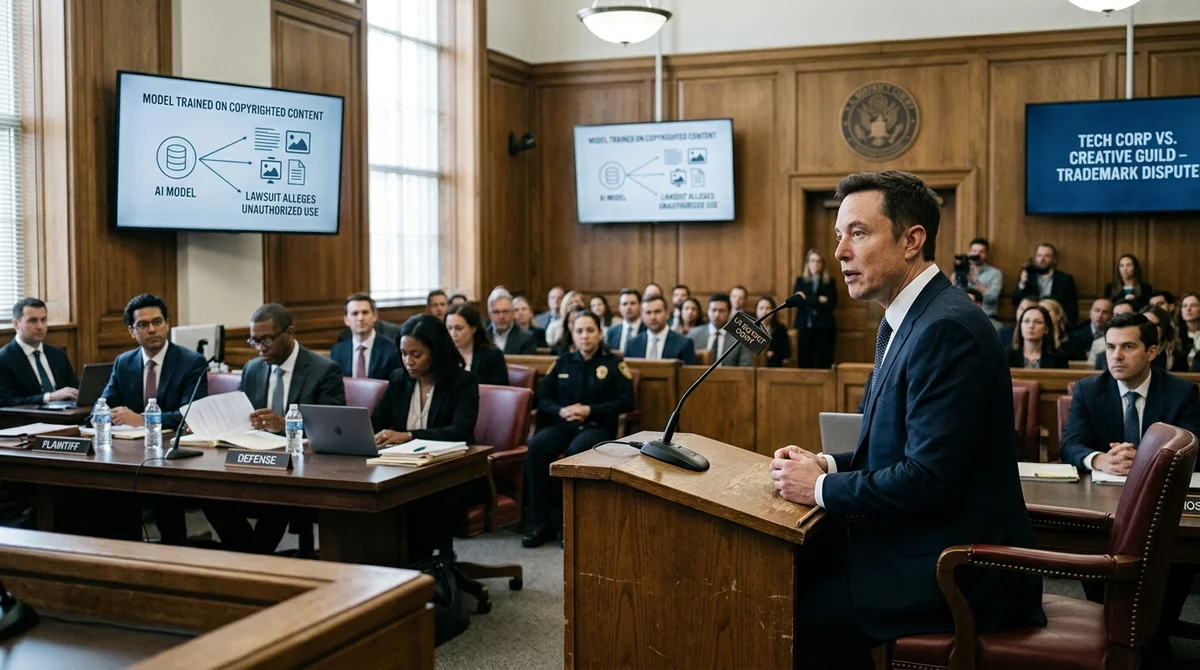
Elon Musk has formally begun testifying in the case he himself brought against OpenAI, its CEO Sam Altman and its president Greg Brockman. The trial puts the spotlight back on an old conflict among people who once launched one of the most influential AI companies together.
How the conflict began
Musk, Altman and Brockman were part of OpenAI's original team. In the early days Musk put up to $38 million into the project, but relations between the co-founders later soured. The sides diverged on what the company's structure should be and how exactly its original mission should be interpreted. Now the dispute is being aired not in interviews and posts but in a courtroom, under oath and with much higher stakes.
One key episode concerns the question of whether OpenAI should have become part of Tesla, which Musk owned. That did not happen: Musk left the project and years later launched xAI, a direct competitor to OpenAI. At the time of publication xAI is already part of SpaceX's orbit, so the conflict between the former co-founders has long since stopped being merely a dispute about the past. It is now both a legal proceeding and a clash between major players fighting for influence in the AI market.
What the court is weighing
The start of Musk's testimony matters in itself, because he can lay out in detail his version of OpenAI's early history: who agreed to what, how the company's mission was understood, and why the alliance fell apart at some point.
This is not the first legal strike against OpenAI. In recent years Musk has filed at least four separate lawsuits against the company, and the current trial is the most visible escalation of this years-long conflict.
- early agreements between the co-founders
- the role of Musk's investment at OpenAI's start
- disagreements over the company's structure and mission
- the significance of Musk's departure and the emergence of xAI
The court will have to examine not only the details of corporate history but also the parties' motives. For one side it is a question of controlling the narrative of OpenAI's origins and of decisions made at the very beginning. For the other it is an attempt to defend the current governance model and show that the later conflict does not negate the company's right to develop along its own path. That is why the trial interests more than lawyers: it touches on a theme that has become nearly fundamental for the AI market, namely who is responsible for a technology organization's original mission, and how.
Why the trial matters
The case is sensitive for OpenAI on several levels at once. First, it concerns reputation and how the public, partners and investors will view the company's history. Second, any public court fight between co-founders brings up archived decisions, internal disagreements and old arrangements that usually stay behind closed doors. The louder the trial, the more it affects not only OpenAI's image but also the broader debate over how leading AI companies should be organized.
For Musk, too, the stakes go beyond his personal conflict with Altman. After leaving OpenAI he built his own competitor, so every statement he makes in court will inevitably be judged not only as the words of a former co-founder but also as the position of a market player with a direct commercial interest. That makes the proceedings especially sharp: the story of OpenAI's founding is intertwined with today's competition for talent, capital and influence over the agenda around artificial intelligence.
What this means
Even if the trial does not deliver an instant answer to every question about OpenAI's past, the fact of Musk's public testimony is already significant. AI companies increasingly argue not only over technology and products but over power, control and the right to define an original mission. For the industry this is a signal: early agreements between founders, governance structure and conflicts of interest may ultimately prove no less consequential than the models themselves and the high-profile releases.
- Nov 1, 2026Local models lose to Opus and Codex: 0.21 on a MacBook versus 1.00 for Codex
- Nov 1, 2026Kimi scores 96.2% on a 1C database analytics test and emerges as a fallback if Claude access is blocked
- Nov 1, 2026OpenAI Rewrites GPT Behavior Rules: Five Values and a Chain of Command
- Nov 1, 2026Google admits AI Mode cuts search revenue, shares fall 15%
Key Questions Answered
How the conflict began?
Musk, Altman and Brockman were part of OpenAI's original team. In the early days Musk put up to $38 million into the project, but relations between the co-founders later soured. The sides diverged on what the company's structure should be and how exactly its original mission should be interpreted. Now the dispute is being aired not in interviews and posts but in a courtroom, under oath and with much higher stakes. One key episode concerns the question of whether OpenAI should have become part of Tesla, which Musk owned. That did not happen: Musk left the project and years l
What the court is weighing?
The start of Musk's testimony matters in itself, because he can lay out in detail his version of OpenAI's early history: who agreed to what, how the company's mission was understood, and why the alliance fell apart at some point. This is not the first legal strike against OpenAI. In recent years Musk has filed at least four separate lawsuits against the company, and the current trial is the most visible escalation of this years-long conflict. early agreements between the co-founders the role of Musk's investment at OpenAI's start disagreements over the company's structure a
Why the trial matters?
The case is sensitive for OpenAI on several levels at once. First, it concerns reputation and how the public, partners and investors will view the company's history. Second, any public court fight between co-founders brings up archived decisions, internal disagreements and old arrangements that usually stay behind closed doors. The louder the trial, the more it affects not only OpenAI's image but also the broader debate over how leading AI companies should be organized. For Musk, too, the stakes go beyond his personal conflict with Altman. After leaving OpenAI he built his
Ship AI Faster with Founders, Engineers & Weekly Architecture Reviews
Inside Vibe Club (hamidun.com/club) — weekly live masterminds with Zhemal Khamidun, Tech Radar, full LMS access, and 370+ production Claude Code skills.
The AI world, distilled — once a week
Seven stories that actually mattered, hand-picked. No noise, no reposts, no press releases.
Done! Check your inbox for a confirmation.