Fortis Solutions bets on human-supervised AI and trust infrastructure
Fortis Solutions is pushing an approach in which AI does not replace specialists but works under their supervision. The company, which has a background in infrastructure, cybersecurity and data, argues that trust in new systems comes not from bold claims about models, but from clear rules, secured perimeters, solid integration into workflows and transparent accountability for the final outcome. In practice, that means asking who makes the final decision, how results are verified, where automation stops and what happens when the system gets it wrong.
AI-processed from TNW; edited by Hamidun News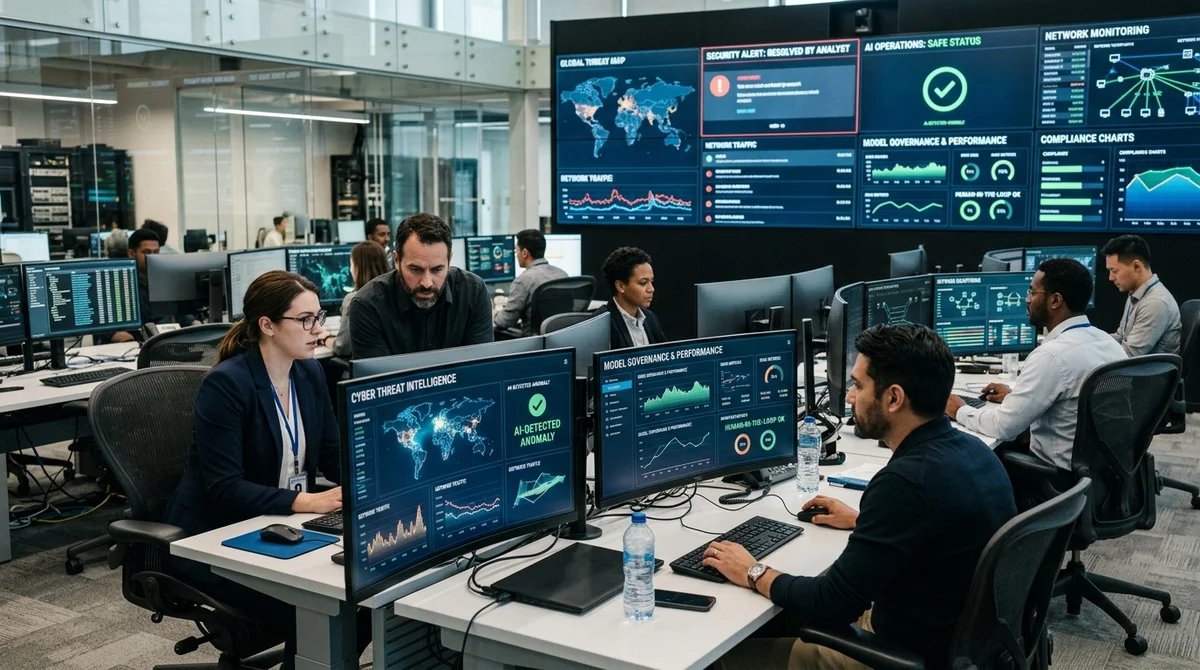
Fortis Solutions suggests treating enterprise AI not as an autonomous replacement for people, but as a managed tool inside a reliable technology environment. At the center of this approach is neither the model itself nor its flashy demos, but trust: who makes the final decision, how results are checked, where the limits of automation lie and what happens if the system makes a mistake.
This view fits the company's own profile. Fortis Solutions has long worked at the intersection of infrastructure, cybersecurity and data systems, the layers on which the resilience of corporate processes depends. That is why it treats AI not as an isolated add-on but as part of the working architecture.
For business, this is an important shift. The question is no longer just whether a model can write a text, analyze a document or suggest a next step. It matters far more who has access to the data, how the system's actions are logged, whether its output can be reproduced and whether it is built into existing control perimeters.
The idea of human-supervised AI, which Fortis promotes, boils down to something simple: machine precision should strengthen human judgment, not replace it. This is especially visible in tasks where the cost of error is high: operations, work with internal knowledge, information security, customer service and analytics. A model can find patterns faster, condense large volumes of data, draft decisions and remove routine work. But setting goals, assessing context, handling ambiguity and bearing final responsibility remain with the human. This mode makes automation less risky and also raises the chance that employees will actually start using it rather than working around it.
Fortis puts separate emphasis on intelligent infrastructure as the foundation of trust in AI. In practice, this means model quality alone guarantees nothing if there is no secured and observable perimeter around it. It takes clear access policies, proper handling of corporate data, logging, monitoring, mechanisms for verifying answers and links to existing security systems.
Without these, even a strong AI quickly becomes a source of new risks: leaks, false conclusions, opaque decisions and conflicts with compliance requirements. That is why the conversation about AI is increasingly shifting from the level of features to the level of architecture. In a corporate environment, trust rarely comes from promises.
It appears when a system can be constrained, checked and, if necessary, quickly stopped.
The approach also changes the very idea of work. Fortis does not describe AI as a tool for fully displacing specialists. Instead, it is about redistributing roles: less manual processing and repetitive operations, more verification, coordination, interpretation and decision-making. For companies, this means AI adoption cannot be reduced to buying access to a model. They will need processes that make clear where automation is acceptable, where human control is mandatory and how employees are trained for new ways of working. In this logic, value is created not only by speed but by predictable results.
For the market, this is another signal that the era of unconditional enthusiasm for AI is gradually giving way to a more mature conversation about deployment. The winners will not be those who promise autonomy the loudest, but those who can build AI into real business processes without losing control and trust. Fortis Solutions' position reflects this shift well: if a company wants to get value from AI at scale, it needs to build not only models but also infrastructure in which the human remains the last instance and technology works to amplify, not to shift responsibility away.
- Nov 2, 2026Microsoft releases 4B model Mage-VL-Cowork, which solves 66.0% of OSWorld-Verified tasks
- Nov 2, 2026Meta's Muse assistant keeps dossiers on loved ones and gets root on Ubuntu by default
- Nov 2, 2026mcp-linter finds 18 undescribed parameters in Anthropic's filesystem server
- Nov 2, 2026The Verge reviewer builds a $50 Meta Muse Charm alternative with Claude Code
Test Frontier LLMs & Autonomous Agents in One Workspace
Run Claude Opus 5.5, GPT-6, Gemini 3.1, and DeepSeek side-by-side in Nomad AI (nomadnet.ai) — unified model routing, deep research, and multimodal workflows under one subscription.
The AI world, distilled — once a week
Seven stories that actually mattered, hand-picked. No noise, no reposts, no press releases.
Done! Check your inbox for a confirmation.