Fortis Solutions Bets on Human-Controlled AI and Trust Infrastructure
Fortis Solutions promotes an approach where AI doesn't displace specialists but operates under their control. With expertise in infrastructure, cybersecurity, and data, the company believes trust in new systems emerges not from bold model promises, but through clear rules, protected systems, quality integration into workflows, and transparent accountability for results.
AI-processed from TNW; edited by Hamidun News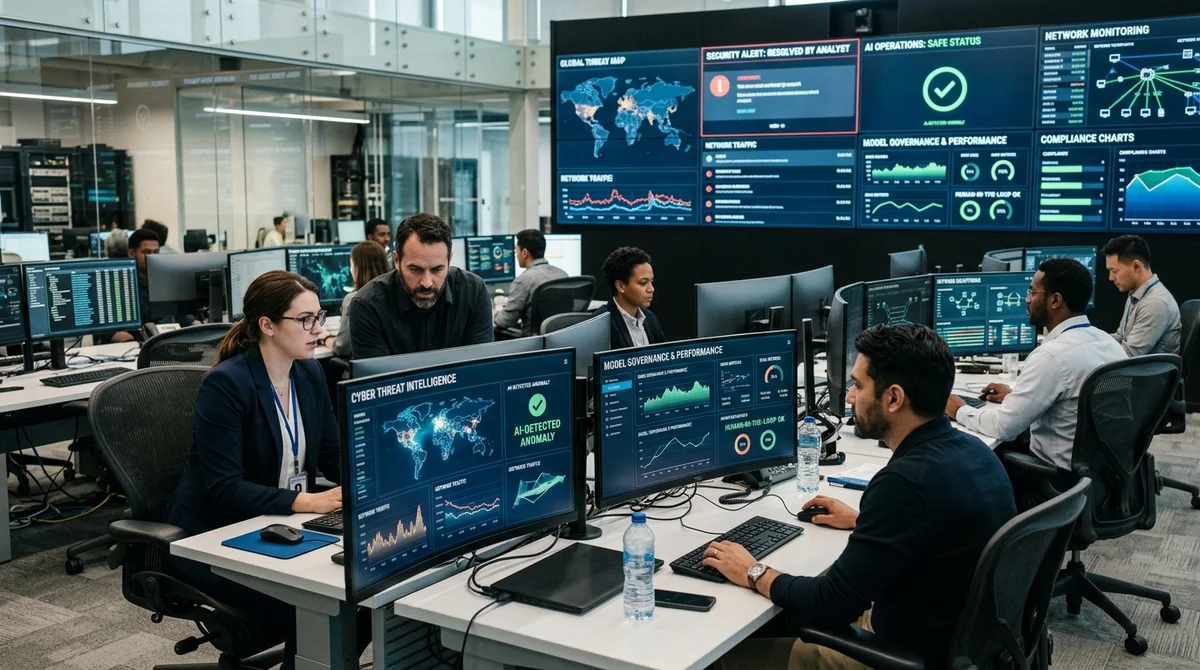
Fortis Solutions proposes viewing corporate AI not as an autonomous replacement for humans, but as a managed tool within a reliable technological environment. At the heart of this approach is not the model itself or its impressive demos, but trust: who makes the final decision, how are results verified, where do the boundaries of automation lie, and what happens when the system makes a mistake. This perspective is logically connected to the company's own profile.
Fortis Solutions has long worked at the intersection of infrastructure, cybersecurity, and data systems—that is, in the layers upon which the stability of corporate processes depends. Therefore, AI here is viewed not as an isolated layer, but as part of the working architecture. For business, this is an important shift.
The question is no longer only about whether a model can write text, analyze a document, or suggest a next step. Much more important is who has access to the data, how system actions are recorded, whether its output can be reproduced, and whether it is built into existing control loops. The idea of AI under human control, which Fortis speaks of, comes down to a simple thing: machine precision should reinforce human judgment, not replace it.
This is especially noticeable in tasks where the cost of error is high: in operational activities, work with internal knowledge, information security, customer service, and analytics. A model can find patterns faster, reduce large datasets, prepare draft solutions, and eliminate routine work. But goal-setting, context evaluation, dealing with ambiguity, and final responsibility remain with the human.
This mode makes automation less risky and simultaneously increases the chance that employees will actually use it rather than work around it. Fortis places special emphasis on intelligent infrastructure as the foundation of trust in AI. In practice, this means that the quality of a model itself guarantees nothing if there is no protected and observable circuit around it.
You need clear access policies, proper handling of corporate data, logging, monitoring, mechanisms for verifying responses, and connection to existing security systems. Without this, even powerful AI quickly becomes a source of new risks: leaks, false conclusions, opaque decisions, and conflicts with compliance requirements. This is exactly why the conversation about AI is increasingly shifting from the level of functions to the level of architecture.
In a corporate environment, trust rarely arises from promises. It emerges when a system can be limited, checked, and if necessary, quickly stopped. Also important is how such an approach changes the very conception of work.
Fortis does not describe AI as a tool for complete displacement of specialists. On the contrary, it is about role redistribution: less manual processing and repetitive operations, more verification, coordination, interpretation, and decision-making. For companies, this means that implementing AI cannot be reduced to purchasing access to a model.
You will need processes that make clear where automation is acceptable, where human control is mandatory, and how employees learn new work scenarios. In such logic, value is created not only by speed but also by result predictability. For the market, this is another signal that the era of unconditional enthusiasm for AI is gradually giving way to a more mature conversation about implementation.
Winners will not be those who promise the most autonomy, but those who can integrate AI into real business processes without losing control and trust. Fortis Solutions' position well reflects this shift: if a company wants to get real value from AI at scale, it needs to build not only models but also infrastructure in which humans remain the final authority and technologies work to strengthen rather than replace responsibility.
Delegate Deep Research, Coding & Workflows to an AI Agent
Deploy autonomous multi-step execution with NomadNet Agent (agent.nomadnet.ai) — automated web research, data synthesis, code generation, and complex task orchestration.
The AI world, distilled — once a week
Seven stories that actually mattered, hand-picked. No noise, no reposts, no press releases.
Done! Check your inbox for a confirmation.