OpenClaw on Xiaomi 11T: turning an old smartphone into a home AI server
An old Xiaomi 11T can be turned into a home AI server instead of sitting in a drawer. An enthusiast set up OpenClaw via Termux, connected free OpenRouter models, and deployed the assistant to Telegram. The guide covers four installation methods, dealing with Android's aggressive power saving, free model limitations, and essential security measures for this setup.
AI-processed from Habr AI; edited by Hamidun News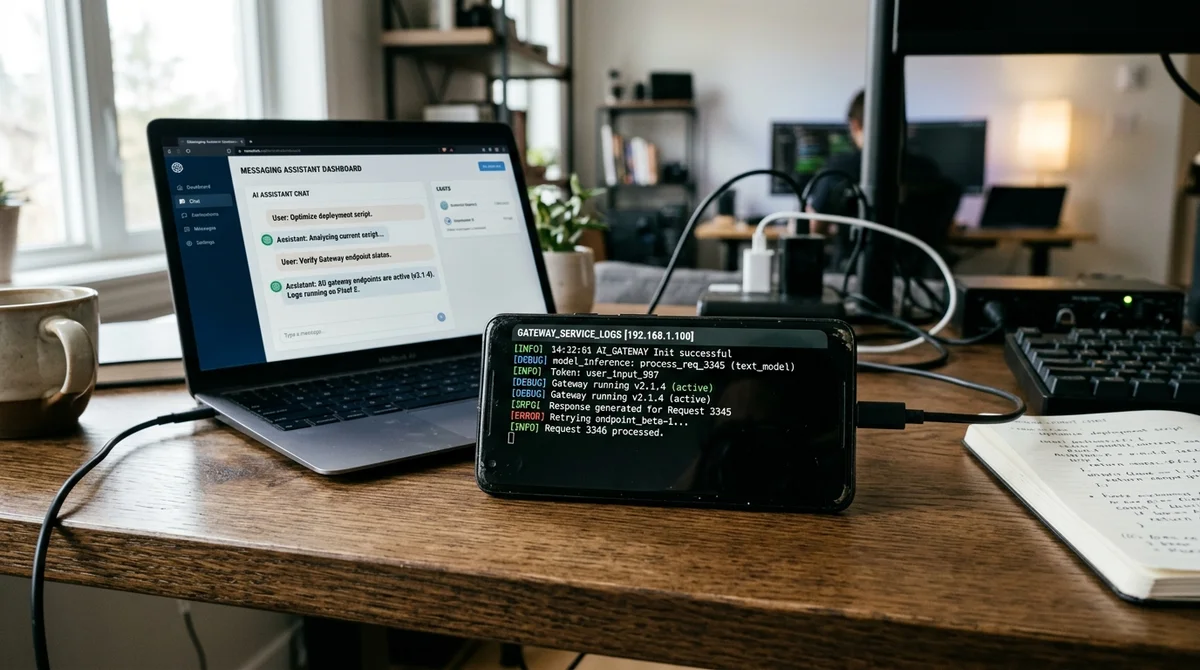
An old Android smartphone can be turned not just into a backup phone, but into a working AI gateway for a personal assistant. Based on a Xiaomi 11T with 8 GB of RAM and a Dimensity 1200 chip, the author of the experiment deployed OpenClaw through Termux, connected free OpenRouter models, and got a Telegram bot that responds with a delay of about 5–10 seconds. The idea is not to run a large model locally on the phone, but to use the device as a constantly active node for an open-source assistant.
The article describes four installation scenarios. The basic and most reliable one is Termux with Ubuntu through proot, inside which Node.js and OpenClaw itself are installed.
This option requires about 3.7–4 GB of free space, but provides better compatibility. There is also a lighter build without a full Ubuntu image, where OpenClaw runs directly in Termux via a separate community installer.
The third path is a Flutter application with a graphical shell that automates deployment. The fourth is AnyClaw, a self-contained APK with built-in OpenClaw components and a terminal agent, but already tied to the OpenAI ecosystem. In essence, the user can choose between maximum control, minimum size, and more convenient installation.
A separate part of the guide addresses why such a scheme makes sense at all. OpenClaw itself acts as a gateway for an assistant that works in familiar channels—from Telegram and WhatsApp to Slack, Discord, and other messengers. To start, you don't need a new computer or VPS: Android 10+, at least 2 GB of RAM, stable Wi-Fi, and an API key from a model provider are enough.
As a free option, OpenRouter is offered with a free-model router and limits of around 20 requests per minute and about 200 requests per day. For home use, this is sufficient, and costs can remain zero if you stay within the free tier. But with active use, the cost quickly becomes more than symbolic, so the author separately recommends setting limits with the provider.
The most unpleasant part of the project is not the installation, but the struggle with Android. On Xiaomi and other devices with aggressive optimization, the system can silently kill the gateway after the screen is locked or after a few minutes of background work. Therefore, the instructions separately highlight termux-wake-lock, disabling battery optimization, allowing autostart, and pinning Termux to the recent apps list.
For some configurations, a Bionic Bypass workaround patch is added if OpenClaw crashes due to errors in detecting network interfaces. This underscores an important point: an old smartphone as a server is a working, but not seamless scheme, requiring manual tuning and periodic checks after system updates. The security section is equally important.
OpenClaw stores tokens, provider settings, and channel credentials in a local directory, so it's recommended to treat it like a password vault: restrict access rights, don't sync it to the cloud, and don't publish the contents. Separately mentioned are the risks of third-party skills and the critical WebSocket access vulnerability to the gateway, due to which even loopback mode cannot be considered absolute protection without fresh updates. The practical conclusion is simple: use separate accounts for keys and bots, don't install unverified extensions, and don't turn such a pet project into an unsupervised production.
The main takeaway from this story is not that an old Xiaomi will replace a server or a local LLM machine. What matters more is this: even an aging smartphone remains a sufficiently powerful and always accessible platform for small-scale AI infrastructure. If you need a personal assistant in a messenger, want to experiment with open-source tools, and don't want to spend money on separate hardware, such a scenario looks quite viable.
But it only works where the user is willing to trade convenience for control, and affordability for careful configuration and discipline in security matters.
Need AI working inside your business — not just in your newsfeed?
I build production AI for companies — custom CRM, internal tools, autonomous agents, workflow automation. Owned by you, shaped to your process, no per-seat tax. Built by Zhemal Khamidun, CPO of AlpinaGPT (AI platform, 6,000+ users).
The AI world, distilled — once a week
Seven stories that actually mattered, hand-picked. No noise, no reposts, no press releases.
Done! Check your inbox for a confirmation.