China swaps old for smart: Beijing forces citizens to love AI gadgets
Imagine your old laptop, which barely handles three browser tabs, suddenly becomes an asset the government is willing to pay you extra for. That's the picture painted by China's Ministry of Commerce in its fresh plan to develop the domestic market over the next two years. While Western analysts ponder how to convince people to buy new smartphones for no apparent reason, Beijing has solved the problem radically and in a state-like manner. The authorities are launching a large-scale consumption optimization campaign, with the concept of "exchanging old for new" taking center stage. It sounds like a typical sale, but the devil is in the details and the scale. Let's figure out why this is happening right now. China's domestic demand after the pandemic is recovering not as vibrantly as the party would like. People started saving instead of spending.
AI-processed from 36Kr (36氪); edited by Hamidun News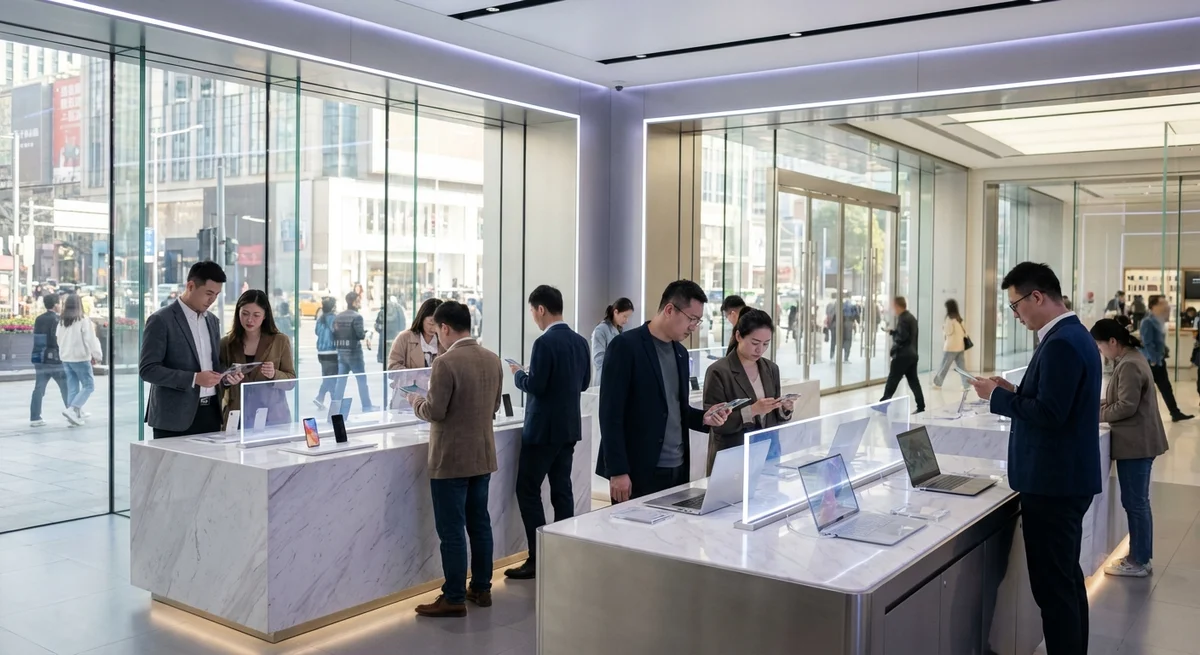
Imagine your old laptop, which barely handles three browser tabs, suddenly becomes an asset the government is willing to pay you extra for. That's the picture painted by China's Ministry of Commerce in its fresh plan to develop the domestic market over the next two years. While Western analysts ponder how to convince people to buy new smartphones for no apparent reason, Beijing has solved the problem radically and in a state-like manner.
The authorities are launching a large-scale consumption optimization campaign, with the concept of "exchanging old for new" taking center stage. It sounds like a typical sale, but the devil is in the details and the scale. Let's figure out why this is happening right now.
China's domestic demand after the pandemic is recovering not as vibrantly as the party would like. People started saving instead of spending. To unlock this piggy bank, simply releasing a new gadget is not enough.
You need to create conditions under which owning an old device becomes economically disadvantageous. The Ministry of Commerce directly states that the focus will be on cars, household appliances, and "smart digital products." The latter term hides the entire spectrum of devices that are now actively moving to local artificial intelligence rails.
Beijing is essentially subsidizing the nation's transition to AI-compatible hardware, creating a giant testing ground for its neural network models. The program is not limited to slogans alone. Authorities are implementing specific stimulation mechanisms, including pilot "lottery voucher" projects.
It's an old but effective mechanism: when you buy goods, you get a chance to win a cash prize from the state. The list of cities for this experiment has already been published. In addition, the "Buy in China" initiative is being launched, which will unite more than 20 major thematic events across the country.
Fifteen cities, which likely will include Shanghai and Shenzhen, will become testing grounds for creating "international consumption centers." There, new retail formats will be tested where online and offline merge into one through augmented reality and smart logistics systems. Why is this important for the global market?
China is the world's largest consumer of electronics. If Beijing successfully pulls off this maneuver, we will see a colossal surge in demand for chips and components for the consumer segment. This will give Chinese manufacturers like Xiaomi, Huawei and Honor incredible advantages through the scale effect in the domestic market.
While the rest of the world wonders whether it needs an AI smartphone, millions of Chinese will get them in hand simply because it will be the most profitable financial decision when exchanging an old device. This is a classic example of how state policy can change the technological landscape of an entire region in just a few quarters. Equally interesting is how the ministry plans to develop what's called the "economy of first launches."
This refers to supporting brands that choose China for global premieres of their products. Authorities promise to create "practical and effective" measures for such companies. Essentially, it's an invitation for those willing to play by Beijing's rules and bring the most advanced developments first to the Chinese consumer.
Against the backdrop of trade wars and restrictions on technology exports, this looks like an attempt to create a self-sufficient ecosystem where innovations are born, sold, and consumed within one country with active budget support. Bottom line: Beijing is transforming the consumer market into a tool for accelerated technological modernization. Will Western brands be able to integrate into this system of subsidized exchange, or will the "Buy in China" program finally close the doors for everyone except local players?
Need AI working inside your business — not just in your newsfeed?
I build production AI for companies — custom CRM, internal tools, autonomous agents, workflow automation. Owned by you, shaped to your process, no per-seat tax. Built by Zhemal Khamidun, CPO of AlpinaGPT (AI platform, 6,000+ users).
The AI world, distilled — once a week
Seven stories that actually mattered, hand-picked. No noise, no reposts, no press releases.
Done! Check your inbox for a confirmation.