Alibaba Releases AI Model for 3D Video and Game Development, Moving Into Tencent's Territory
Alibaba has unveiled a new AI model that can be used to develop games and generate 3D video that simulates the real world. The launch expands the company's AI lineup and shows that Alibaba wants to do more than demonstrate what its models can do: it wants to make money from them in segments where Tencent has traditionally been strong, from content to the gaming ecosystem. For the market, it is one more signal that competition in applied AI is shifting toward commercial products.
AI-processed from Bloomberg Tech; edited by Hamidun News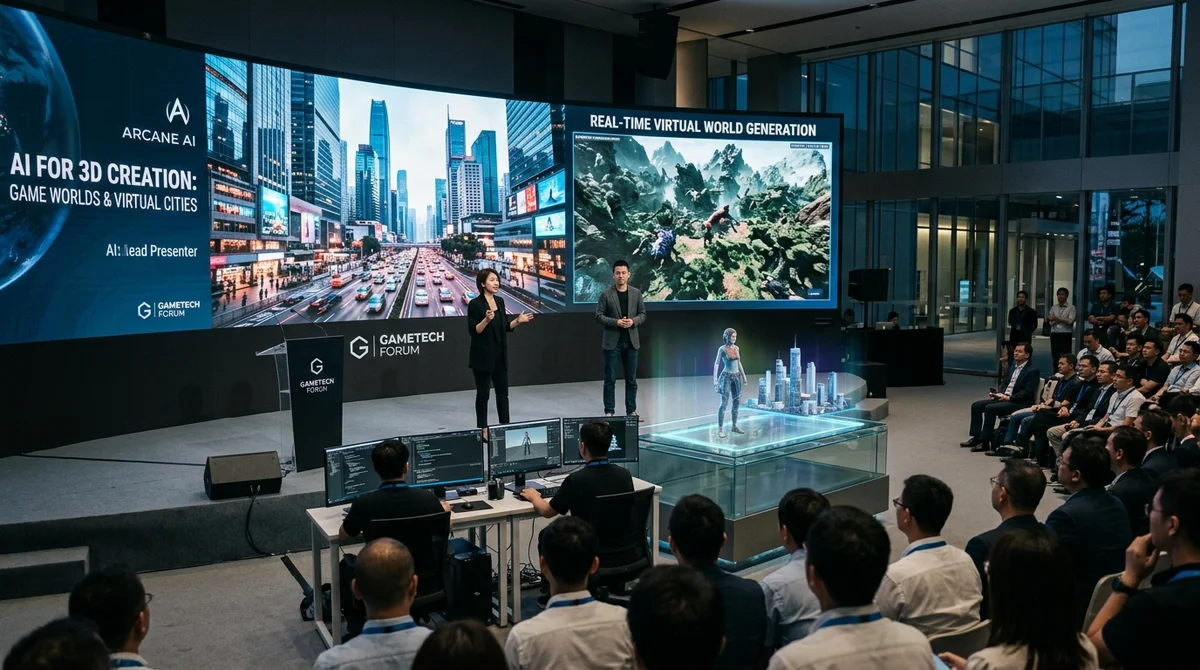
Alibaba is moving into a more applied segment of AI and hitting one of Tencent's strongest areas head-on. The company has unveiled a new model that can be used to develop games and generate 3D video that simulates the real world. For Alibaba, this is not just another release in a long line of models, but an attempt to claim a place in the content-creation chain, where value comes not from the AI itself but from a specific commercial use case.
judging by its positioning, the model is aimed at tasks that demand visual realism, fast production and the ability to build generation into the workflows of studios and developers. It covers two large areas at once: game development and video close to real footage. In the first, such tools can cut the time needed to create prototypes, environments and animation drafts. In the second, they can speed up the release of clips, the testing of ideas and the production of scenes that previously required a complex 3D pipeline.
It also matters that the bet is on 3D and real-world simulation, not just ordinary text-to-image generation. This class of models is potentially useful not only for entertainment but also for advertising, virtual storefronts, interactive product demos and training. The closer the output is to a physically plausible scene, the wider the range of commercial cases. For large platforms this is especially valuable: the same technology base can work in game engines, in video production and in marketing teams that need to turn out visual content quickly, without a long production cycle.
The key point here is the competitive context. Tencent has historically been very strong in games, digital content and an ecosystem where entertainment, social platforms and monetization are tightly linked. If Alibaba offers developers and production teams its own AI tool for 3D video and game tasks, it is effectively entering territory where Tencent has not only the audience but also ready-made business models. That makes the release important not in itself, but as a move in the fight for applied AI services that can be sold to companies, studios and platforms.
Monetization is especially important for Alibaba. It is no longer enough in this market to simply release new models and show off their quality in benchmarks. Investors and corporate customers expect an answer to a more practical question: how exactly will AI bring in revenue. Games and realistic video generation look like a logical direction, because they have clear customers, repeat demand and high costs of traditional production. The more visible the savings in time and budget, the easier it is to turn a model from a research project into a product with a paid subscription, an API or an enterprise license.
The launch also shows how competition itself is changing in China's AI sector. The fight is no longer only about who has the stronger base model, but about who embeds AI into real industries faster. The winners will not necessarily be the companies with the loudest release, but those that can offer developers convenient tools, clear pricing and integration into existing processes. In that setup, 3D video and game pipelines become a convenient entry point: these are areas where results can be seen quickly and the effect of automation is easy to calculate.
For the market, this is a signal that the next stage of the AI race is shifting further toward specialized products. Alibaba is trying to turn generative AI into a working tool for studios and teams while increasing pressure on Tencent in its core segments. If the model really proves useful in production, this will be not just a new technology release but a redistribution of influence among the largest players in China's digital market.
- Nov 19, 2026The Word "Video Game" Raised GPT-6 Astra's Willingness to Pick Targets From 6% to 92%
- Nov 19, 2026Snapchat lets developers build AR Lenses with Claude Code, Cursor and Codex
- Nov 18, 2026ffmpeg-skill gives Claude Code and Cursor 42 local video-editing tools
- Nov 18, 2026Huang steps down as NVIDIA CEO, company loses more than $1 trillion in market cap
Test Frontier LLMs & Autonomous Agents in One Workspace
Run Claude Opus 5.5, GPT-6, Gemini 3.1, and DeepSeek side-by-side in Nomad AI (nomadnet.ai) — unified model routing, deep research, and multimodal workflows under one subscription.
The AI world, distilled — once a week
Seven stories that actually mattered, hand-picked. No noise, no reposts, no press releases.
Done! Check your inbox for a confirmation.