Alibaba unveils Happy Oyster — an AI model for generating interactive 3D worlds
Alibaba has unveiled Happy Oyster, a world model for generating interactive 3D worlds and video. The model can build scenes from text and images, modify them on the fly, and is suited to games, film, and previsualization. The project was developed by Alibaba's new Token Hub division, and the launch fits into the company's push to monetize AI and compete directly with Tencent.
AI-processed from 3DNews AI; edited by Hamidun News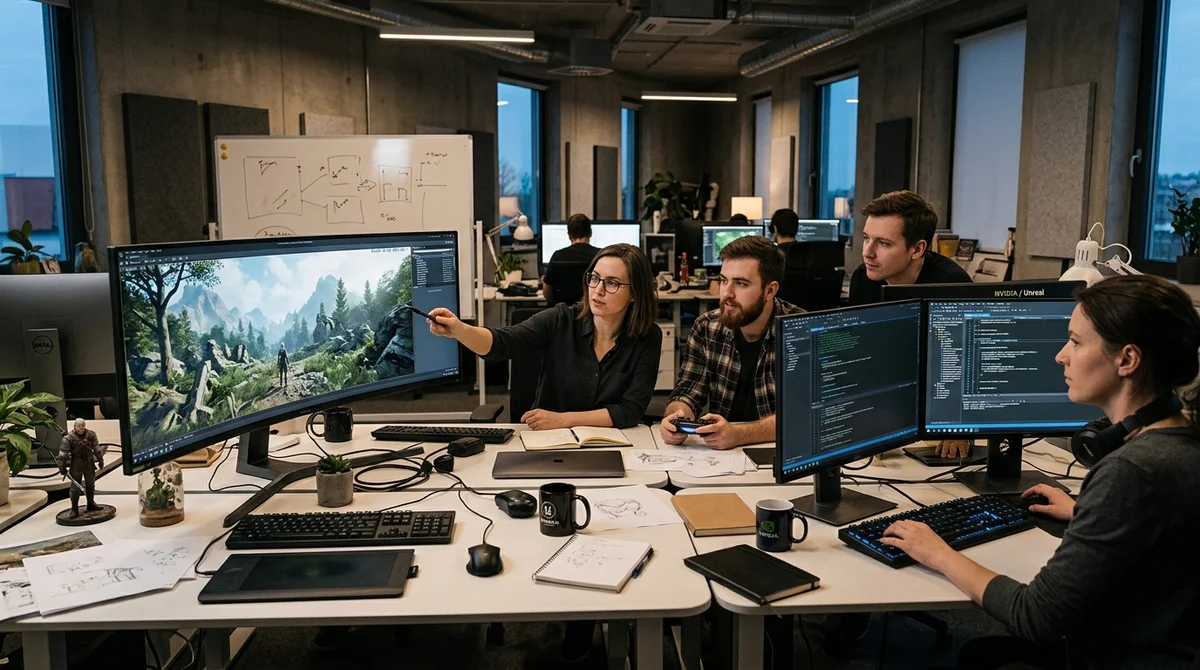
Alibaba unveiled Happy Oyster — a global AI model for creating interactive 3D spaces and videos that simulate real-world behavior. For the company, this is not just an impressive demo project, but another step in the fight for the generative AI market, where the interests of cloud platforms, game studios, and content producers increasingly overlap.
What Alibaba Showed
Happy Oyster belongs to the class of so-called world models — systems that don't just render a single video based on a prompt, but attempt to assemble a coherent virtual environment where you can change the scene, camera, and behavior of objects. Alibaba says the model is suitable for game development, film production, and other video projects where success depends not on a single good image, but on a connected world with a sense of space and logic.
According to the company, Happy Oyster has two operating modes. The first is oriented toward building a world based on text and visual prompts, the second toward exploring an already created scene. An important detail is that the model can respond to new commands right during generation, not just in a "one request — one result" mode. In demonstrations, it's enough for the user to add a new instruction to add a raven to the frame, change camera movement, or make characters interact with each other.
- Generating 3D scenes from text and images
- Interactive video up to three minutes long
- Scene changes during generation
- Separate modes for creating and exploring worlds
- Application for games, films, and previsualization
Why This for Alibaba
The launch of Happy Oyster fits well into Alibaba's broader AI restructuring. The company openly shows that it wants not only to release research models, but to turn them into commercial products. The goal is ambitious: increase annual revenue from cloud technologies and AI by five times within five years — to $100 billion. Against this backdrop, Alibaba has recently simultaneously changed its internal structure, assembled teams around new AI businesses, and accelerated model releases.
The new tool was developed by Alibaba Token Hub, or ATH, created specifically to consolidate key AI initiatives. Access to Happy Oyster is currently limited to an early testing program, meaning it's more about showcasing capabilities and gathering feedback than a mass release. But the market reacted quickly to the signal: on the day of the news, Alibaba's shares rose noticeably, outpacing the broader market. This shows that investors expect from the company not more AI promises, but clear products with revenue potential.
It's also worth noting that just a week before this, Alibaba revealed authorship of the Happy Horse video model, which made a splash in industry rankings. The combination of Happy Horse and Happy Oyster shows that the company is building a product line not around a single chatbot, but around a set of models for different content formats — from short video to interactive virtual worlds. This is important both for cloud positioning and for sales to studio clients.
The Race for World Models
Interest in world models is growing now not just because of film and games. Such systems are needed where AI must understand space, physics, and sequence of actions. That's why they're considered a foundational layer for 3D content, robot training, and improving environmental perception in autonomous vehicles. If a language model learns to work with words, then a world model learns how the world is organized in a frame: where objects are, how they move, and what happens when the user intervenes in the scene.
In this field, Alibaba enters direct competition with Tencent, which already has the Hunyuan3D lineup, as well as with Google and other players working on similar systems. Meanwhile, newer teams like World Labs are also entering the race, also betting on 3D environment generation and exploration. The difference now lies not only in image quality, but in how long the model maintains world coherence, accepts new commands, and is suitable for real production scenarios.
What This Means
Happy Oyster shows that the next stage of generative AI is moving away from individual images and short videos toward managed environments where users can not just watch, but intervene in what's happening. For Alibaba, this is a chance to sell more expensive AI tools through the cloud, and for the market — a signal that competition is shifting from chat interfaces toward 3D, video, and interactive production.
Want to stop reading about AI and start using it?
AI News is a curated feed of AI/tech news. Hamidun Academy teaches you to use AI systematically in your work.
The AI world, distilled — once a week
Seven stories that actually mattered, hand-picked. No noise, no reposts, no press releases.
Done! Check your inbox for a confirmation.