Elon Musk takes OpenAI to court: trial against Sam Altman set to open in the US
Elon Musk and Sam Altman are entering a new phase of their feud: the trial over Musk's lawsuit against OpenAI is due to open on April 27, 2026, in Oakland. Formally, the dispute turns on whether the company misled Musk. In substance, it is a public airing of a struggle over mission, power, reputation and the future of one of the AI market's main players. Musk was among OpenAI's co-founders. The company launched as a research organization with a publicly stated mission to benefit all of humanity, and has since moved toward becoming a fully commercial market leader.
AI-processed from The Verge; edited by Hamidun News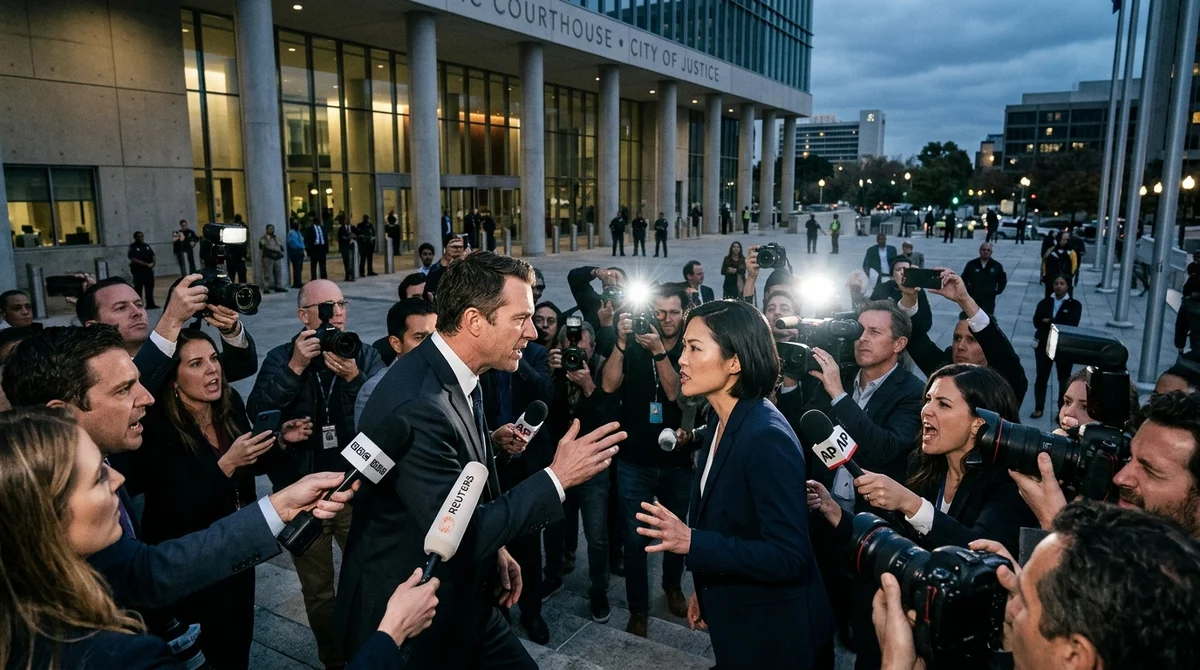
The legal battle between Elon Musk and Sam Altman is entering a new phase: the trial over Musk's lawsuit against OpenAI is due to open on April 27, 2026, in Oakland, California. Formally, the dispute concerns whether the company misled Musk. In practice, it is a bigger story about power, control and the right to decide what one of the world's most influential AI companies should be.
Musk was among OpenAI's co-founders. It launched as a research organization with a publicly stated mission to work for the benefit of all humanity. He later left the project, and OpenAI gradually shifted from the image of a research lab to the status of a full-fledged commercial market leader. Over that time Altman became the chief architect of its strategy and the company's most visible face.
That is why the current dispute is seen as more than a former co-founder suing an organization. It looks like a deferred conflict over who owns OpenAI's original idea and who has the right to interpret its mission.
Over the past few years Musk's legal position has changed several times. Different versions of the claims have alleged breach of agreements, unfair business practices and misleading statements. That spread matters: it shows the dispute is not about one narrow deal or one contract, but about a whole chain of decisions, statements and transformations. For the court, this means a fight not only over the letter of the documents, but over how to read OpenAI's early promises, internal discussions and public rhetoric at a time when the company was still building its identity.
The timing adds further edge. OpenAI remains at the center of the AI race, where what is at stake is not only reputation but also access to investment, computing resources, corporate partners and top researchers. At the same time, Musk is building his own AI ecosystem around xAI and is effectively competing with OpenAI for market share, talent and influence. In that situation, any episode of the trial, whether testimony, correspondence, old agreements or discussions inside the board or management, can become more than a legal argument. It can become a tool of pressure on a rival and a signal to investors. Hence the heightened interest in who exactly will appear in court and which details will become public.
If Musk and Altman do testify in person, the case will quickly move beyond an ordinary corporate dispute. The public, competitors and regulators will watch not only the outcome of the suit, but also how each side describes OpenAI's early history, its motivation, its governance structure and its move to a more commercial model. The focus will fall not only on loud statements but also on more mundane questions: who made the key decisions, how the company's mission was discussed, and where exactly the line between a research project and a big business was drawn.
Any gap between internal discussions and public statements could do real damage to reputation, even if there are no immediate legal consequences. The conflict already looks like a concentrate of the whole industry: a mix of ideology, ambition, personal history and very high stakes around generative AI.
The main takeaway is that this trial matters beyond OpenAI and Musk. It may become a marker of how the market will judge AI companies' promises, their governance structures and the boundary between a research mission and commercial interests. Even if the trial does not deliver a quick legal resolution, it already increases pressure on the whole sector: the more capital and influence concentrate around generative AI, the harsher the wars between its leaders will become, on technology and on personal terms alike.
- Nov 2, 2026Meta's Muse assistant keeps dossiers on loved ones and gets root on Ubuntu by default
- Nov 1, 2026Local models lose to Opus and Codex: 0.21 on a MacBook versus 1.00 for Codex
- Nov 1, 2026Kimi scores 96.2% on a 1C database analytics test and emerges as a fallback if Claude access is blocked
- Nov 1, 2026OpenAI Rewrites GPT Behavior Rules: Five Values and a Chain of Command
Test Frontier LLMs & Autonomous Agents in One Workspace
Run Claude Opus 5.5, GPT-6, Gemini 3.1, and DeepSeek side-by-side in Nomad AI (nomadnet.ai) — unified model routing, deep research, and multimodal workflows under one subscription.
The AI world, distilled — once a week
Seven stories that actually mattered, hand-picked. No noise, no reposts, no press releases.
Done! Check your inbox for a confirmation.