OpenAI's Codex for Mac Now Screenshots Your Screen and Sends the Images to the Company's Servers
OpenAI has launched Chronicle in Codex for Mac. The feature, released as a research preview, periodically takes screenshots of the screen, sends them to OpenAI's servers, and then saves text summaries locally in unencrypted Markdown files. The goal is to give the AI assistant passive context about what the user is doing. Chronicle is not available in the EU, the UK or Switzerland, and it requires a subscription starting at $100 per month.
AI-processed from TNW; edited by Hamidun News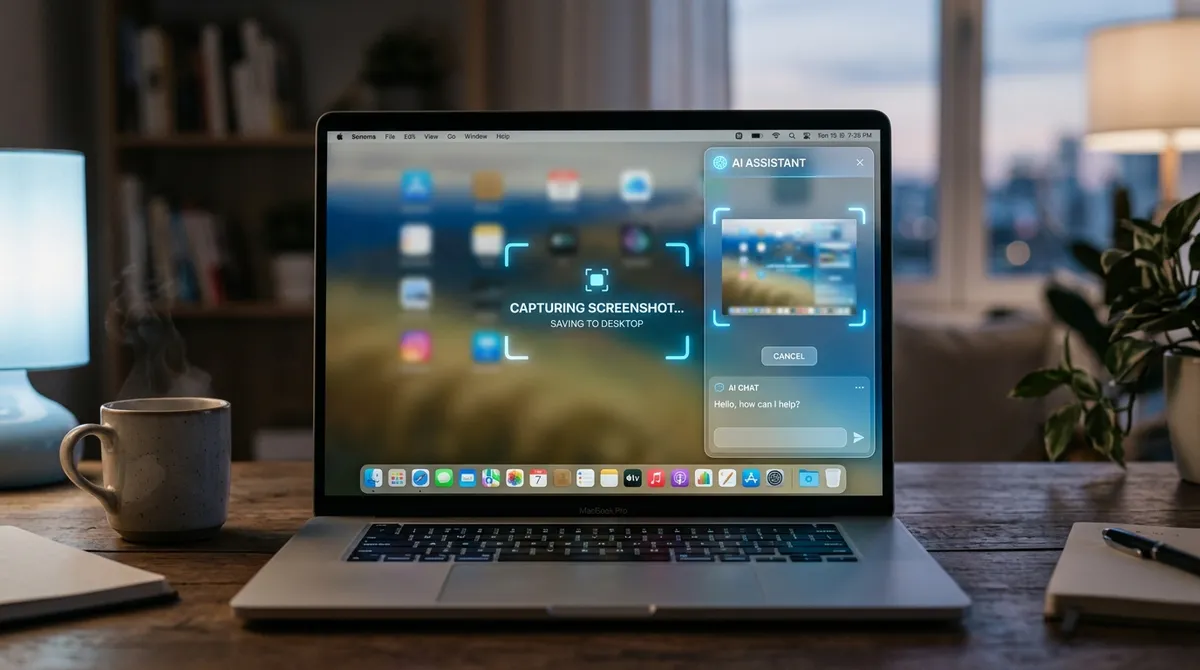
OpenAI has added a new feature to Codex for Mac called Chronicle, a research preview that gives the AI assistant passive context about what the user is doing on their computer.
The way it works is straightforward: Chronicle periodically takes screenshots of the screen, sends them to OpenAI's servers for processing, and then saves text summaries locally as unencrypted Markdown files. In effect, the feature acts as a constant observer of the user's screen.
The saved summaries become context for Codex. The assistant can answer questions with knowledge of what the user did earlier: which files they opened, which apps they worked in, what they read. That lets the AI give more relevant answers without the user having to explain the situation manually.
The mechanics raise privacy questions, however. Screenshots first go to OpenAI's servers, where the company processes them, and only then do text excerpts appear locally. The files themselves are not encrypted, which means anyone with access to the machine could potentially read them. OpenAI has not yet disclosed how long images are kept on its servers or what its deletion policy is.
Chronicle's availability is geographically limited: the feature is not available to users in the European Union, the UK or Switzerland, apparently because of the strict requirements of GDPR and similar regulatory regimes in those regions. Chronicle also requires a subscription costing from $100 per month, which immediately narrows the audience to professional users and developers.
This is not the first attempt by a major tech company to build an AI assistant with persistent context through screen capture. Microsoft announced Recall as part of Copilot+ PC back in 2024, but the feature met a wave of security criticism and was delayed several times. Apple is developing its own tools within Apple Intelligence, trying to process data on the device rather than in the cloud. OpenAI is taking a more explicit path: data goes to a server, and the company says so openly.
Chronicle is labeled a research preview, which means the product is rough and will change. But the direction is clear: AI assistants are moving toward a model of constant passive observation, in which context accumulates automatically rather than being supplied by the user by hand. How widely users will accept this trade-off between convenience and privacy is the question Chronicle is meant to test.
- Nov 2, 2026Meta's Muse assistant keeps dossiers on loved ones and gets root on Ubuntu by default
- Nov 1, 2026Local models lose to Opus and Codex: 0.21 on a MacBook versus 1.00 for Codex
- Nov 1, 2026Kimi scores 96.2% on a 1C database analytics test and emerges as a fallback if Claude access is blocked
- Nov 1, 2026OpenAI Rewrites GPT Behavior Rules: Five Values and a Chain of Command
Build & Ship Production AI Agents Without Boilerplate Code
Start your free 72-hour trial at Hamidun Academy (academy.hamidun.com) — interactive lessons on Claude Code & Cursor, live Tech Radar, and production agent templates.
The AI world, distilled — once a week
Seven stories that actually mattered, hand-picked. No noise, no reposts, no press releases.
Done! Check your inbox for a confirmation.