Startup Niv-AI Exits Stealth With $12M to Tackle GPU Power Spikes
Startup Niv-AI has come out of stealth with a $12M seed round. The company is developing technology to measure and manage GPU power spikes, the moments when processors draw several times their normal load and overload data center infrastructure. The solution is meant to let operators squeeze more compute out of hardware they have already installed, without upgrading equipment.
AI-processed from TechCrunch; edited by Hamidun News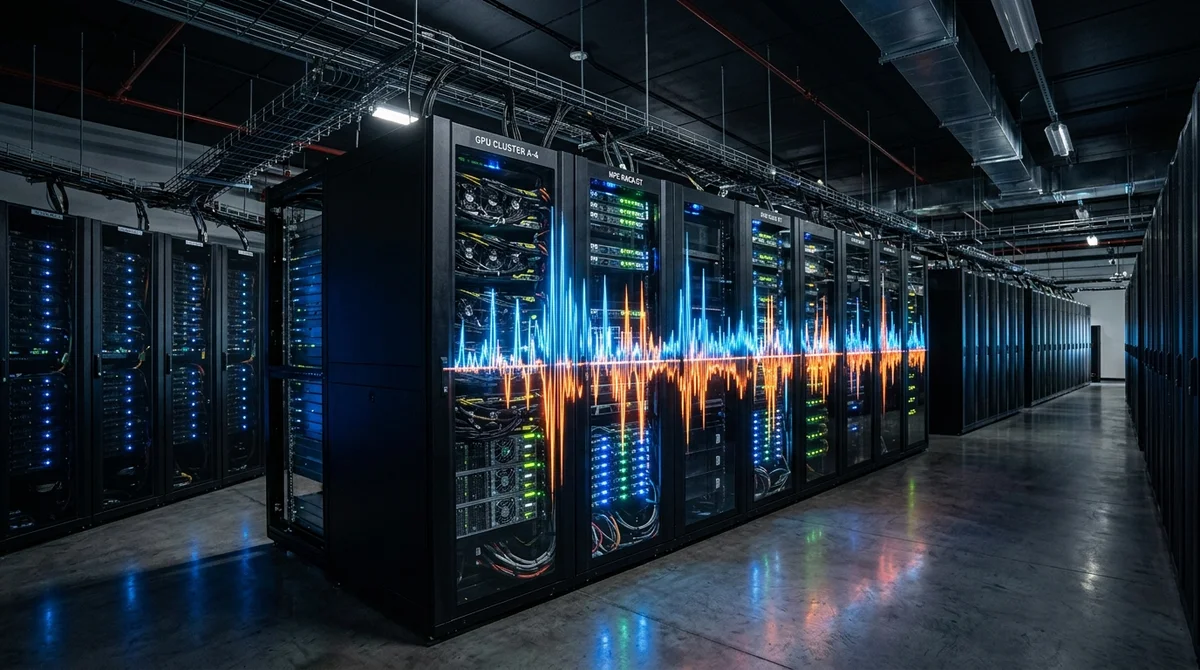
Startup Niv-AI has exited stealth mode and raised $12M in seed funding to address one of the costliest and least visible problems in the AI industry: GPU power spikes.
Every operator of a large data center knows the problem well. When training neural networks, GPUs draw power very unevenly: peak loads can exceed average consumption several times over. This strains the power grid, causes equipment to overheat and forces operators to artificially lower clock speeds and server power. As a result, expensive hardware runs well below its potential, and customers pay for it through higher compute costs.
Niv-AI offers tools to precisely measure and manage these consumption spikes in real time. In essence, the company is taking a task usually seen as a power infrastructure problem and moving its solution to the software level. If the technology works as claimed, operators will be able to extract more usable compute from GPUs they already have, without buying new servers and without a major upgrade of the electrical grid.
The timing of the exit from stealth is well chosen. The global race for AI compute has caused an acute GPU shortage and enormous pressure on energy infrastructure. The largest cloud providers and independent data centers are investing hundreds of billions of dollars in capacity expansion, but the physical limits of power grids and energy supply are becoming a critical bottleneck. Building new substations is expensive and slow. Using existing resources more efficiently is far more attractive.
The $12M size of the seed round signals that investors share this thesis. The funding will let Niv-AI build an engineering team, run pilot integrations with real operators and assemble an evidence base before raising a Series A. The investors are not named in public materials.
The market for data center energy efficiency management is getting more competitive. Major server hardware vendors are building monitoring tools directly into firmware, cloud providers are developing their own workload schedulers, and other startups are attacking adjacent problems: heat removal, dynamic load distribution and software-defined power. Niv-AI's specific focus on GPU power spikes looks like an unoccupied niche with clear economics: even a gain of a few percent in efficiency translates into significant savings at the scale of modern data centers.
The real test for the company will be working with live customers. The data center industry is conservative: operators are very cautious about letting new software layers control critical infrastructure. Niv-AI will have to convince engineers on the customer side that the system is safe, predictable and delivers measurable results: more teraflops per kilowatt, fewer unplanned outages, higher hardware utilization.
Coming out of stealth is a statement of intent to the market. The next step will show whether there is a technological foundation behind it.
Test Frontier LLMs & Autonomous Agents in One Workspace
Run Claude Opus 5.5, GPT-6, Gemini 3.1, and DeepSeek side-by-side in Nomad AI (nomadnet.ai) — unified model routing, deep research, and multimodal workflows under one subscription.
The AI world, distilled — once a week
Seven stories that actually mattered, hand-picked. No noise, no reposts, no press releases.
Done! Check your inbox for a confirmation.