Startup Queue Emerges From Stealth With $12.6M and a Pharmacist-Free Robotic Pharmacy
Silicon Valley startup Queue came out of stealth on July 1, 2026, with a working prototype of an autonomous pharmacy and a $12.6M seed round. The machine accepts sealed vials, counts out the pills, checks the prescription and dispenses the package, all in about a minute. No pharmacist or operator takes part in the process.
AI-processed from TNW; edited by Hamidun News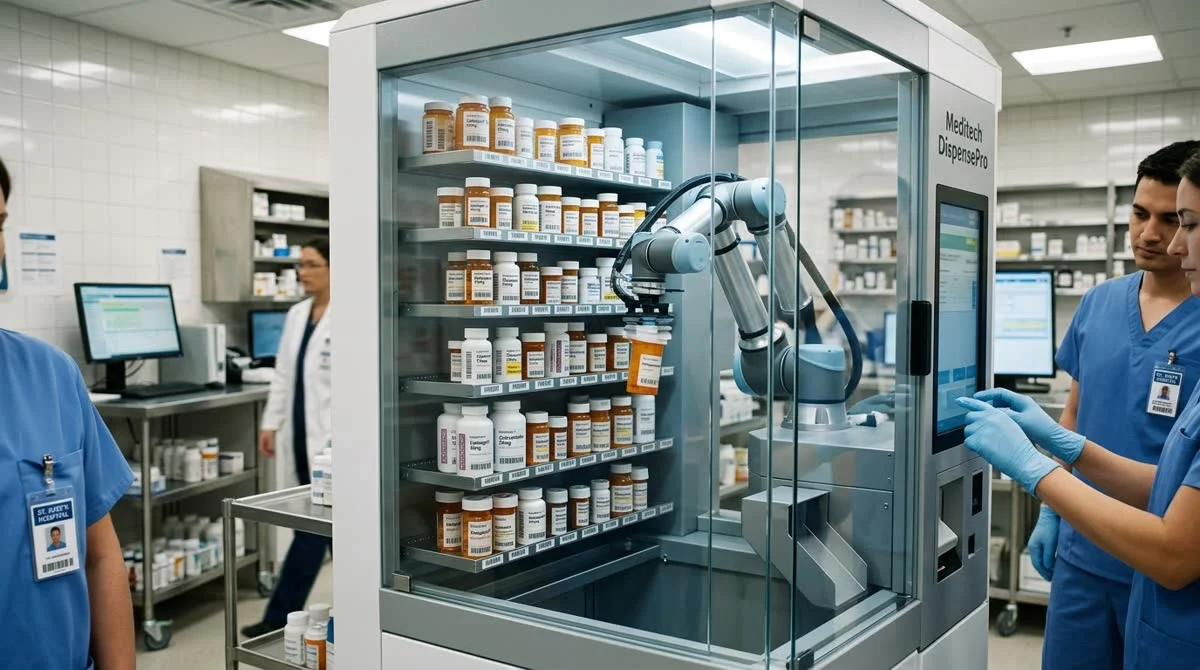
Silicon Valley startup Queue came out of stealth on July 1, 2026, with a working prototype of a fully autonomous pharmacy and announced the close of a $12.6M seed round. It is the first publicly presented machine capable of running the entire pharmacy cycle, from receiving a vial to dispensing the prescription, without a pharmacist or operator.
How the Queue pharmacy robot works
The machine receives sealed vials of medication, identifies the drug, counts out the required number of tablets or capsules, verifies the dosage against the prescription and packages the finished order. The whole cycle takes about one minute. Neither a pharmacist nor an operator is needed at a counter.
The fully autonomous cycle is what sets Queue apart from most existing pharmacy robots. Competitors such as ScriptPro and Omnicell work inside hospital pharmacies under constant staff supervision: they automate storage and delivery of vials, but leave final verification and dispensing to a licensed pharmacist. Queue is aiming at a fundamentally different model: public dispensing points with no staff on site. The company is not yet disclosing details of its verification technology.
- Stealth exit date: July 1, 2026
- Seed round size: $12.6M
- Time to process one prescription: about 1 minute
- Product format: autonomous pharmacy machine with no operator
- The company is based in Silicon Valley
$12.6M is a sizable sum for a seed round, especially since Queue is building a hardware product. Developing, certifying and manufacturing physical machines demands far more capital than software. That suggests investors believe in a path to scale.
Why the regulatory barrier is Queue's main challenge
Prescription drugs are tightly regulated in most countries. In the US, the FDA and state pharmacy boards require every prescription to be verified by a licensed pharmacist who bears professional and legal responsibility. That requirement is why a living specialist has stood behind every pharmacy counter for decades.
Queue will apparently take one of two paths. The first is remote supervision: a licensed pharmacist verifies each prescription remotely while the machine physically dispenses the drug. This model already operates in several US telepharmacy services. The second is seeking special regulatory approval for fully autonomous operation without remote supervision. That takes years and requires extensive safety data.
At the same time, Queue must solve integration with electronic prescription systems. In the US, most prescriptions reach pharmacies electronically, and the machine's ability to work with existing e-prescribing infrastructure will largely determine how fast it can be deployed.
Where such machines are needed
The pharmacist shortage is a growing problem in the US: pharmacies in small towns and remote areas are closing, and recruiting and retaining a licensed specialist there is expensive. Chronic overload of pharmacists in chain pharmacies is one risk factor for pill-counting errors, and automating that step could in theory reduce that risk.
Queue's obvious niches are corporate campuses, shopping malls, airports and outpatient clinics. If the company can clear the regulatory barrier and prove safety in real-world conditions, the business model looks scalable: the machine runs 24 hours a day and takes no vacations.
What this means
Queue is another bet on automating heavily regulated professions that have traditionally been protected by a requirement for a live specialist. The $12.6M in seed funding should let the company handle regulatory work and its first pilots, but the main test, obtaining permits for commercial operation, still lies ahead.
- Nov 2, 2026DeepSeek open-sources Super-agent prototype: p95 task completion time of 15.7 minutes vs. 29.5
- Nov 2, 2026Bun creator uses Claude Code to port 750K lines from Zig to Rust in 11 days
- Nov 2, 2026Microsoft releases 4B model Mage-VL-Cowork, which solves 66.0% of OSWorld-Verified tasks
- Nov 2, 2026Meta's Muse assistant keeps dossiers on loved ones and gets root on Ubuntu by default
Key Questions Answered
How the Queue pharmacy robot works?
The machine receives sealed vials of medication, identifies the drug, counts out the required number of tablets or capsules, verifies the dosage against the prescription and packages the finished order. The whole cycle takes about one minute. Neither a pharmacist nor an operator is needed at a counter. The fully autonomous cycle is what sets Queue apart from most existing pharmacy robots. Competitors such as ScriptPro and Omnicell work inside hospital pharmacies under constant staff supervision: they automate storage and delivery of vials, but leave final verification and d
Why the regulatory barrier is Queue's main challenge?
Prescription drugs are tightly regulated in most countries. In the US, the FDA and state pharmacy boards require every prescription to be verified by a licensed pharmacist who bears professional and legal responsibility. That requirement is why a living specialist has stood behind every pharmacy counter for decades. Queue will apparently take one of two paths. The first is remote supervision: a licensed pharmacist verifies each prescription remotely while the machine physically dispenses the drug. This model already operates in several US telepharmacy services. The second i
Where such machines are needed?
The pharmacist shortage is a growing problem in the US: pharmacies in small towns and remote areas are closing, and recruiting and retaining a licensed specialist there is expensive. Chronic overload of pharmacists in chain pharmacies is one risk factor for pill-counting errors, and automating that step could in theory reduce that risk. Queue's obvious niches are corporate campuses, shopping malls, airports and outpatient clinics. If the company can clear the regulatory barrier and prove safety in real-world conditions, the business model looks scalable: the machine runs 24
Test Frontier LLMs & Autonomous Agents in One Workspace
Run Claude Opus 5.5, GPT-6, Gemini 3.1, and DeepSeek side-by-side in Nomad AI (nomadnet.ai) — unified model routing, deep research, and multimodal workflows under one subscription.
The AI world, distilled — once a week
Seven stories that actually mattered, hand-picked. No noise, no reposts, no press releases.
Done! Check your inbox for a confirmation.