Agile Robots to build Google DeepMind's foundation models into its robots
Agile Robots has announced a partnership with Google DeepMind. The company will embed DeepMind's foundation AI models in its robots and, in return, collect real-world data for the research lab. It is not DeepMind's first deal of this kind: the lab previously struck similar partnerships with Apptronik and other startups. The formula is simple: AI models in exchange for real-world data. This is how an ecosystem of next-generation smart robots is taking shape.
AI-processed from TechCrunch; edited by Hamidun News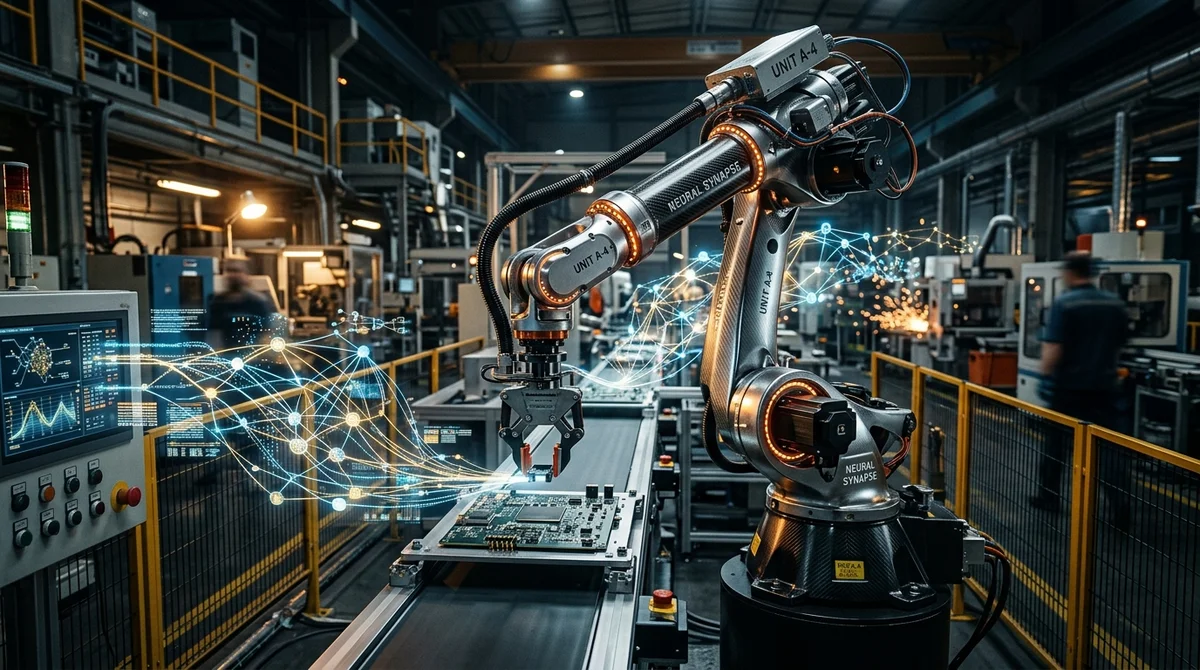
German robotics company Agile Robots has joined the growing list of Google DeepMind partners. Under the agreement, Agile Robots will build DeepMind's foundation models into its robots and, in return, collect real-world data on physical interaction for the research lab.
Agile Robots was founded in 2018 as a spin-off from the German Aerospace Center (DLR). The company specializes in robotic arms with intelligent control; its flagship product, Diana, can perform precise assembly operations and manipulate objects. Its headquarters are in Munich, but the company is expanding actively in China and Europe.
For Google DeepMind, the partnership continues a series of strategic agreements with robotics companies. DeepMind previously struck similar deals with Apptronik, Enchanted Tools and a number of other startups. The idea is the same in every case: DeepMind provides access to foundation models that let robots learn new tasks faster and from fewer examples, while partners supply a stream of real-world data from physical operation.
Foundation models for robots are large pretrained neural networks that, like language models, can generalize knowledge across different tasks. Instead of training from scratch for each operation, such a model transfers skills: basic knowledge of the physics of grasping objects helps a robot learn to assemble a new part faster. Google DeepMind invests in this area through the RT-2 project and its successors, which combine computer vision, language understanding and control of robotic arms.
The key problem that such partnerships address is data scarcity. Language models learned from trillions of tokens on the internet. Robots have no such resource: every movement cycle has to be physically performed in the real world. That is why the deal is structured as it is: DeepMind needs real motion trajectories, grip forces and data on failed attempts, which are what Agile Robots' robots generate in the course of ordinary work. For DeepMind this is a valuable training signal; for Agile Robots, it is access to cutting-edge AI models without having to build research infrastructure itself.
The partnership fits into a broader competitive picture. OpenAI has invested in Figure AI and 1X. Amazon backs Agility Robotics. Microsoft works with Apptronik. Nvidia is building the Isaac platform and investing in a wide range of robotics startups. The fight over whose AI platform becomes the standard for the next generation of industrial robots is under way right now, and each new partnership is another brick in the respective ecosystem.
Real-world data is critical for DeepMind for another reason: the so-called sim-to-real gap, the difference between a model's capabilities in simulation and in a physical environment, remains a serious obstacle. Data from manufacturing partners lets DeepMind narrow this gap much faster than a closed lab could.
Agile Robots becomes part of an emerging ecosystem in which several major AI labs are effectively building parallel standards for intelligent robots. Which standard wins, or whether several survive, will largely shape the architecture of industrial automation for the next decade.
- Nov 1, 202616 models tested on 7 search tools: Exa averaged 10.5 out of 14, SearXNG about 3
- Nov 1, 2026Google's StreamVibe video agent beats other models by 10.7% on response timing and quality
- Nov 1, 2026OpenAI Rewrites GPT Behavior Rules: Five Values and a Chain of Command
- Nov 1, 2026Voice bots built on LLMs turn to Jev, a fast classifier, for decisions in 200–500 ms
Test Frontier LLMs & Autonomous Agents in One Workspace
Run Claude Opus 5.5, GPT-6, Gemini 3.1, and DeepSeek side-by-side in Nomad AI (nomadnet.ai) — unified model routing, deep research, and multimodal workflows under one subscription.
The AI world, distilled — once a week
Seven stories that actually mattered, hand-picked. No noise, no reposts, no press releases.
Done! Check your inbox for a confirmation.