Sanders and Ocasio-Cortez propose banning construction of new data centers in the US
Senator Bernie Sanders and Rep. Alexandria Ocasio-Cortez have introduced a bill in the US Congress that would completely ban construction of new data centers. The moratorium would take effect immediately and remain in force until Congress passes a comprehensive federal law on artificial intelligence. The authors argue that the uncontrolled growth of AI infrastructure is outpacing the government's ability to grasp the consequences, and that it creates risks for the country's power grid.
AI-processed from TechCrunch; edited by Hamidun News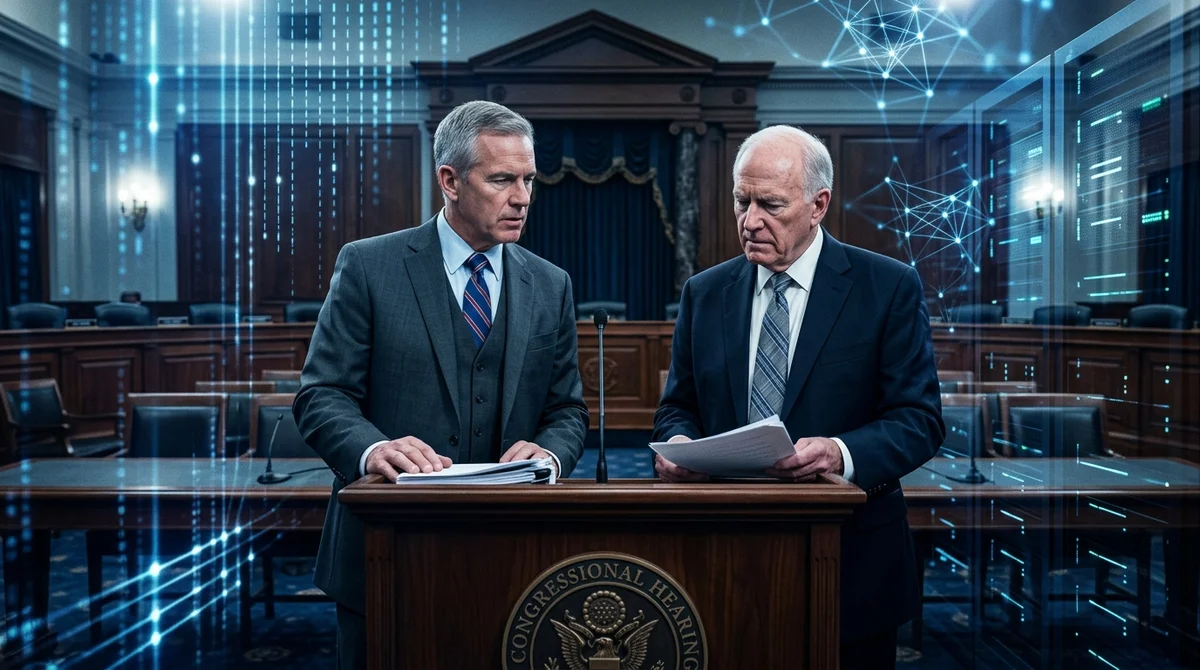
Senator Bernie Sanders and Rep. Alexandria Ocasio-Cortez have introduced companion bills in the US Congress that would impose a full moratorium on construction of new data centers in the United States. The ban would remain in force until lawmakers pass a comprehensive federal law on artificial intelligence.
The initiative is one of the most radical political moves in the history of the US Congress to rein in the growth of AI infrastructure. Both politicians, among the most prominent critics of concentrated corporate power in Washington, say the pace of data center construction has outstripped the government's ability to understand the consequences of AI. In their view, until Congress sets basic rules of the game on algorithm safety, personal data protection, corporate accountability to society and the impact of automation on the labor market, building up computing capacity is like building a city without a master plan.
The technological context behind the bill is well known. Modern language models and generative services demand enormous computing resources: training a single large model takes thousands of GPUs running for weeks. Inference, meaning serving user requests in real time, requires infrastructure that runs around the clock.
According to various analyst estimates, electricity consumption by data centers worldwide could double by the middle of this decade compared with 2022. In the US, Microsoft, Amazon, Google and Meta* have announced combined investments of hundreds of billions of dollars in new facilities. In fiscal 2025 alone, Microsoft planned to invest about $80 billion in AI infrastructure, a figure comparable to the GDP of a small country.
The bill's authors insist that this pace of expansion puts additional pressure on already overloaded power grids, water resources and local ecosystems. Building large data centers requires hundreds of megawatts of electricity and millions of liters of water for cooling. Several US states have already seen conflicts between residents and companies seeking sites for new server halls.
Sanders and Ocasio-Cortez want to pause the process until the country figures out what exactly is being built and why. Industry groups and tech lobbyists have already voiced sharp opposition. The critics' main argument is blunt: a construction ban on US territory will not stop AI development worldwide.
Companies will simply redirect investment to Canada, the European Union, Singapore or Japan, where the regulatory climate will be friendlier. This is the classic scenario in which tough national regulation drives out capital and expertise, with no real benefit for safety or society. Industry associations called the bill populist, unworkable and counterproductive for American technology leadership.
The bill's chances of passing in the current Congress are low. Most lawmakers, including moderate Democrats, are skeptical of such sweeping restrictions on business. Still, the political significance of the initiative goes beyond its legislative prospects.
It shows plainly that the regulatory vacuum around AI in the US has long since become a political problem. A country that claims the role of global AI leader still has no basic federal law defining the rules for developing and deploying AI systems. Years after ChatGPT appeared, questions of accountability, transparency and safety remain open at the federal level.
The Sanders and Ocasio-Cortez initiative signals a shift in the political agenda. The debate is no longer only about what algorithms should look like. Physical infrastructure is now at the center of the dispute: who builds, where they build, how it affects the environment and local communities, and who pays for the electricity and bears responsibility for the consequences.
The AI race has finally turned into infrastructure policy.
*Meta is recognized as an extremist organization and banned in Russia.
- Nov 2, 2026Meta's Muse assistant keeps dossiers on loved ones and gets root on Ubuntu by default
- Nov 1, 2026Local models lose to Opus and Codex: 0.21 on a MacBook versus 1.00 for Codex
- Nov 1, 2026Kimi scores 96.2% on a 1C database analytics test and emerges as a fallback if Claude access is blocked
- Nov 1, 2026OpenAI Rewrites GPT Behavior Rules: Five Values and a Chain of Command
Test Frontier LLMs & Autonomous Agents in One Workspace
Run Claude Opus 5.5, GPT-6, Gemini 3.1, and DeepSeek side-by-side in Nomad AI (nomadnet.ai) — unified model routing, deep research, and multimodal workflows under one subscription.
The AI world, distilled — once a week
Seven stories that actually mattered, hand-picked. No noise, no reposts, no press releases.
Done! Check your inbox for a confirmation.