English Wikipedia bans editors from writing articles with AI
English Wikipedia has updated its editorial policy: editors can no longer create or rewrite articles using AI. The reason is that language models systematically violate the encyclopedia's core principles. Some exceptions remain. AI may suggest minor stylistic edits and help with translation, but any content it adds on its own is banned.
AI-processed from The Verge; edited by Hamidun News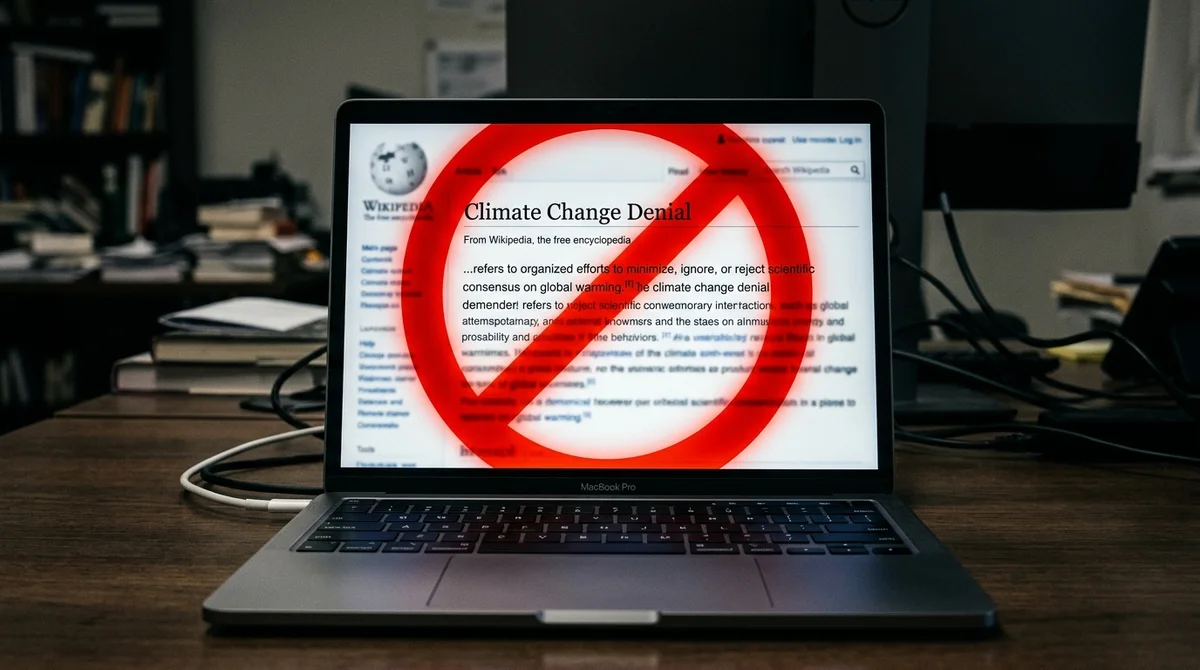
English Wikipedia has updated its editorial rules: editors are now prohibited from creating and rewriting articles using language models. The update appeared in the encyclopedia's official guideline documents last week and is one of the most concrete responses by a major public platform to the problem of mass-produced AI content.
The reason for the ban is stated plainly: AI-written text systematically violates several of Wikipedia's key principles. These are the requirements for a neutral point of view, verifiability of sources, and no original research. Language models generate convincing-sounding text that may not reflect the actual state of affairs, may mix up sources or add details that were not in the original materials, all without any warning.
The new rules do not ban AI entirely, however. Editors may use language models in two specific cases. The first is suggesting basic style and grammar edits, provided the model does not add new content of its own. The second is translating articles from other-language Wikipedias into English. Even then, the editor must check the result: an AI translation cannot be published without verification.
The distinction is telling. Wikipedia is not trying to isolate itself completely from LLM-based tools, but it draws a clear line between technical assistance and generating meaning. An editor can ask a model to fix commas or suggest smoother syntax, but cannot delegate responsibility for the content to it.
For now, the change applies only to the English edition, the largest, with more than 6.8 million articles. Other language editions of Wikipedia are run by independent communities and may make their own decisions. Still, the English edition traditionally sets the tone for the whole ecosystem, and similar rules may well appear in other versions.
Over the past two years, some editors have experimented with ChatGPT and similar tools to speed up work on a large backlog of unprocessed topics. The problem is not malicious intent but a systemic trait of LLMs: models cannot clearly separate what is reliably known from what merely sounds plausible. For an encyclopedia built on verifiable claims, that is a fundamental contradiction.
Wikipedia's decision stands out against how most platforms react to AI content. Many services either turn a blind eye to where material comes from or settle for vague statements about responsible use. Here there is a concrete, operational ban with clearly defined exceptions. That approach is easier to check and to apply in practice.
Enforcement remains an open question. Authorship of a text is hard to verify automatically: AI content detectors have long been acknowledged as unreliable. The real mechanism is the editor community, which spots characteristic patterns and raises issues for discussion. How well this will work across millions of articles, time will tell.
For the broader debate about AI in publishing, the move matters as a precedent. Wikipedia is one of the few large public resources with transparent governance: rules are adopted by the community, documented openly and applied without commercial incentives. If the experience proves successful, it could become a reference point for other platforms that have so far avoided firm wording.
- Nov 2, 2026Arca gives AI agents finance tasks lasting up to 10 days, but leaves the trades to humans
- Nov 2, 2026Meta's Muse assistant keeps dossiers on loved ones and gets root on Ubuntu by default
- Nov 1, 2026Local models lose to Opus and Codex: 0.21 on a MacBook versus 1.00 for Codex
- Nov 1, 2026Kimi scores 96.2% on a 1C database analytics test and emerges as a fallback if Claude access is blocked
Test Frontier LLMs & Autonomous Agents in One Workspace
Run Claude Opus 5.5, GPT-6, Gemini 3.1, and DeepSeek side-by-side in Nomad AI (nomadnet.ai) — unified model routing, deep research, and multimodal workflows under one subscription.
The AI world, distilled — once a week
Seven stories that actually mattered, hand-picked. No noise, no reposts, no press releases.
Done! Check your inbox for a confirmation.