A war over generative AI is breaking out at CalArts and other US art schools
US art schools are sharply divided over generative AI. At the California Institute of the Arts (CalArts), students staged a protest against the use of AI art in thesis projects. 3D modeling, animation and illustration are under threat: algorithms already do much of what universities teach. Some institutions are making AI a required tool, while others ban it outright. There is no single answer.
AI-processed from The Verge; edited by Hamidun News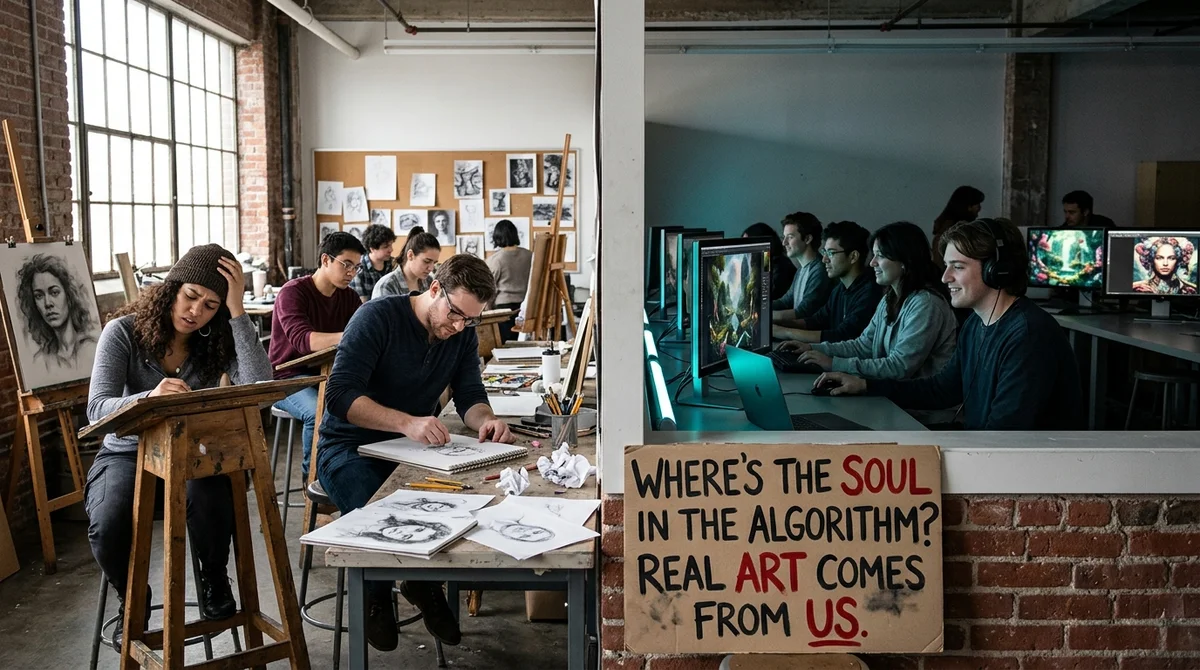
American art schools have found themselves at the center of a clash between traditional creative education and rapidly advancing generative AI tools. Students fear for their professional future, instructors argue over where the limits lie, and schools are forced to rewrite their curricula without knowing what the job market will look like in four years.
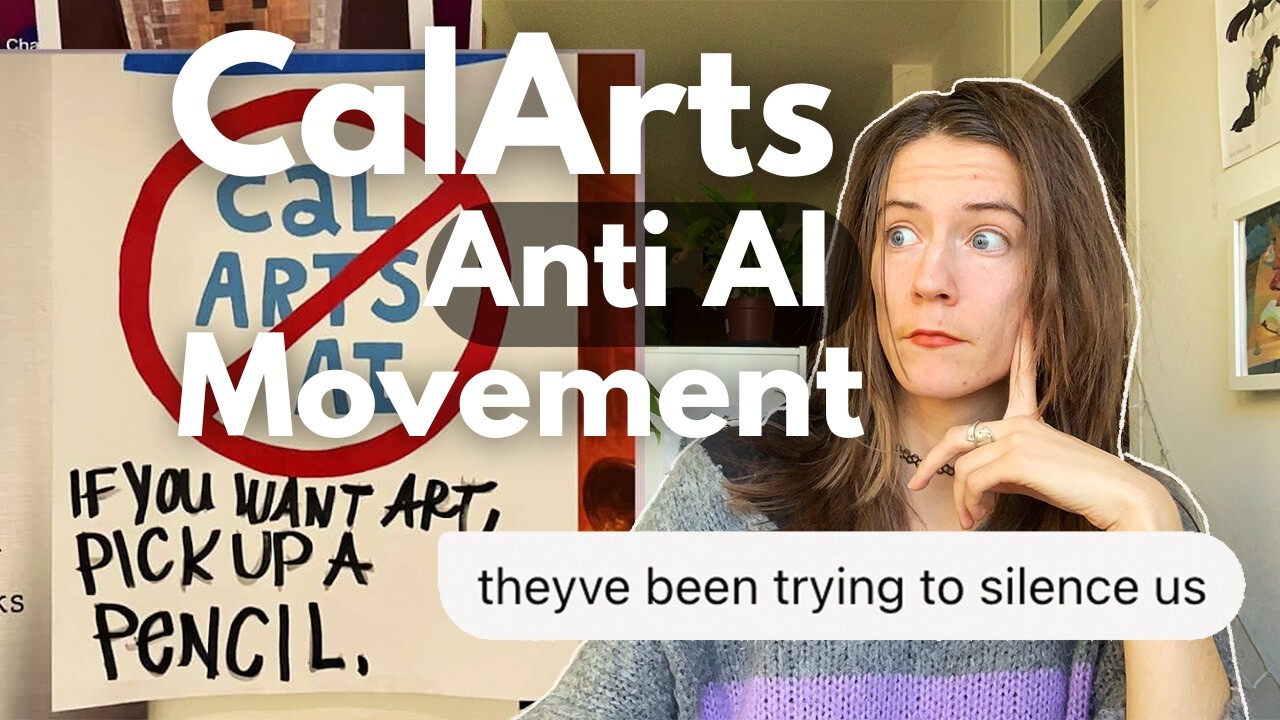
The situation reached a boiling point earlier this year at the California Institute of the Arts (CalArts). Students organized a protest: posters calling for AI artists to be brought into thesis projects were covered in handwritten corrections from dissatisfied students, because nobody wanted algorithms to replace genuine human creative input. The episode exposed a contradiction that is now tearing creative universities apart around the world.
The students' fears are not unfounded. Specialties that seemed secure just a few years ago, such as 3D modeling, animation, illustration and motion design, are now directly in the line of fire. Generative models can produce concept art, generate textures, animate characters and assemble storyboards faster than any graduate. Employers increasingly demand proficiency with AI tools, and the barrier to entering the market has dropped sharply for people who know how to work with prompts. A student who spent three years mastering traditional techniques risks losing on speed to someone skilled with Midjourney or Runway.
Schools' responses differ radically. Some have begun building generative tools into the required curriculum, with simple logic: the market demands these skills, so they must be taught. Others impose bans, fearing that students will stop developing fundamental skills and an understanding of the craft. A third group holds to a compromise: AI is acceptable for finding ideas and references, but the final work must be entirely the student's own.
The problem runs deeper than a dispute over tools. At its core is an existential question: what is creative education if its main product, the hand, the eye and the imagination, starts competing with an algorithm? Instructors who devoted their careers to passing on craft face the devaluation of their discipline, not because of weak students but because of technological progress. Students pay huge sums for an education without knowing which skills will be in demand by the time they graduate.
The split is also growing within institutions themselves. Some faculty actively explore AI and see it as an expansion of creative space. Others regard embracing these tools as surrender to forces that will ultimately destroy the profession. Students are caught between two fires: the fear of ending up jobless if they do not master AI, and the fear of losing their creative identity if they trust it completely.
What is happening in art schools is not an isolated crisis of education but an early symptom of a broader restructuring. The creative job market is transforming at a pace that leaves no time for gradual adaptation. The decisions universities make today, whether to include AI in the curriculum, how to teach critical thinking in the age of generation, and what to prioritize, will shape the next generation of creative professionals. For now, there are far more questions than answers.
- Oct 25, 2026Shadow AI in the Enterprise: Why 90% of Security Officers Break Their Own Bans and How a 3-Zone Traffic Light System Works
- Oct 19, 2026Black Forest Labs: A 70-Person Team Takes On Silicon Valley's Giants
- Oct 11, 2026BBC: AI Is Devaluing Images and Raising the Price of Human-Made Work
- Oct 9, 2026Midjourney Adds Thinking Mode for V8.2 and Shared Folders in Alpha
Test Frontier LLMs & Autonomous Agents in One Workspace
Run Claude Opus 5.5, GPT-6, Gemini 3.1, and DeepSeek side-by-side in Nomad AI (nomadnet.ai) — unified model routing, deep research, and multimodal workflows under one subscription.
The AI world, distilled — once a week
Seven stories that actually mattered, hand-picked. No noise, no reposts, no press releases.
Done! Check your inbox for a confirmation.