Deepfake nudes in schools: WIRED investigation finds 90 schools and 600 victims
Journalists at WIRED and analysts at Indicator examined cases of AI-generated intimate images spreading through schools, covering nearly 90 schools and more than 600 student victims worldwide. Any teenager with a smartphone can access the tools, legislation is lagging behind, and platforms keep running ads for nudify services despite their own rules.
AI-processed from Wired; edited by Hamidun News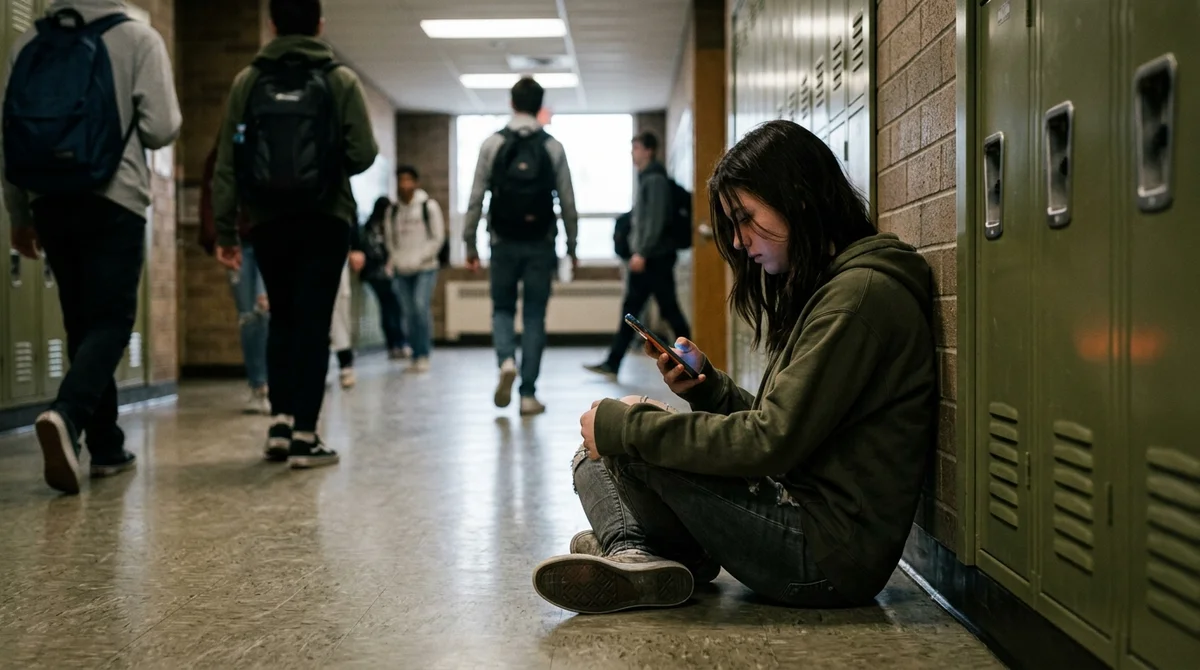
An investigation by WIRED and the analytics platform Indicator identified nearly 90 schools in countries around the world where students faced the spread of AI-generated intimate images. The total number of victims exceeded 600, and the trend suggests the problem is growing rather than fading. The authors reviewed open sources and court documents and interviewed school administrators, parents, and victims from dozens of countries.
Their conclusion is unambiguous: tools for creating so-called nudes from a photo of a real person have become so accessible that any teenager with a smartphone can use them. Most of these services operate in a gray zone, do not require age verification, and take no responsibility for the content they generate. The scale of the problem surprised even the researchers.
The documented cases include schools in the US, the UK, Spain, Australia, and Canada. In most cases, the perpetrators were the victims' classmates, who used photos from public social media accounts. The images spread through messaging apps, private group chats, and anonymous platforms.
Some cases led to criminal charges, but enforcement remains inconsistent: in many jurisdictions, the law simply hasn't kept up with the technology. Victims describe serious psychological harm: depression, anxiety disorders, and reluctance to go to school. Some were forced to change schools.
According to parents, school administrations often don't know how to respond, with neither protocols nor resources in place. Law enforcement frequently advises victims to "ignore" what happened or points out that the images are technically not real photos, which victims hear as mockery. The technology side makes things worse.
Nudify apps are heavily advertised on search engines and social networks, despite platform rules that formally prohibit such content. Image generation models get more accurate every month, and the barrier to entry keeps dropping. Some services offer a few free "edits" and then charge a subscription for further access.
Removing generated content from the internet is slow, expensive, and often unsuccessful. Legislation is starting to change, but slowly. Several US states have criminalized creating and distributing deepfake intimate images without a person's consent.
In the UK, the relevant amendments took effect in 2024. The European Union is discussing additional measures under the AI Act. But there is no global consensus, and the cross-border nature of the internet means any national law is only a partial fix.
The investigation is another warning sign: the generative AI industry still has not developed technical standards or industry norms capable of stopping its technology from being used against vulnerable people. While companies compete for market share and regulators try to catch up, students and their families bear the real costs.
- Oct 31, 2026Author puts his script before an AI jury: the verdict cost 850 thousand tokens
- Oct 29, 2026OvisOCR3: an 0.8B-parameter model that reads documents better than specialized systems
- Oct 29, 2026Tencent releases Youtu-Parsing-Omni: one model parses documents, audio and video
- Oct 28, 2026Liquid AI releases LFM2.5-24B-A2B: an agent model with 2B active parameters
Test Frontier LLMs & Autonomous Agents in One Workspace
Run Claude Opus 5.5, GPT-6, Gemini 3.1, and DeepSeek side-by-side in Nomad AI (nomadnet.ai) — unified model routing, deep research, and multimodal workflows under one subscription.
The AI world, distilled — once a week
Seven stories that actually mattered, hand-picked. No noise, no reposts, no press releases.
Done! Check your inbox for a confirmation.