YouTube expands AI likeness detection to celebrities, giving them a new tool against deepfakes
YouTube is rolling out an AI-powered tool that detects deepfakes of celebrities. Artists and their representatives will be able to automatically find videos that use their likeness without permission and request that the platform take them down. YouTube is extending its AI likeness detection technology to a broad range of public figures; until now, access was limited. The move responds to a growing wave of synthetic media generated by neural networks.
AI-processed from TechCrunch; edited by Hamidun News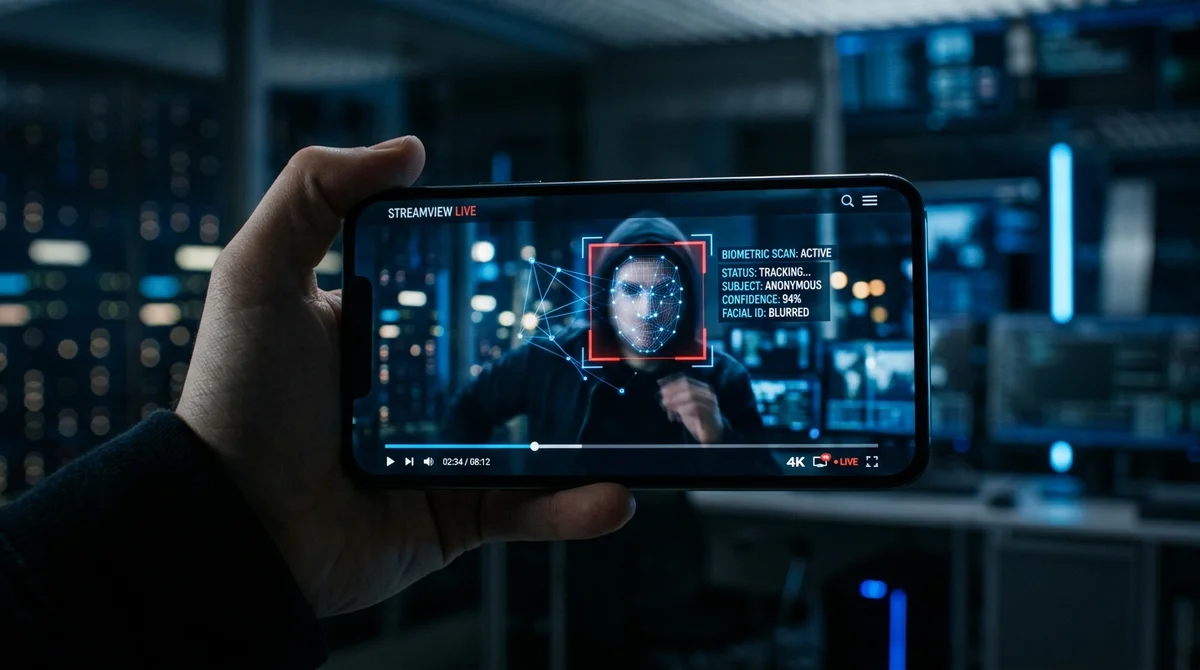
YouTube has announced that it is expanding its AI likeness detection tool to celebrities. Artists and their representatives will now be able to automatically find deepfakes and push for their removal from the platform.
Deepfakes are synthetic videos in which a neural network overlays someone else's face or voice onto existing footage, and over the past two years they have become one of the biggest problems for public figures. The tools for generating them are getting cheaper and easier to use at a rapid pace: today, anyone can create a convincing deepfake of a famous person for free, in a few minutes, with no specialized knowledge. With more than two billion monthly active users, YouTube has become one of the main venues where this kind of content spreads.
Until now, the AI-based likeness detection technology was available only to a limited group of partners, mostly labels and artists in the music industry with whom YouTube has direct agreements. The platform is now opening the tool to celebrities more broadly: actors, athletes, TV hosts, major creators, and other public figures. Their managers, agencies, and legal representatives will be able to register a client's likeness data with YouTube's system. The algorithm will then automatically scan uploaded videos and flag content that may use the registered person's likeness without their consent.
The mechanism works much like Content ID, the system YouTube has long used to protect copyright in music and video. Instead of an audio fingerprint or video signature, however, the new system compares facial biometric features. Flagged content is not removed automatically. Instead, the celebrity's representative receives a notification and can file a removal request. The final decision rests with YouTube's moderation team.
The move looks like a logical extension of the platform's policy on synthetic content. In 2024, YouTube began requiring creators to label realistic AI-generated content with a special tag. At the same time, the company introduced a complaint process that lets anyone request the removal of a video that depicts them synthetically without their consent. The AI detection tool takes this process a step further: the system identifies violations on its own, without waiting for a complaint from the affected person.
The deepfake problem became especially pressing after several high-profile incidents. In early 2024, synthetic intimate images of Taylor Swift spread widely online, sparking public outrage and kicking off a debate about legislative regulation. That same year, several major influencers discovered that their faces were being used in deepfake ads promoting fraudulent financial schemes. YouTube's users upload more than 500 hours of video every minute, and moderating that volume by hand is physically impossible.
The initiative also has a commercial dimension for YouTube: celebrities and their labels are major advertising partners and key suppliers of monetizable content. Deepfake scandals hurt the reputation not only of the victims but of the platform itself. Building protection tools is a way to keep major entertainment industry partners on board and to position YouTube as a responsible platform as regulation tightens.
The EU AI Act, which takes effect in phases from 2025 to 2027, explicitly requires labeling of synthetic content. California has already passed laws criminalizing the creation and distribution of deepfakes in political and intimate contexts. Platforms that do not show active work in this area risk regulatory sanctions.
The real scale remains an open question: how many celebrities will get access to the tool, how accurate the detection is, and whether there are safeguards against false claims. YouTube has not yet disclosed technical details.
- Nov 1, 2026Pika Labs releases open video model H3 Flex: 6 steps instead of 50
- Nov 1, 2026Google's StreamVibe video agent beats other models by 10.7% on response timing and quality
- Oct 31, 2026AI cartoon series: a 24-second episode built ten ways, the best cost 162 credits
- Oct 31, 2026Anthropic: Fold Subagents Back Into a Single Loop — One Customer's Tasks Ran Twice as Fast
Test Frontier LLMs & Autonomous Agents in One Workspace
Run Claude Opus 5.5, GPT-6, Gemini 3.1, and DeepSeek side-by-side in Nomad AI (nomadnet.ai) — unified model routing, deep research, and multimodal workflows under one subscription.
The AI world, distilled — once a week
Seven stories that actually mattered, hand-picked. No noise, no reposts, no press releases.
Done! Check your inbox for a confirmation.