ProPublica Newsroom Strikes Over AI, Layoff Protections and Pay
The ProPublica Guild, representing about 150 journalists at one of the largest nonprofit newsrooms in the US, has called a 24-hour strike. The main sticking point is protection from AI. Journalists want guarantees that technology will not replace people without the staff's agreement. The list of demands also includes protection from layoffs, fair grounds for dismissal and higher pay. Talks have stalled after two years of trying to resolve the dispute quietly.
AI-processed from The Verge; edited by Hamidun News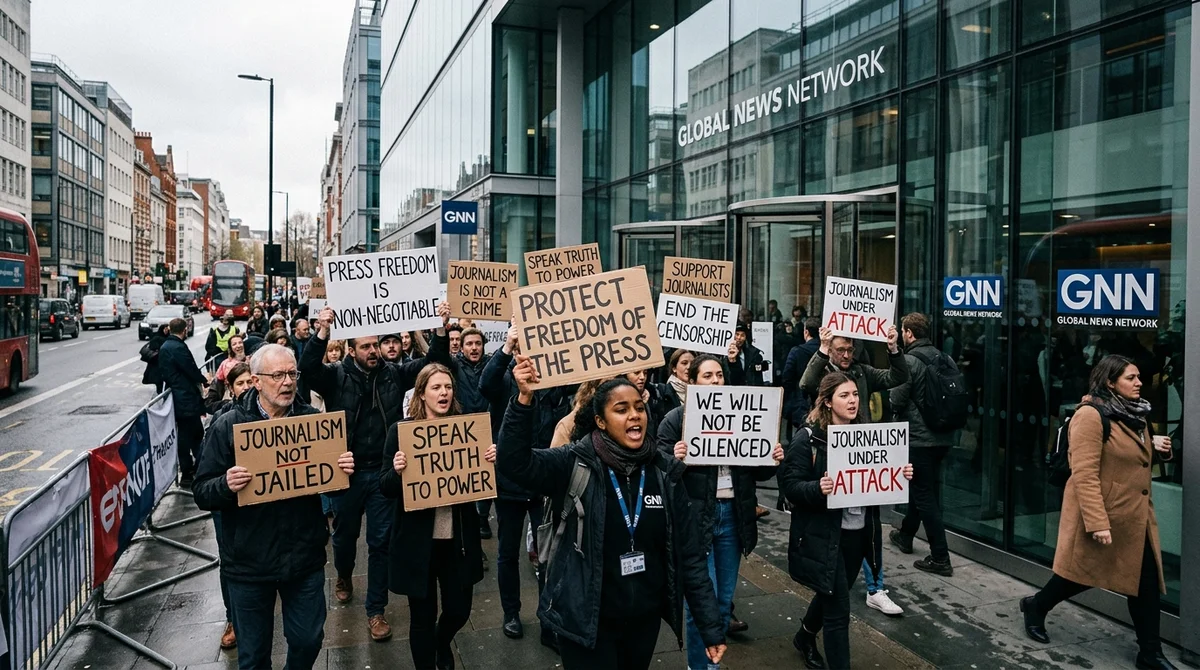
About 150 journalists at the ProPublica Guild, the union of one of the leading nonprofit newsrooms in the US, have gone on a 24-hour strike. The trigger was a deadlock in collective bargaining, with the use of artificial intelligence at the center of the dispute.
ProPublica is the country's largest nonprofit newsroom, specializing in investigative journalism. Staff unionized in 2023 and have been negotiating with management ever since. According to Guild members, in more than two years the sides have failed to reach agreement on key points.
The union's main demand is clear rules for using AI in the newsroom. Journalists want guarantees that technology will not replace people without the staff's agreement, and that the newsroom will not use AI to do work that was previously paid for as staff work. This is one of the first major labor disputes in the media industry in which AI is a central, rather than peripheral, bargaining issue.
Beyond AI, the bargaining table also includes "fair grounds" for disciplinary action and dismissal, protection from layoffs, and pay levels. Union members insist that an employer has no right to fire employees without objective reasons, the so-called just cause provision. Newsroom management has not accepted this position.
Kati Campbell, a ProPublica Guild member, stressed in the union's statement: "We tried to resolve this quietly for more than two years." The strike is a public signal that patience has run out. The union also called on the audience to support a digital picket line by not visiting the ProPublica website on the day of the action.
The context deserves separate attention: ProPublica is a nonprofit that lives on donations. The newsroom presents itself as a defender of the public interest. A conflict with its own staff over demands for AI protection puts the outlet in an awkward position: it is hard to defend citizens' rights while ignoring the rights of its own journalists.
This case is part of a broader wave. Across the media industry, newsrooms are cutting staff and adopting AI tools for content generation, data processing and automation of routine tasks. At the same time, journalists' unions, from The New York Times Guild to the Writers Guild of America, increasingly make demands that directly address AI. The ProPublica Guild strike is a clear example of how a technology issue has turned from abstract to a concrete labor dispute.
For the media market, the conclusion is unambiguous: newsrooms that want to avoid such conflicts should spell out AI usage policies in collective agreements in advance. Vague wording or quiet rollout of the technology increasingly becomes a reason to strike. For nonprofit media that depend on the trust of their audience and donors, such conflicts are especially painful.
Test Frontier LLMs & Autonomous Agents in One Workspace
Run Claude Opus 5.5, GPT-6, Gemini 3.1, and DeepSeek side-by-side in Nomad AI (nomadnet.ai) — unified model routing, deep research, and multimodal workflows under one subscription.
The AI world, distilled — once a week
Seven stories that actually mattered, hand-picked. No noise, no reposts, no press releases.
Done! Check your inbox for a confirmation.