Tesla expands its robotaxi service to Dallas and Houston, moving beyond Austin
Tesla has launched its robotaxi service in Dallas and Houston. The company posted a 14-second video showing electric cars driving with no driver or operator on board. Until now the service ran only in Austin, so Tesla now covers three major Texas cities. Texas does not require a special permit for driverless cars, which makes the state an ideal staging ground for scaling up.
AI-processed from TechCrunch; edited by Hamidun News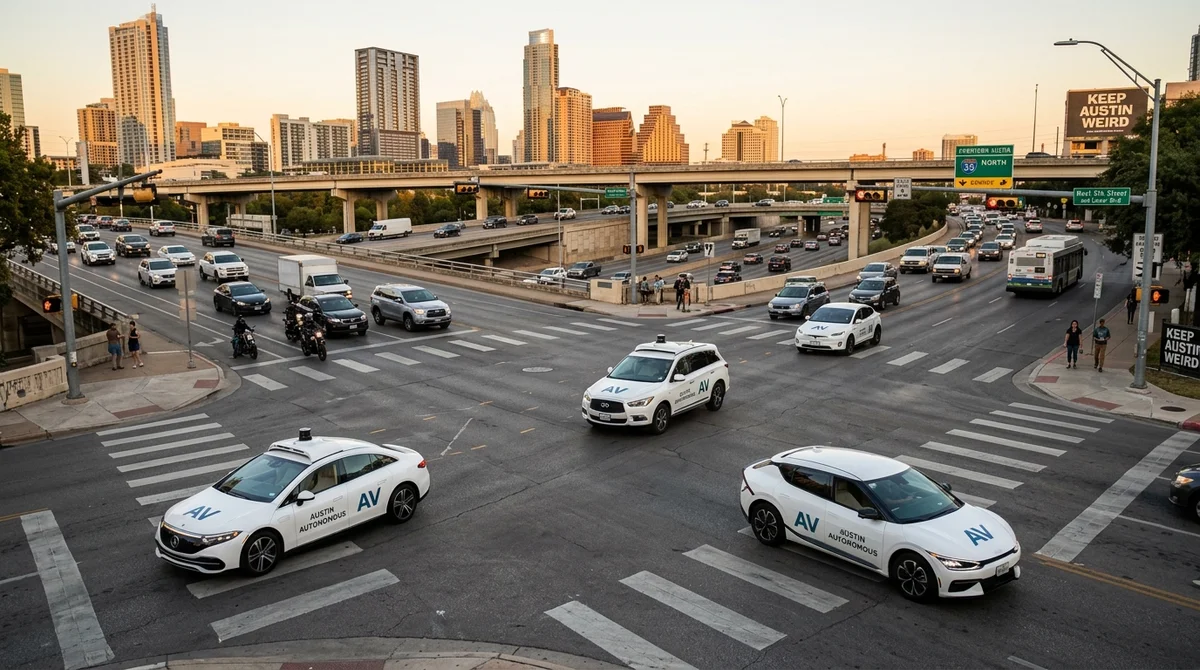
Tesla is expanding its robotaxi service to Dallas and Houston. The company announced the move in an official social media post, along with a 14-second video of electric cars driving through city streets with no driver or operator inside. These are the second and third cities after Austin, and the first time Tesla has launched in two new markets at once.
Until now, Tesla's robotaxi operated exclusively in Austin, where the company ran a limited test of the commercial service. The launch in Dallas and Houston marks a shift from the pilot stage to real scaling.
Houston is the fourth-largest city in the US, with a population of about 2.3 million; Dallas is the eighth, with roughly 1.3 million. Both metro areas have dense traffic and a relatively favorable regulatory environment: Texas does not require manufacturers to obtain a special permit to launch autonomous vehicles commercially, which makes it an attractive proving ground for experiments like this.
Tesla's video highlights the company's main difference from its key competitors: no safety drivers inside. Waymo, the market leader, has also removed operators from its robotaxis in San Francisco, Los Angeles and Phoenix, but that took years of development and expensive hardware: lidars, high-precision radars and hundreds of cameras on each vehicle.
Tesla takes a fundamentally different approach: cameras and neural networks only, no lidar. The company claims this architecture scales far more efficiently and cheaply than competitors' sensor stacks.
The purpose-built Tesla Cybercab, with no steering wheel or pedals and designed solely for autonomous use, was announced in late 2024. The current commercial service in Texas, however, runs on production Model 3 and Model Y vehicles with Full Self-Driving enabled. Technically, FSD requires the driver to be ready to intervene, yet Tesla is in effect allowing commercial operation with no human behind the wheel. This raises legal questions that regulators are only beginning to work through.
FSD continues to draw scrutiny from US oversight bodies. NHTSA has opened several investigations into complaints about unpredictable braking, object-recognition errors and crashes involving cars with FSD engaged. Tesla responds by pointing to the accumulated mileage of its vehicles and to lower crash rates when the system is used, but independent verification of that data remains disputed.
The autonomous ride-hailing market is getting more competitive. Waymo handles hundreds of thousands of rides a month and is steadily expanding its footprint. Amazon's Zoox is developing its own driverless electric vehicle. Cruise (GM) is gradually resuming operations after the high-profile incident in San Francisco in 2023. Tesla enters the market late, but with a powerful structural asset: millions of cars already sold collect real-world road data every day to train the company's neural networks.
The Dallas and Houston launch is a practical test of Tesla's entire strategy. Successful operation without operators in two large, heavily trafficked metro areas would strengthen the company's standing with regulators and investors. A serious incident, by contrast, risks slowing not only Tesla's ambitions but the development of the entire autonomous ride-hailing industry in the US.
In the long term, the robotaxi could become as important a business for the company as building and selling electric cars.
- Nov 2, 2026The Verge reviewer builds a $50 Meta Muse Charm alternative with Claude Code
- Oct 31, 2026Worldwide Express hands disputed invoices to AI agents and cuts unresolved disputes by 75%
- Oct 30, 2026AWS gives coding agents a live site preview straight from an isolated session
- Oct 30, 2026Agent traffic on Zocdoc is up 30x since July, and ChatGPT faces two health lawsuits
Test Frontier LLMs & Autonomous Agents in One Workspace
Run Claude Opus 5.5, GPT-6, Gemini 3.1, and DeepSeek side-by-side in Nomad AI (nomadnet.ai) — unified model routing, deep research, and multimodal workflows under one subscription.
The AI world, distilled — once a week
Seven stories that actually mattered, hand-picked. No noise, no reposts, no press releases.
Done! Check your inbox for a confirmation.