Uber shifts to an asset-ownership strategy: what it means for the taxi market
Uber is betting on owning physical assets, namely autonomous fleets and infrastructure. For years the company pitched itself as a lightweight platform with no cars. Now it is changing course: the spread of robotaxis is forcing it into the ownership chain rather than just aggregating demand. The shift is not limited to Uber. Lyft and several Asian ride-hailing aggregators are on a similar path.
AI-processed from TechCrunch; edited by Hamidun News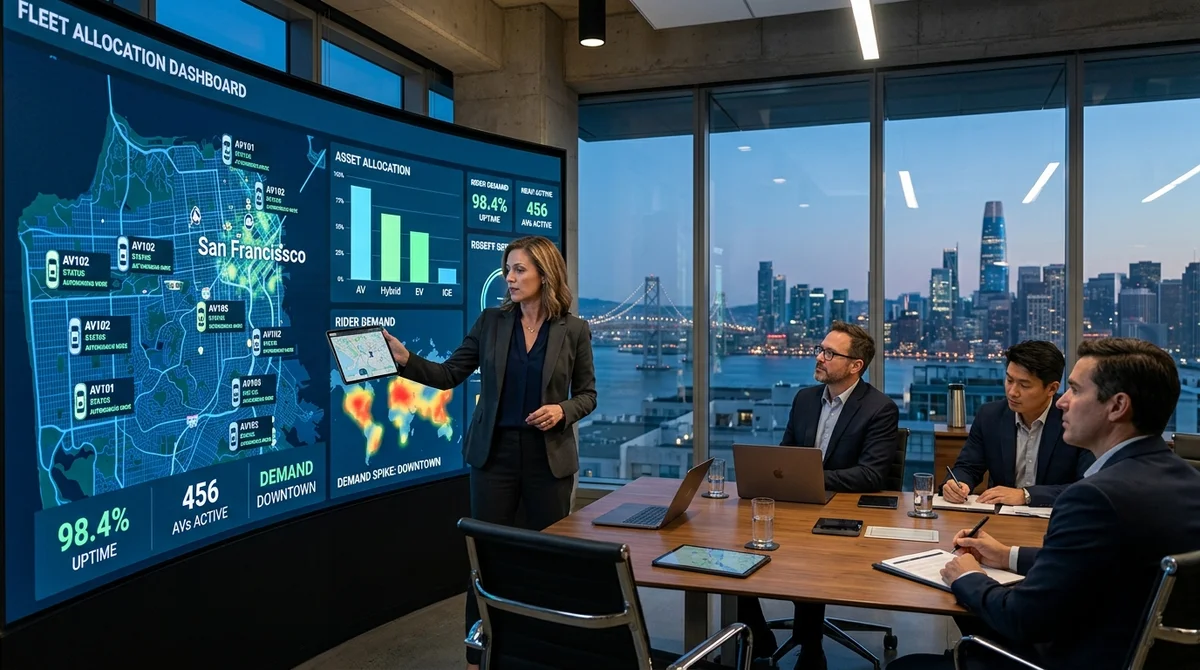
Uber is changing the basic logic of its business. For years the company took pride in the model "we don't own a single car." Now it is actively moving toward owning real assets, from autonomous vehicles to physical logistics infrastructure. The term "assetmaxxing", a play on the internet slang "looksmaxxing", describes a deliberate strategy of maximizing the assets one owns. For Uber, this means taking part in leasing, co-ownership and direct financing of autonomous fleets, instead of simply connecting partners to a marketplace.
The driver of the change is the rapid rise of robotaxis. Waymo, Tesla Robotaxi, Zoox and dozens of other players are preparing to scale their autonomous fleets. In that world, Uber risks becoming an intermediary with no leverage: if an AV fleet maker can roll out its own app, Uber's platform margin evaporates. To hold its position, the company needs to become a co-owner of the assets, not merely their aggregator.
In practice, this takes several forms. Uber signs joint-deployment agreements with autonomous vehicle makers, giving them access to its demand base in exchange for a stake in the fleet or priority access to it. At the same time, the company is investing in charging and service infrastructure, without which electric or autonomous transport cannot operate.
This transformation is not unique to Uber. Lyft and a number of Asian aggregators are following a similar path. The shared logic: the era of "pure platforms" in transport is ending as the human driver disappears as the main asset. Whoever controls the physical unit of transport controls the economics of the ride.
For consumers, the short-term changes are barely noticeable. But over a three-to-five-year horizon, pricing structure and service availability will be determined by who owns the fleet. Uber is betting that it will be Uber, at least in part.
- Nov 2, 2026DeepSeek open-sources Super-agent prototype: p95 task completion time of 15.7 minutes vs. 29.5
- Nov 2, 2026Bun creator uses Claude Code to port 750K lines from Zig to Rust in 11 days
- Nov 2, 2026Microsoft releases 4B model Mage-VL-Cowork, which solves 66.0% of OSWorld-Verified tasks
- Nov 2, 2026Meta's Muse assistant keeps dossiers on loved ones and gets root on Ubuntu by default
Test Frontier LLMs & Autonomous Agents in One Workspace
Run Claude Opus 5.5, GPT-6, Gemini 3.1, and DeepSeek side-by-side in Nomad AI (nomadnet.ai) — unified model routing, deep research, and multimodal workflows under one subscription.
The AI world, distilled — once a week
Seven stories that actually mattered, hand-picked. No noise, no reposts, no press releases.
Done! Check your inbox for a confirmation.